
Spray Foam Insulation Contractor in Westchester & Northern NJ
Spray foam is the one insulation that also air seals, which is why it belongs on the rim joist, the crawl space walls, the roof deck and the knee walls, and why it does not belong everywhere. We install open-cell and closed-cell foam where it earns its place, and tell you where cellulose does the job better.
workspace_premiumBPI Accredited
ecoNYSERDA Participant
diversity_1Woman Owned, Family Run
verifiedServing NY & NJ since 2005
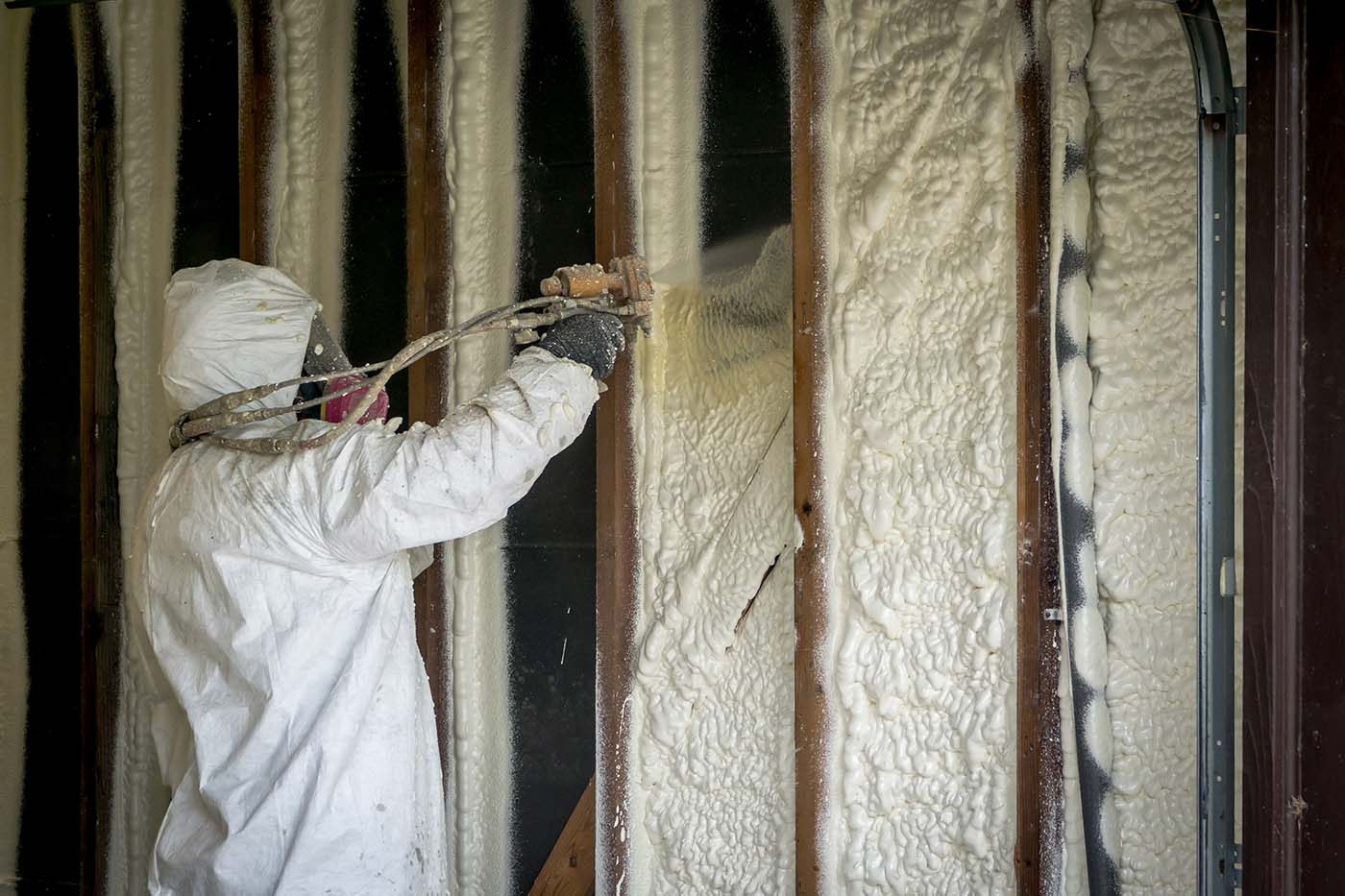
Closed-cell foam
Insulates · Air seals · Stops vapor
Spray polyurethane foam is two liquids, an isocyanate and a polyol resin, that meet in the spray gun and expand into a solid within seconds. Because it goes on as a liquid, it fills every gap it touches and bonds to whatever it lands on. That is the whole point: it is the only common insulation that is also an air barrier, and in a house that leaks air the air sealing is worth as much as the R-value.
This page covers what we use it for in Westchester, Rockland and northern New Jersey, the difference between open-cell and closed-cell, how a job actually goes from prep to re-occupancy, and the honest answers on safety and the real downsides. If you are comparing materials for a whole attic, start with cellulose versus spray foam; the short version is that most open attic floors are a cellulose job with foam doing the air sealing underneath.
Open-Cell or Closed-Cell
Two different materials that share a name. Which one goes where is the first decision on every spray foam job.
In our climate the answer is closed-cell far more often than not. Almost everything we foam is either below grade, touching masonry, or on the cold side of the house, and those are all closed-cell conditions.
Where Spray Foam Earns Its Place
The parts of a Westchester or Bergen County house where foam is the right material, and the one place it usually is not.
foundation
Rim joist and sill plate
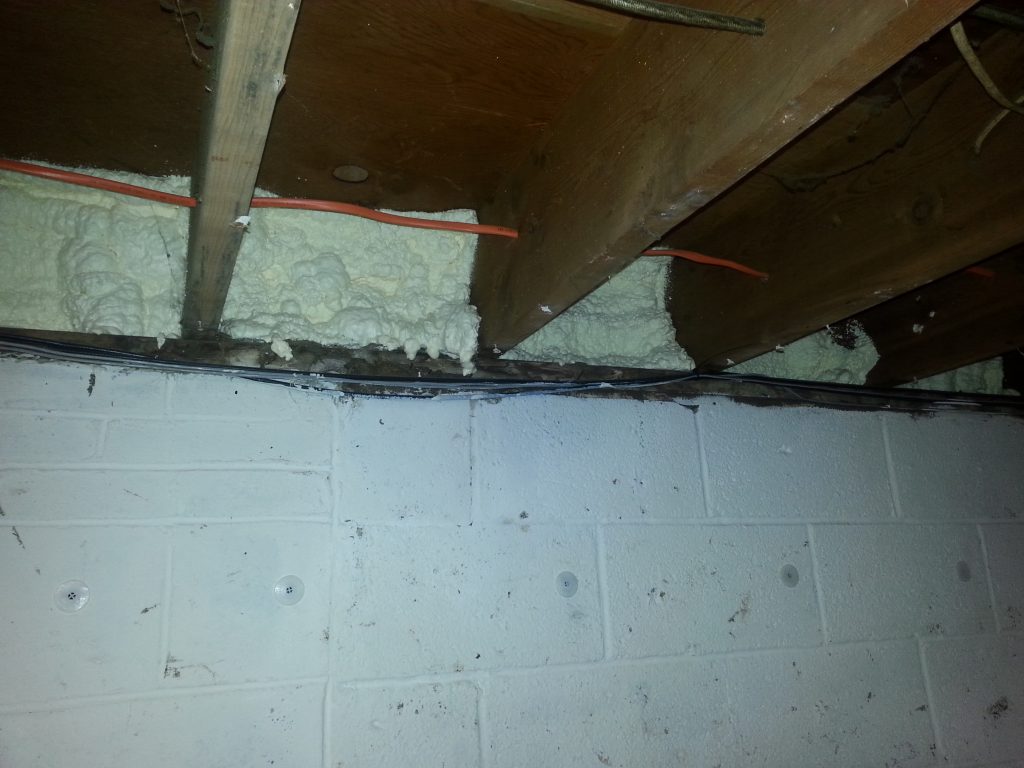
The band of framing on top of the foundation wall leaks air at the sill, at the joist ends and at every pipe and wire through it. Two inches of closed-cell foam seals and insulates it in one pass. It is the most common spray foam job we do and it is part of NYSERDA Package A. Rim joist insulation →
water_damage
Crawl space and basement walls
Concrete, block and stone foundations are cold, damp and irregular. Closed-cell foam bonds to all of them, does not absorb moisture and brings the space inside the envelope. Crawl space insulation → and encapsulation →
roofing
Attic roof deck
When the attic has to be conditioned, because the air handler and ducts are up there or the space is being finished, the insulation moves from the floor to the underside of the roof. Code sets a minimum thickness of air-impermeable foam on the deck for condensation control (R-15 in Climate Zone 4, R-20 in Zone 5); we meet it with closed-cell and top up with open-cell or batts where the rafters allow.
stairs
Knee walls and bonus rooms
The short walls behind a finished attic or over a garage back onto unconditioned space and are the reason those rooms are cold. Foam on the back of the knee wall and on the garage ceiling is the fix. Knee wall insulation →
hvac
Air sealing the attic floor
Before cellulose goes down, every top plate, wire hole, plumbing chase, can light and chimney chase in the attic floor gets foamed. This is the step that makes the attic insulation work. Attic air sealing →
block
Where we do not use it
Open attic floors. Foam across a whole attic floor uses a lot of material for the R-value it delivers and is permanent, and dense-pack cellulose over a foamed air seal reaches R-49 for less material and can be added to later. We will say so on the assessment. Cellulose versus spray foam →
How a Spray Foam Job Goes
What to expect from the assessment to the day you can use the space again. Most residential jobs are one day of spraying.
1
Assess and specify
A blower door test and infrared pass show where the house is actually leaking, so the foam goes where it matters. We specify open- or closed-cell, thickness and where the thermal or ignition barrier is required, in writing, before the truck comes.
2
Remove and prepare
Old insulation comes out; foam does not go over fiberglass or cellulose. Surfaces have to be clean, dry and above the minimum temperature the foam needs to bond. Wet or damaged framing is flagged before it is covered.
3
Mask, ventilate, clear the area
Everything near the spray zone is masked against overspray. Pilot lights and other ignition sources are shut off. Fans and ducting exhaust the space to the outdoors, aimed away from neighbors. Nobody but the crew, in supplied-air respirators and suits, is in the area while foam is going on.
4
Spray in lifts
The rig heats and pressurizes both components and mixes them at the gun. Closed-cell goes on in passes of about two inches with time between them; foam sprayed too thick in one lift overheats, cures badly and is the usual source of odor complaints. We check ratio and temperature at the rig throughout.
5
Cure, trim and cover
Foam that overfills a cavity is trimmed flush. Where code requires it, foam left exposed in an attic or crawl space gets an ignition barrier coating, and foam in living space is covered by drywall as a thermal barrier. The space stays ventilated and closed off for the cure window.
6
Re-occupy and verify
Plan on 24 hours before using the sprayed area. Then a second blower door reading shows what the air sealing did. It goes in your file and on the NYSERDA paperwork we submit for New York homes.
Safety, Off-Gassing and the Real Downsides
People search this before they call anyone. Here are the straight answers.
masks
During the job, it is a hazardous material
The A-side of spray foam is an isocyanate. While it is being sprayed and for the hours it cures, the mist and vapor can irritate eyes and airways and, with repeated exposure, sensitize the lungs. That is a fact about the material, and it is why the rules are not negotiable: crew in supplied-air respirators and full suits, occupants out of the area, mechanical ventilation to the outdoors during and after spraying, and no re-entry until the cure window has passed. A contractor who sprays with a paper mask on and lets you watch is telling you how the rest of the job will go.
check_circle
After it cures, it is inert
Properly mixed and cured polyurethane foam is a stable solid. It does not shed fibers, it does not feed mold, and it does not keep off-gassing. The manufacturer guidance we follow is 24 hours of ventilated cure before re-occupancy for high-pressure foam. Cases of a house that still smells weeks later trace back to installation errors: foam mixed off-ratio, sprayed too thick per lift, or applied to a cold or damp surface. Those are avoidable, and the way to avoid them is the rig discipline in step four.
local_fire_department
Fire code: thermal and ignition barriers
Foam plastic burns, so the building code does not allow it to be left exposed to living space. Inside the house it has to be behind a thermal barrier, which in practice means half-inch drywall. In an attic or crawl space that is entered only for service, code allows a lighter ignition barrier instead, usually an intumescent coating sprayed over the foam. We include whichever one the location calls for and note it on the proposal, because leaving it off is the most common code violation we see on other people's spray foam.
warning
The downsides we tell every customer
It is permanent. Foam bonded to framing is very hard to remove, so later rewiring, replumbing or re-roofing from inside is harder. On a roof deck it can hide a leak, because water no longer drips into the attic where you would notice. And its performance depends entirely on the installer; the same material sprayed badly shrinks, pulls away from studs, or smells. The one thing it is not: a mold problem. Cured foam does not hold water and does not feed mold; the mold stories come from foam sealing in moisture that was never dealt with, which is an assessment failure, not a foam failure.
Spray Foam Jobs We Have Done
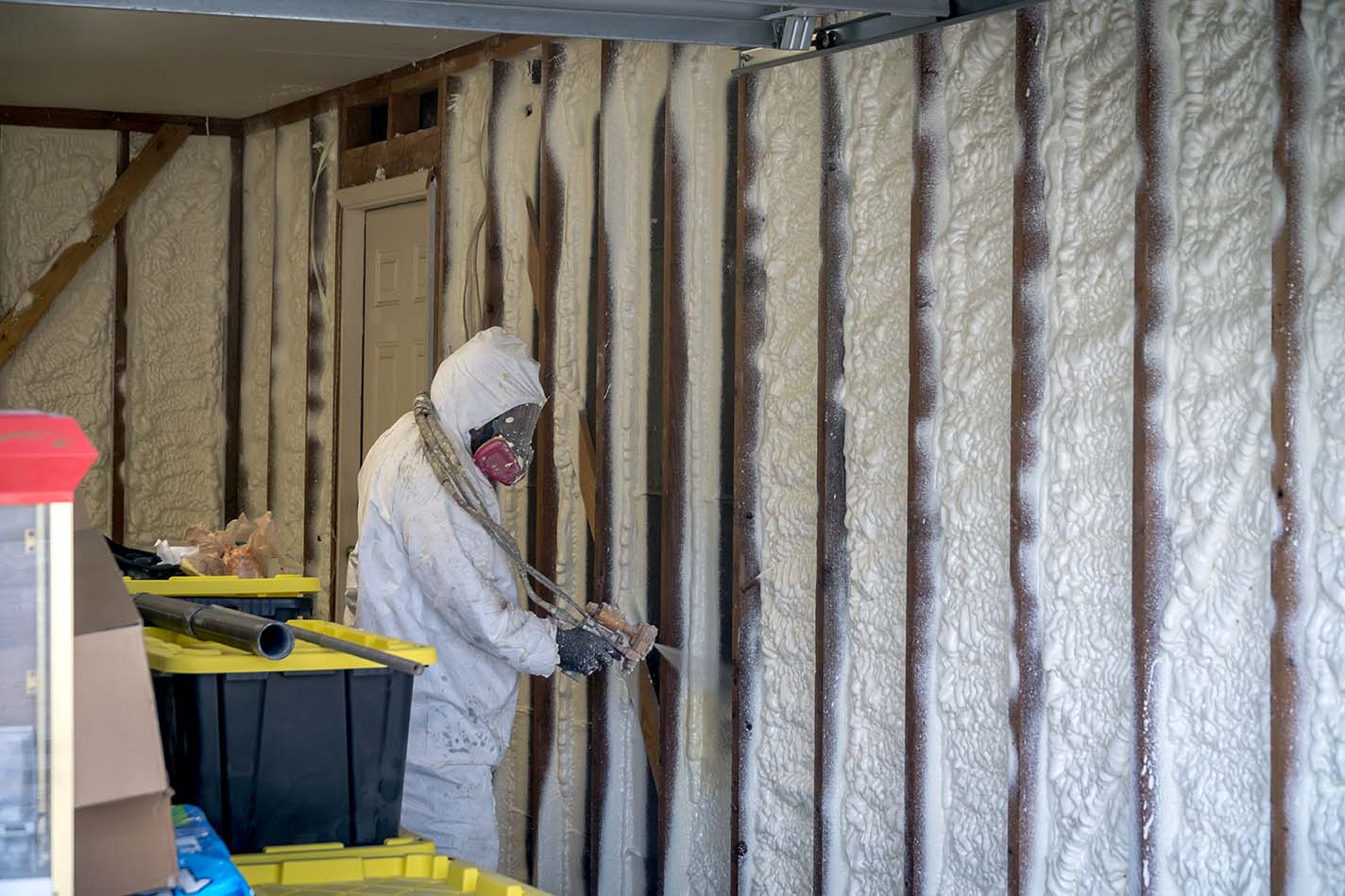
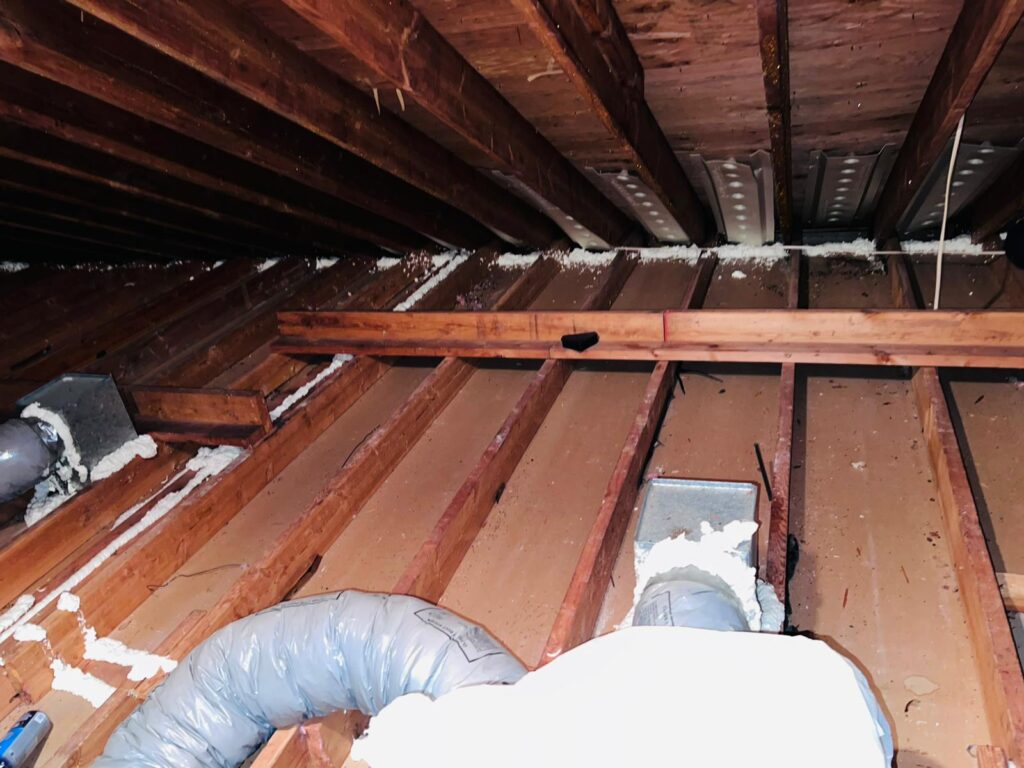
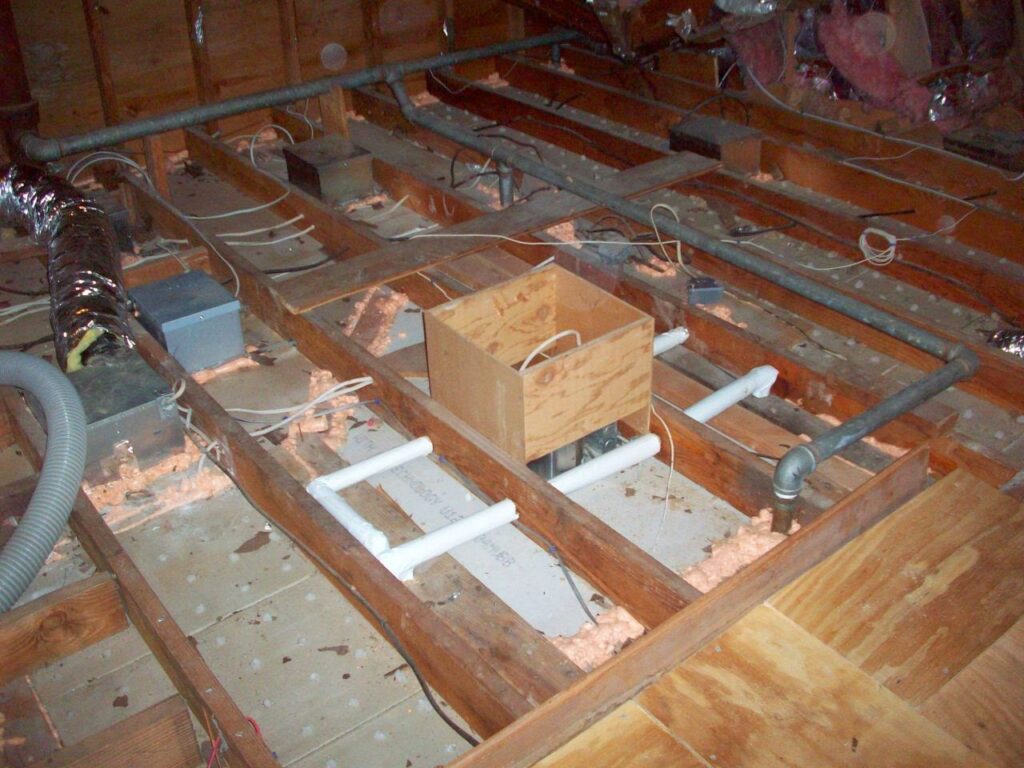
Our crews, our photos. The one at the top of the page is a garage wall in progress; these are the other places foam goes.
Spray Foam Is in Both NYSERDA Comfort Home Packages
We install spray foam in Scarsdale, Rye, Bronxville, Pelham, New Rochelle, Yonkers, White Plains, Tarrytown, Chappaqua, Bedford, Yorktown and Peekskill in Westchester; across Rockland, Orange and Dutchess; and in Mahwah, Ramsey, Ridgewood, Wyckoff, Franklin Lakes, Paramus and the rest of Bergen County, along with Essex, Passaic and Hudson counties in New Jersey.
Metro NY Insulation is a NYSERDA participating contractor and BPI accredited. We file the paperwork. New York only — New Jersey homes go through Home Performance with ENERGY STAR, which has its own incentive structure, and we work in both states.
Westchester County, NY
Rockland County, NY
Orange County, NY
Dutchess County, NY
Bergen County, NJ
Essex County, NJ
Passaic County, NJ
Hudson County, NJ
Comfort Home Package A
$2,500 — attic and rim joist
The rim joist is a spray foam job, and the attic air sealing under the cellulose is foam too. Package A is where most spray foam work in a New York home lands.
Comfort Home Package B
$3,000 — adds walls or floor
Foaming crawl space, basement or exterior walls is the wall-and-floor scope that moves a project to Package B. We confirm which package your home falls under during the assessment.
Westchester bonus · through December 31, 2026
Up to $5,000 combined
Westchester homeowners add $2,000 as Con Edison customers, or $1,000 on other utilities, on top of their Comfort Home package. Con Edison's own Weather Ready program is closed; this adder is fulfilled by NYSERDA.
The Jobs Spray Foam Is Part Of
Foam is rarely the whole project. These are the pages for the places it goes.
foundation
Rim Joist Insulation
The most common spray foam job in a Westchester basement, and part of NYSERDA Package A.
roofingAttic Air Sealing
Foam on every top plate and penetration before the cellulose goes down. The step that makes attic insulation work.
water_damageCrawl Space Insulation
Closed-cell on the foundation walls instead of batts under the floor. Walls versus floor, explained.
compare_arrowsCellulose Versus Spray Foam
Where each material wins, with R-values and a comparison table. Start here if you are choosing for an attic.
Spray Foam Insulation Questions
Find Out Where Foam Belongs in Your House
A blower door test and infrared pass show where the air is actually moving. We will tell you where spray foam is the answer, where cellulose is, and which NYSERDA package the work falls under.