
Rim Joist Insulation: Closed-Cell Spray Foam Where Your House Leaks Most
The seam where the floor framing meets the foundation runs the whole perimeter of the house and, in most Westchester and northern New Jersey homes, has never been sealed. We seal the sill plate and every rim joist bay with closed-cell spray foam in one pass.
NYSERDA Comfort Home Package A
Attic + Rim Joist — $2,500
The rim joist (or band joist) is the board around the outside edge of your floor framing, sitting on the sill plate on top of the foundation. In most homes built before the 2000s it was never insulated or air sealed, so it is a continuous band of thin wood, gaps and pipe penetrations between your heated basement and the outdoors — one of the largest single air leaks in a typical New York or New Jersey house.
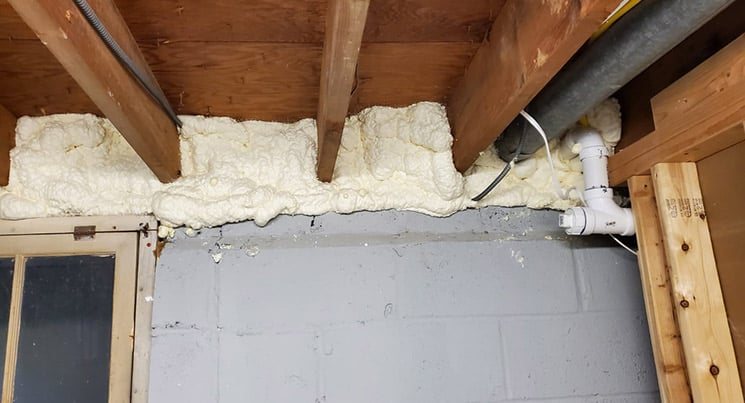
The fix is about two inches of closed-cell spray foam applied to each bay and the sill plate, which insulates to roughly R-13 and seals air and vapor in the same pass. Rim joist work is named in NYSERDA Comfort Home Package A, which pairs it with the attic for a $2,500 incentive through a participating contractor.
Where the Rim Joist Leaks
Go down to the basement on a cold day and hold your hand along the top of the foundation wall. The three places you will feel air moving are the same three places on every house.

The sill plate gap
The sill plate is bolted to the top of the foundation, and the top of a poured or block wall is never perfectly flat. The gap underneath it runs the full perimeter of the house and is open to the outside.
Top and bottom of the rim joist
Where the rim joist meets the subfloor above and the sill plate below, wood has shrunk and settled for decades. On the ends of the house, where the joists run parallel to the rim, the whole bay is often open behind the siding.
Every penetration
Dryer vents, hose bibs, the gas service, the electrical mast, the AC line set, the sump discharge. Each one was drilled oversize and most were never sealed. Individually small; together, a hole you could put your fist through.
Closed-Cell Spray Foam vs. the Do-It-Yourself Route
Plenty of homeowners insulate their own rim joists with cut rigid foam and canned sealant, and done carefully it works. Here is where the two approaches actually differ.
If you are going to do it yourself, do it with foil-faced rigid board, seal every edge, and seal every penetration on its own. If you would rather have it done once, in a day, and documented, that is what we do.
From Assessment to a Sealed Perimeter in One Visit
Rim joist work is usually a single-day job, and it is almost always done alongside the attic because the two together are what NYSERDA pays for.
1
Assess
A blower door test and an infrared pass along the perimeter show exactly where the air is coming in and how much.
2
Clear and prepare
Old fiberglass comes out of the bays. Loose debris, dust and any damp material is removed so the foam bonds to clean wood and masonry.
3
Seal the penetrations
Every pipe, wire, duct and vent through the rim gets sealed individually before the field foam goes on, so nothing is bridged over.
4
Foam the rim and sill
About two inches of closed-cell foam across each bay, down over the sill plate and onto the top of the foundation wall, in one continuous layer.
5
Verify and document
A second blower door reading shows the change. That number goes in your file and on the NYSERDA paperwork we submit for you.
A Rim Joist and Sill Plate Job, Start to Finish
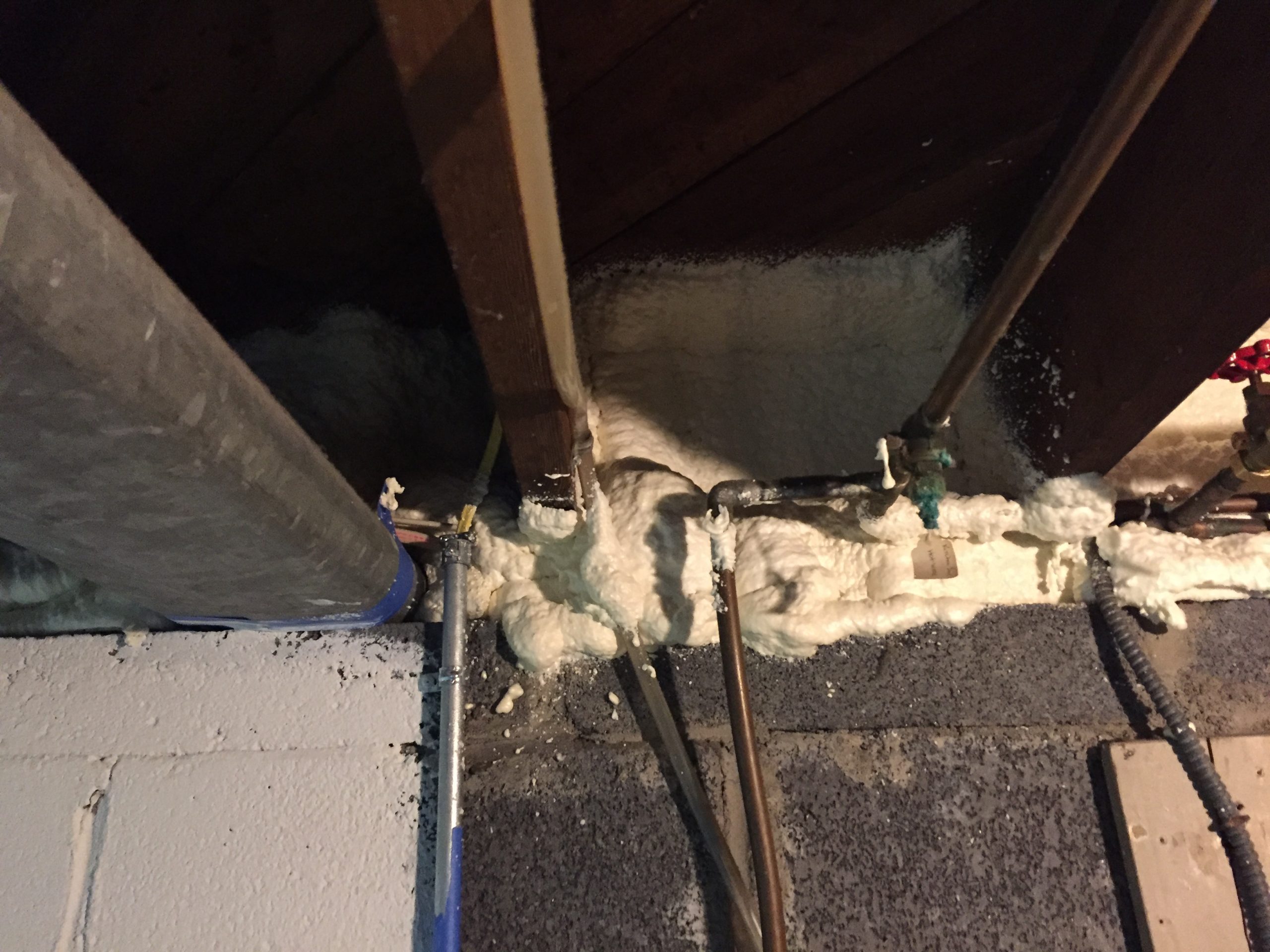
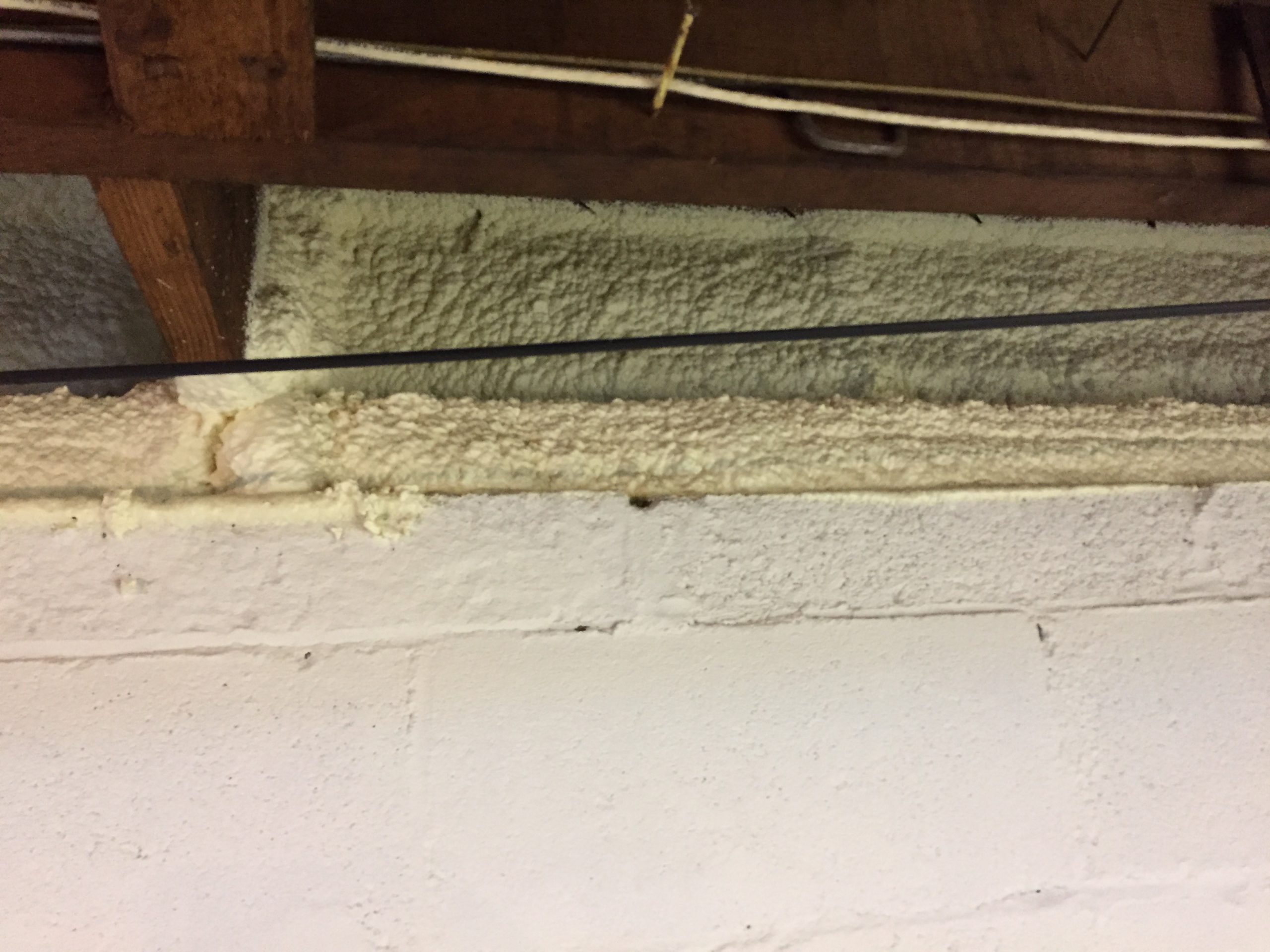
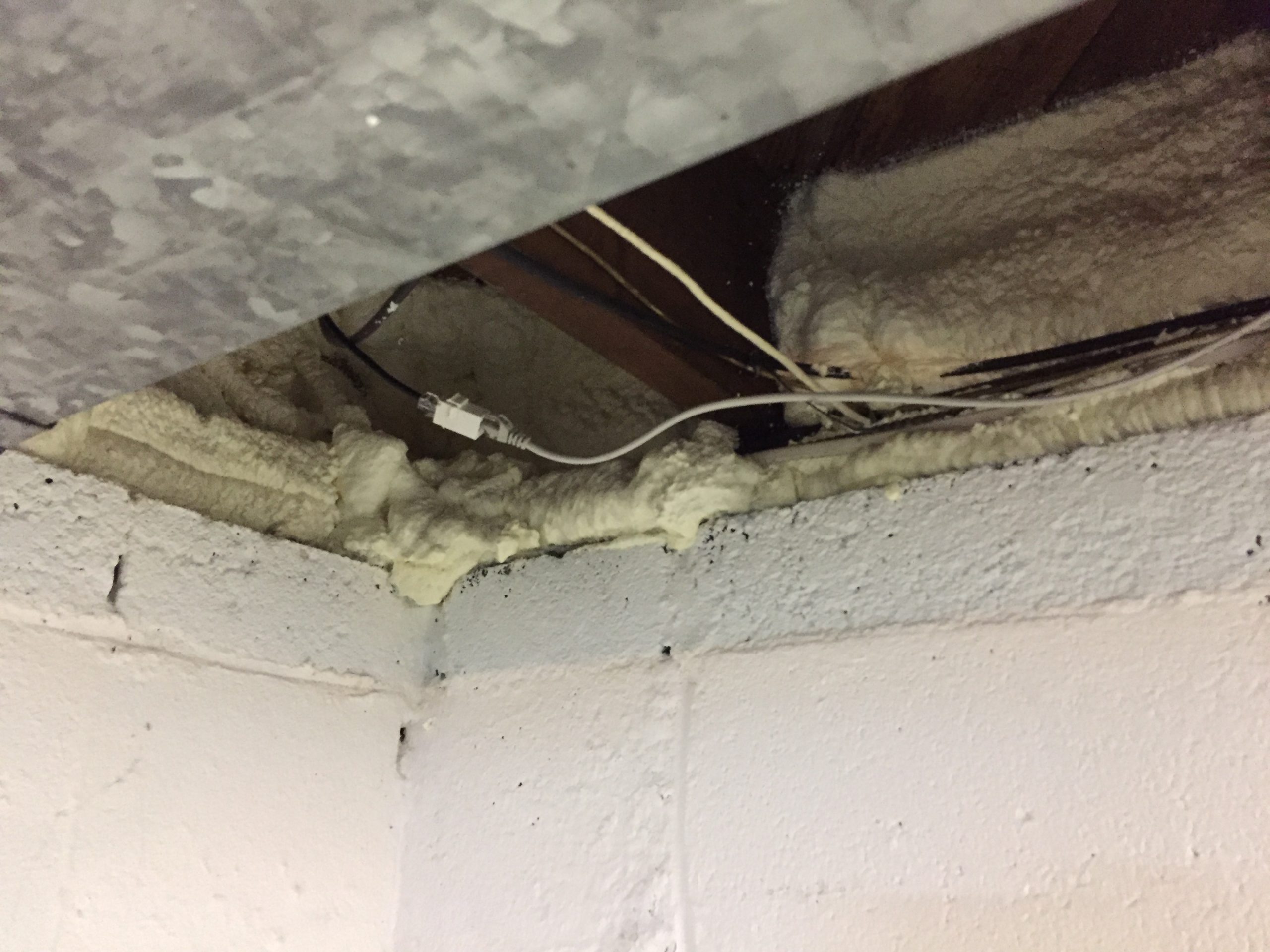
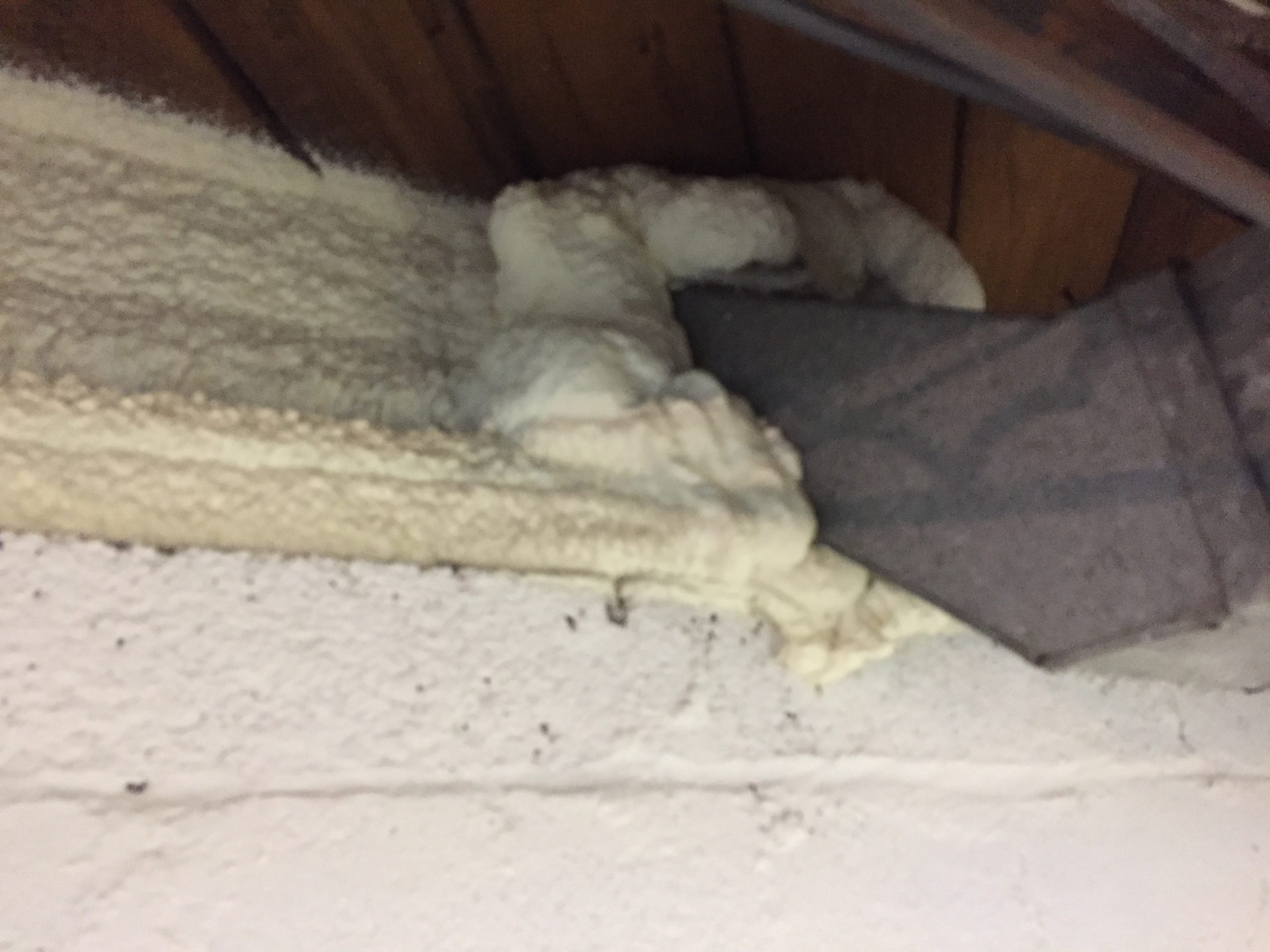
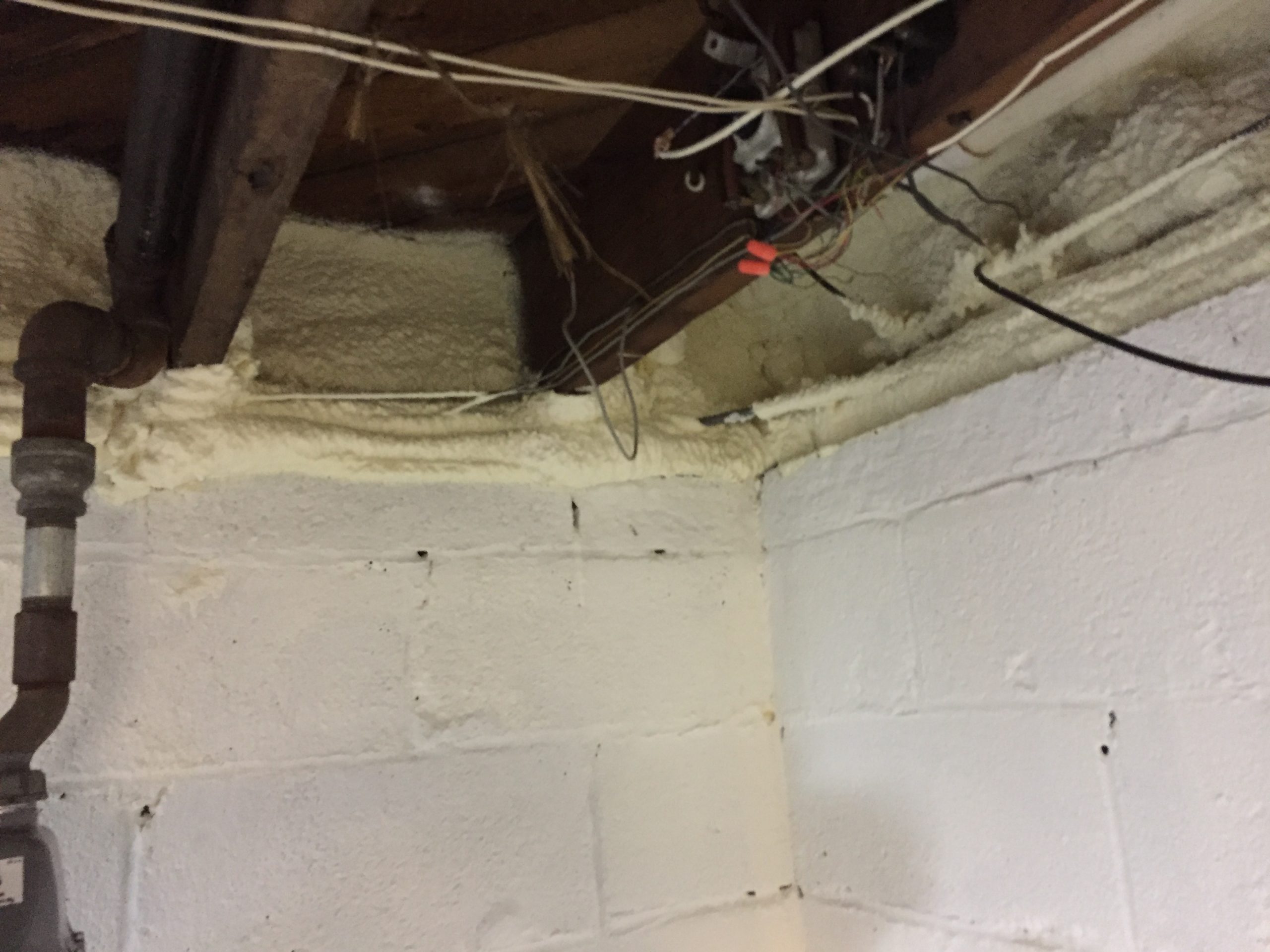
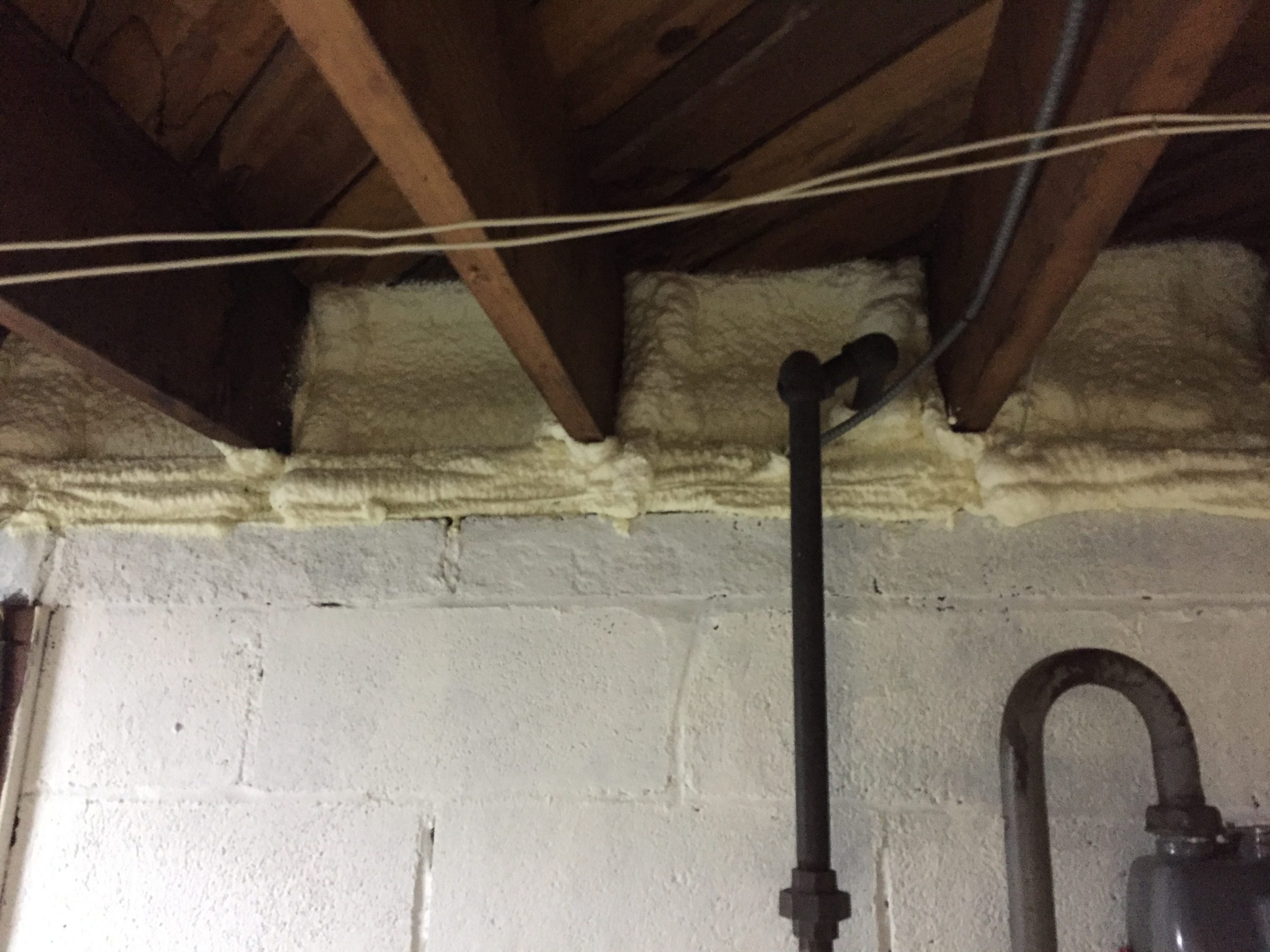
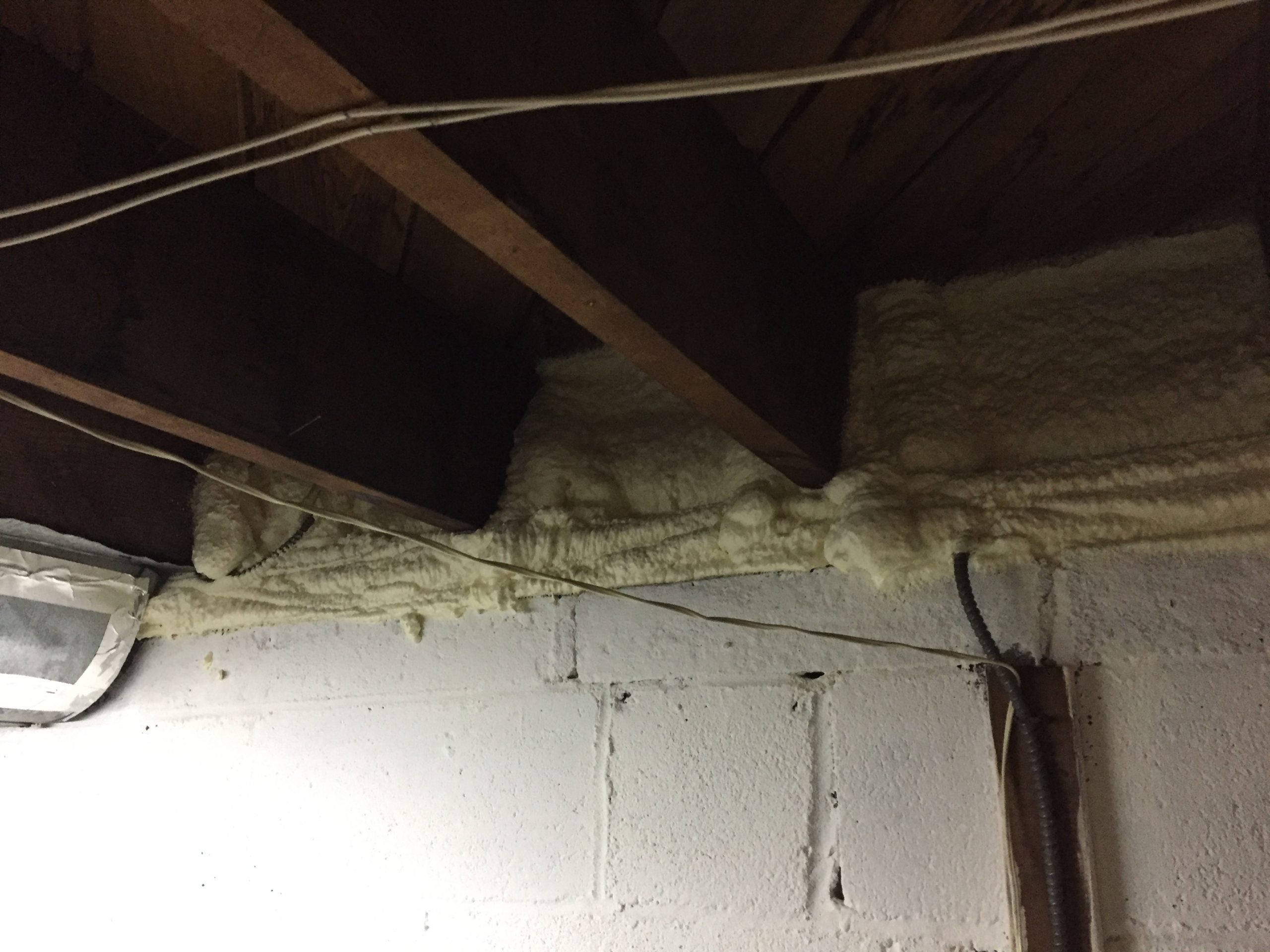
These are our photos from a Metro NY Insulation basement job. Block foundation, original unsealed rim joist, the usual collection of pipes and lines through it.

Rim Joist Work Is Written Into NYSERDA Comfort Home Package A
This is the part no how-to article can offer you. NYSERDA's Comfort Home program names the rim joist specifically: Package A is attic and rim joist together, and it pays a fixed incentive when the work is done by a participating contractor. Do it yourself and the incentive is not available.
Metro NY Insulation is a NYSERDA participating contractor and BPI accredited. We file the paperwork. New York only — New Jersey homes go through Home Performance with ENERGY STAR, which has its own incentive structure, and we work in both states.
Comfort Home Package A
$2,500 — attic and rim joist
Air seal and insulate the attic and the rim joist. This is the package most rim joist jobs fall under.
Comfort Home Package B
$3,000 — adds walls or floor
Package A plus wall insulation or an above-grade floor. For homes that need more than the attic and rim.
Westchester bonus · through December 31, 2026
Up to $5,000 combined
Westchester homeowners add $2,000 as Con Edison customers, or $1,000 on other utilities, on top of their Comfort Home package. Con Edison's own Weather Ready program is closed; this adder is fulfilled by NYSERDA.
The Rim Joist Is Where the Basement Meets the Rest of the House
Air that comes in at the rim goes out through the attic. Sealing one end without the other is half a job, which is why NYSERDA pairs them.
Attic Air Sealing
The other half of Package A. Sealing the top of the house stops the stack effect that pulls air in at the rim in the first place.
layersAttic Insulation
Blown-in cellulose to R-49 or better once the attic is sealed. Most rim joist jobs are scheduled with this.
foundationCrawl Space Encapsulation
If your house sits on a crawl space instead of a basement, the rim joist is sealed as part of encapsulating the space.
Rim Joist Insulation Questions
Find Out How Much Air Is Coming In at the Rim
A blower door test puts a number on it. If the rim joist and attic are the problem, we will tell you what Package A covers and file the NYSERDA paperwork for you.