
Ice Dam Prevention Starts in the Attic, Not on the Roof
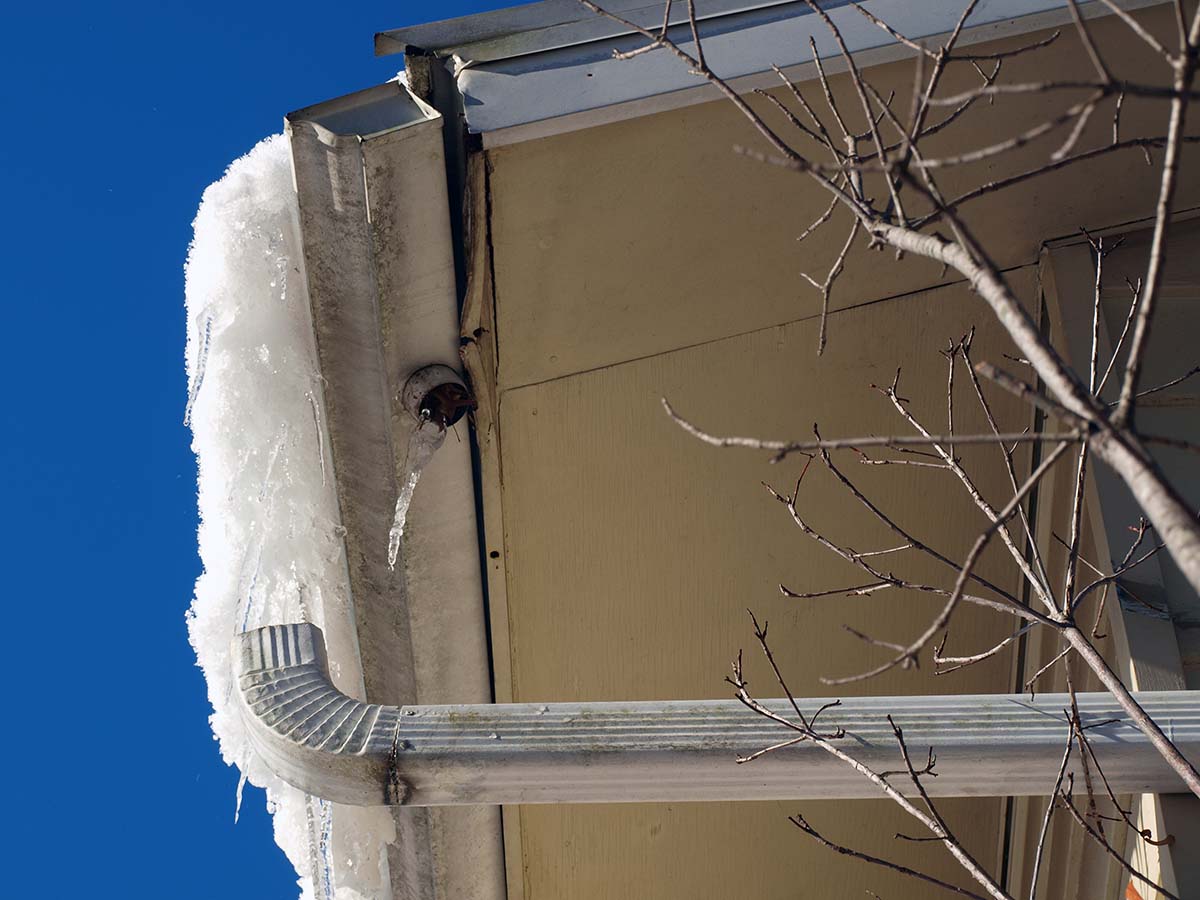
An ice dam is what a roof does when the attic under it is warm: heat leaking up from the house melts the snow from underneath, and the water refreezes at the cold eave. Roofers, gutter companies and heat cables treat the ice. We seal and insulate the attic so it stops forming.
workspace_premiumBPI Accredited
ecoNYSERDA Participant
diversity_1Woman Owned, Family Run
verifiedServing NY & NJ since 2005
The permanent fix
Air seal · Insulate · Ventilate
Ice dams need three things: snow on the roof, an outdoor temperature below freezing, and a roof surface that is above freezing where the snow sits and below freezing at the edge. The first two are the weather. The third is your attic. A roof over a cold, well-sealed attic stays the same temperature end to end, the snow sits on it until it sublimates or slides, and nothing dams. A roof over a warm attic is a melting machine.
This page explains what causes ice dams, how to read the melt pattern on your own roof, what to do this week if you already have one, why the usual remedies do not last, and what a permanent fix involves. If the house is a Cape Cod, a colonial with a finished attic, or anything with knee walls or a cathedral ceiling, read the section on the houses that get ice dams here; those are the ones we see most.
What Causes Ice Dams
Heat gets into the attic, the roof warms, snow melts from underneath, and the water refreezes where the roof hangs over cold air.
whatshot
1. Heat leaks into the attic
Not mainly through the insulation. Through the holes: the gaps along every top plate, recessed lights, the attic hatch, the chase around the chimney and plumbing stack, bath fans that dump into the attic instead of outside. Warm air rises through all of them and pools under the roof deck.
water_drop
2. Snow melts from underneath
The roof deck over the attic climbs above 32°F, and the bottom layer of snow turns to water. It runs downhill under the snowpack, invisible from the street, toward the eave. The thicker the snow, the better it insulates the melt from the cold air, so the melt keeps going.
ac_unit
3. The eave refreezes it
The last two or three feet of roof hang over the outdoors, not the house, so they stay at air temperature. Water hits that cold strip and freezes. Each cycle adds a layer. Once the ridge is a few inches tall, water pools behind it, finds the shingle laps, and comes into the wall or ceiling.
The gutters get blamed because that is where the ice is. A house with no gutters at all builds the same dam on the same eave. Icicles are the symptom you can see from the driveway; the cause is above the ceiling.
How to Read Your Own Roof
After a snowfall, the roof is a thermal image of the attic. Here is what the pattern means.
visibility
Bare patches with snow everywhere else
Snow that melts off one area first, over a bathroom, along a wall line, in a stripe above the hallway, is showing you exactly where warm air is arriving under the deck. Usually it is a recessed light, a bath fan, or a chase. We confirm it with the infrared camera, but the roof already told you.
north_east
Icicles only on certain runs
An ice dam over one part of the house and nothing over another means the attic is warm there and cold elsewhere. Classic on a Cape Cod: the ice forms below the knee walls of the finished second floor, where the sloped ceiling has an inch or two of insulation and no air barrier.
ac_unit
Frost on the nails inside the attic
Go up on a cold morning. Frost or ice on the roofing nail tips, or wet, darkened sheathing, means warm, humid house air is reaching the deck. Same cause as the ice dam, seen from inside.
roofing
A roof that holds snow evenly
The house next door with a white, undisturbed roof after the same storm is not lucky. Its attic is cold. That is what a sealed, insulated, vented attic looks like from the street, and it is the goal.
If You Have an Ice Dam Right Now
What is safe to do this week, and what is not. We do not remove ice dams; this is what we tell customers who call with water coming in.
check_circle
Rake the snow off the eave
From the ground, with a roof rake on a pole, pull the snow off the lowest three or four feet of roof. No snow above the dam means no more meltwater feeding it. This is the single most useful thing a homeowner can do, and the safest.
check_circle
Melt a channel, carefully
A nylon stocking filled with calcium chloride laid across the dam melts a channel so pooled water can drain. Not rock salt, which damages shingles and kills the plants below.
check_circle
Call a steam removal company
If water is inside, a company with low-pressure steam equipment can cut the dam out without damaging the roof. That is a roofing or ice dam removal trade, not ours. Ask what equipment they use; high-pressure washers and hammers are how roofs get wrecked.
cancel
Do not chip, hack or salt it
No hammers, axes, shovels or chisels on the roof and no one on a ladder against an icy gutter. Every year the emergency rooms and the roofers see the results. The dam will be there tomorrow; the shingles you break will not grow back.
Then, before you forget about it in April, fix the attic. Air sealing and insulation is indoor work; we do it in January as readily as October.
Why the Usual Remedies Do Not Fix It
Each one treats a piece of the symptom. None of them stop warm air from reaching the roof.
The Permanent Fix, in Order
The order matters. Air sealing first, insulation second, ventilation third. Skip the first and the other two underperform.
1
Find the leaks
A blower door depressurizes the house and the infrared camera shows every place warm air is escaping into the attic. On a snow day the roof shows us too. This is the map for the rest of the job.
2
Air seal the attic floor
Every top plate, wire and pipe hole, the chimney and plumbing chases, the hatch, and the recessed lights (replaced or boxed with airtight covers) get sealed with foam. Bath fans get ducted through the roof, not into the attic. Attic air sealing →
3
Baffle the eaves
Before insulation goes in, baffles are installed at every rafter bay at the eave so the soffit vents stay open and the insulation can run all the way out over the top plate without blocking airflow. This is where cold air enters to keep the deck cold.
4
Insulate to R-49
Dense blown cellulose across the whole attic floor to the code value for our climate zones, with the depth checked at the edges where it matters most. Attic insulation →
5
Knee walls and slopes
On a Cape Cod or a finished attic, the sloped ceilings and the backs of the knee walls are the roof. Closed-cell foam on the slopes and the knee wall backs is what stops the dam below them. Knee wall insulation →
6
Verify and file
A second blower door reading shows the leakage reduction, and the roof shows the rest after the next snowfall. For New York homes, the paperwork goes to NYSERDA as a Comfort Home Package A project.
The Houses That Get Ice Dams Around Here
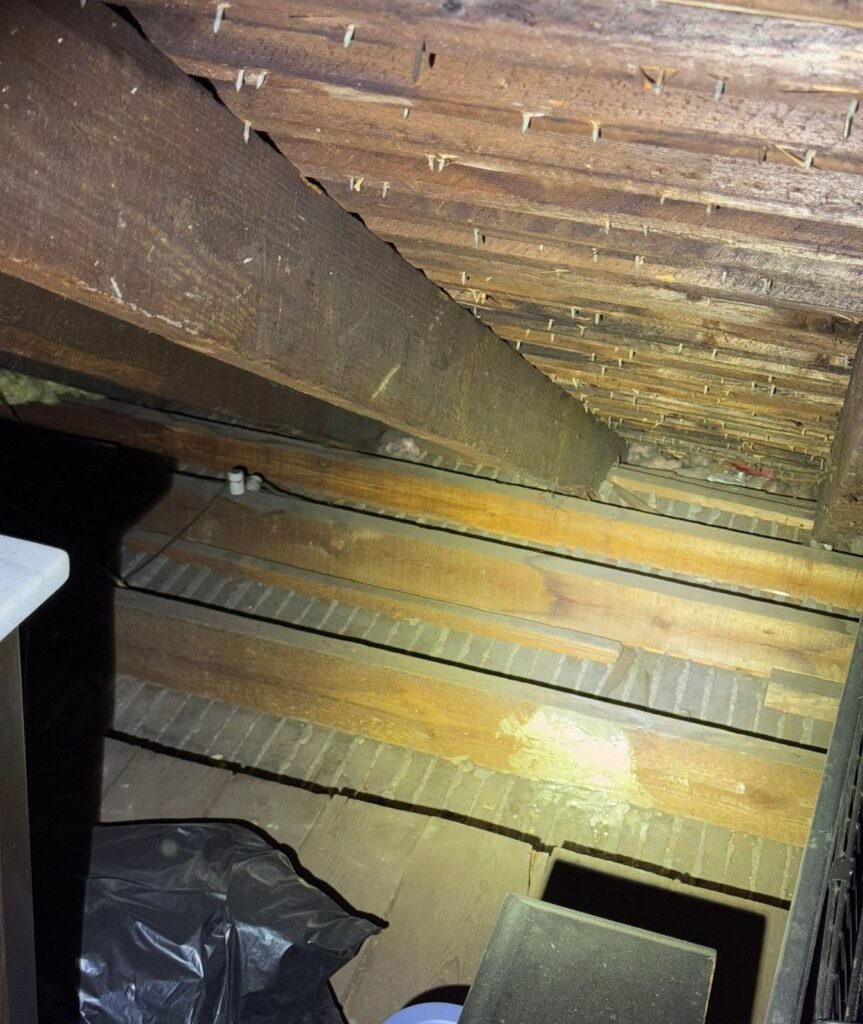
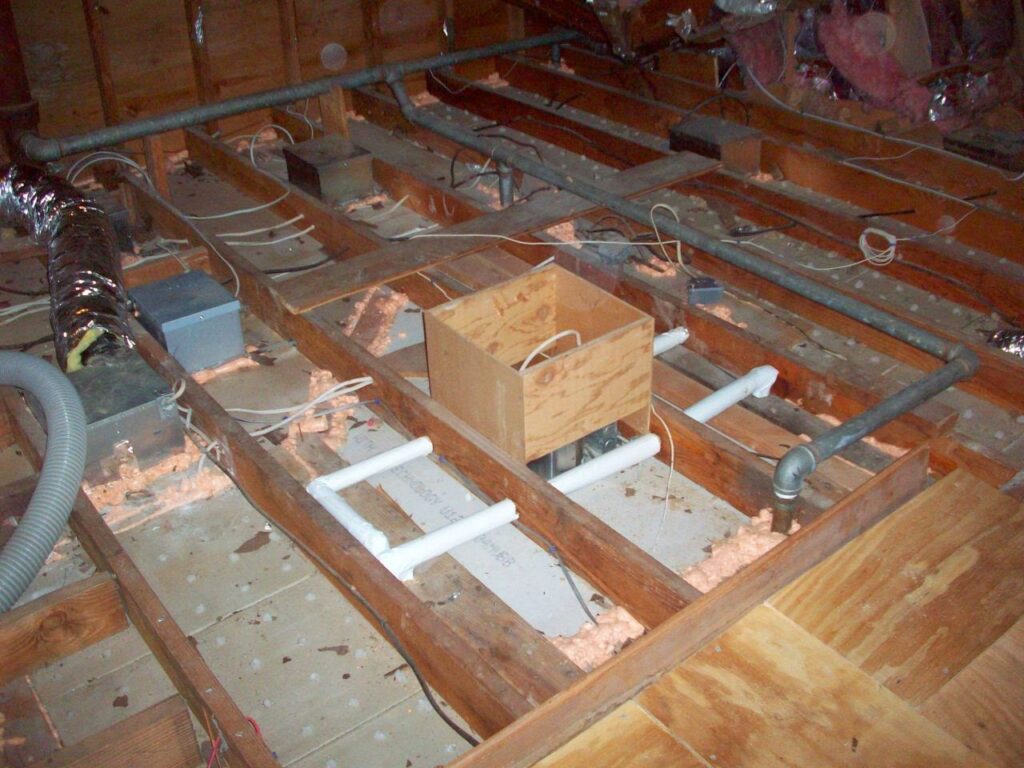
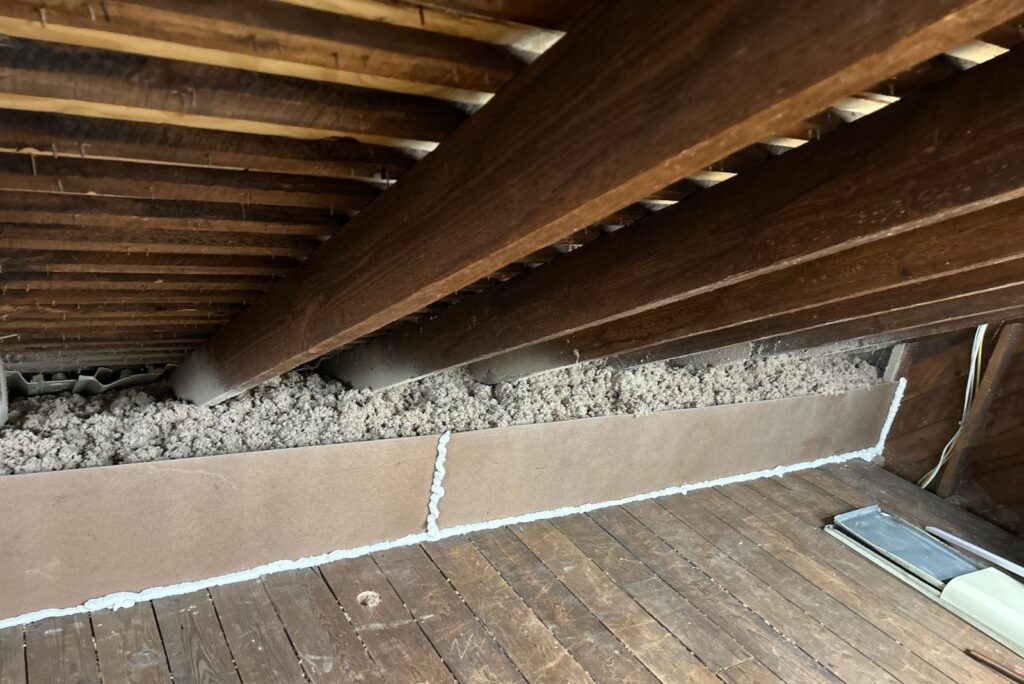
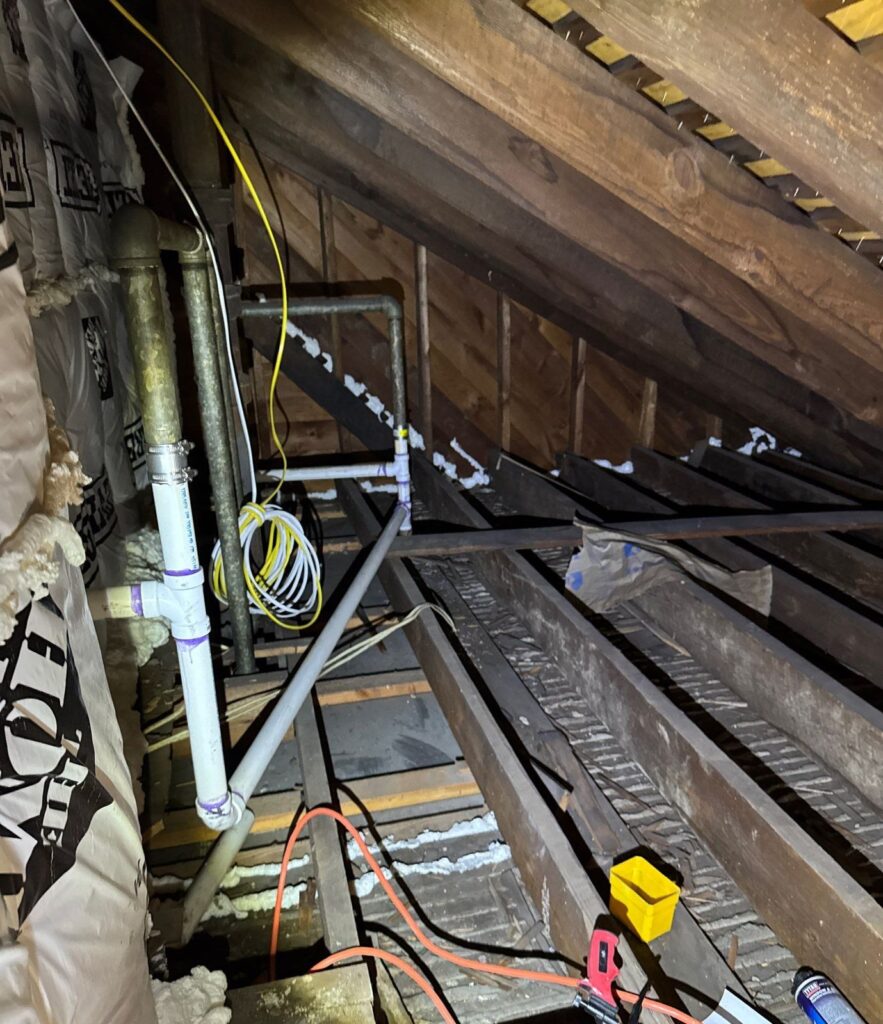
Our photos, from our attics. The housing stock of Westchester and Bergen County is practically designed for ice dams.
home
Cape Cods and finished attics
Knee walls with nothing behind them and sloped ceilings with an inch of batt. The ice forms in a line below the knee wall on both sides of the house, every winter.
home
Split levels and raised ranches
The attic hatch in a bedroom closet with no weatherstrip, a hallway of recessed lights, and a bath fan venting into the attic. Bald spot on the roof over the bathroom by noon.
home
Additions and dormers
Where the new roof meets the old, the insulation usually stops and the air sealing never started. The dam forms in the valley.
The Ice Dam Fix Is NYSERDA Comfort Home Package A
Attic air sealing and insulation is exactly the scope NYSERDA's Package A pays for. We do this work in Scarsdale, Larchmont, Rye, Bronxville, White Plains, Tarrytown, Chappaqua, Katonah, Bedford, Somers and Yorktown in Westchester; across Rockland, Orange and Dutchess; and in Mahwah, Ramsey, Ridgewood, Wyckoff, Franklin Lakes and the rest of Bergen County, along with Essex, Passaic and Hudson counties in New Jersey.
Metro NY Insulation is a NYSERDA participating contractor and BPI accredited. We file the paperwork. New York only — New Jersey homes go through Home Performance with ENERGY STAR, which has its own incentive structure, and we work in both states.
Westchester County, NY
Rockland County, NY
Orange County, NY
Dutchess County, NY
Bergen County, NJ
Essex County, NJ
Passaic County, NJ
Hudson County, NJ
Comfort Home Package A
$2,500 — attic and rim joist
Air sealing plus insulation to R-49 in the attic, and the rim joist in the basement. The attic half of this is the ice dam fix.
Comfort Home Package B
$3,000 — adds walls or floor
If the house also needs the walls dense-packed or the crawl space or basement walls insulated, the project moves to Package B. We confirm which package your home falls under during the assessment.
Westchester bonus · through December 31, 2026
Up to $5,000 combined
Westchester homeowners add $2,000 as Con Edison customers, or $1,000 on other utilities, on top of their Comfort Home package. Con Edison's own Weather Ready program is closed; this adder is fulfilled by NYSERDA.
The Work Behind the Fix
Ice dam prevention is attic work. These are the pages for each part of it.
roofing
Attic Air Sealing
Step one. Every top plate, light, hatch and chase sealed before any insulation goes in.
layersAttic Insulation
Dense-pack cellulose to R-49, baffled at the eaves, over a sealed floor.
stairsKnee Wall Insulation
The Cape Cod fix: foam behind the knee walls and on the sloped ceilings where the ice forms.
speedHome Energy Assessment
The blower door and infrared pass that find the leaks the roof has been showing you.
Ice Dam Questions
Fix It Before the First Snow
A blower door test and an infrared pass through the attic show exactly where the heat that melts your roof is coming from. We will tell you what to seal, how much insulation the attic needs, and which NYSERDA package it falls under.