
How to Prevent Frozen Pipes: Insulate the Wall, Not Just the Pipe
Pipes do not freeze because the house is cold. They freeze because the cavity they run through is cold: an empty exterior wall, a leaking rim joist, a vented crawl space. We find the cold cavities with an infrared camera and bring them inside the house with dense-pack cellulose and closed-cell foam.
workspace_premiumBPI Accredited
ecoNYSERDA Participant
diversity_1Woman Owned, Family Run
verifiedServing NY & NJ since 2005
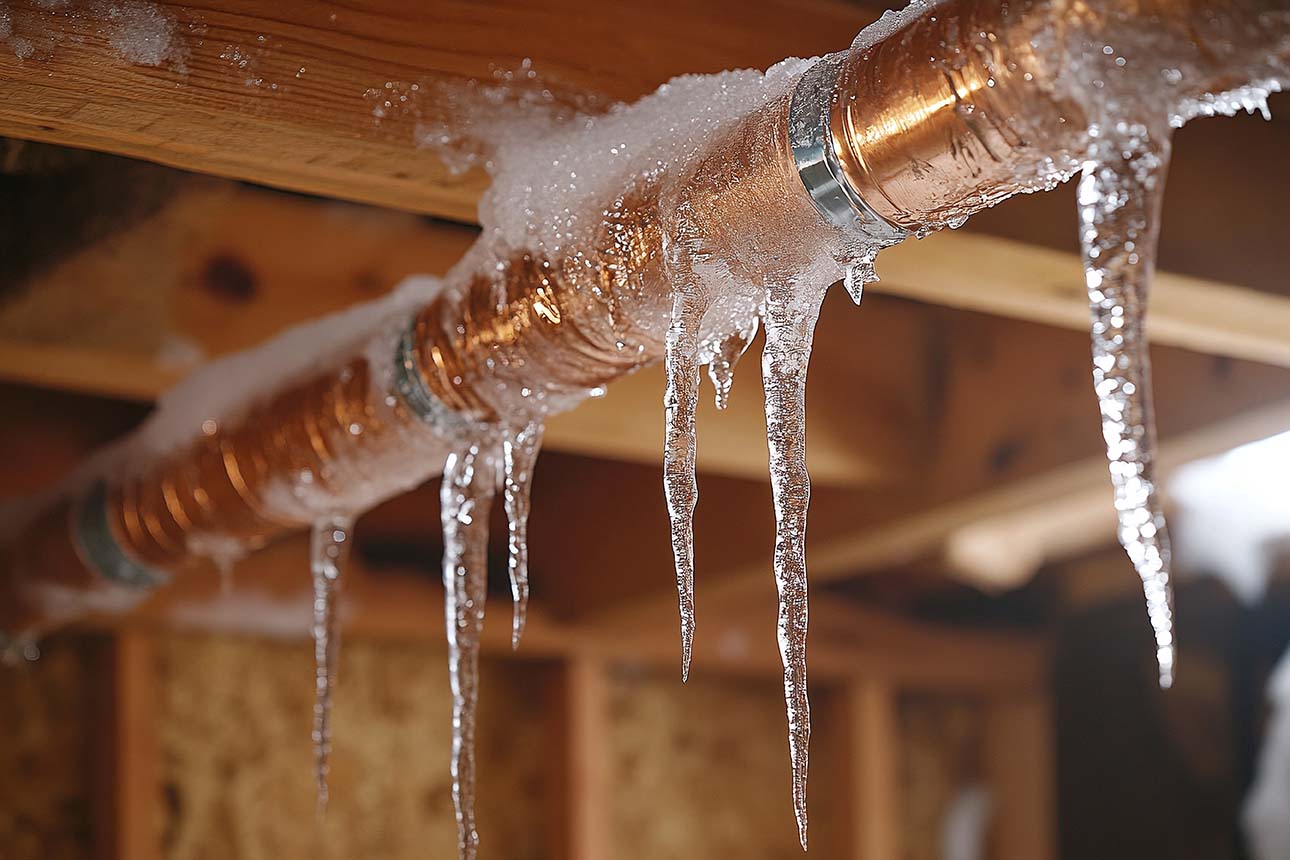
The risk line for uninsulated pipes
About 20°F outside
A pipe freezes when the air around it stays below 32°F long enough to pull the heat out of the water. Inside a house, that air is in the wall cavities, the rim joist bays, the crawl space and the garage ceiling, and those spaces are only as warm as the insulation and air sealing between them and the outdoors. A foam sleeve on the pipe slows the loss. A dripping faucet keeps the water moving. Neither one warms the cavity, which is why the same pipe freezes again the next cold snap.
This page covers why pipes freeze even with the heat running, at what temperature it happens, where the vulnerable pipes are in the houses around here, what the temporary fixes are worth, and what the permanent one involves. If a pipe is frozen right now, skip to what to do this hour.
Why Pipes Freeze Even When the Heat Is On
The thermostat measures the hallway. The pipe is somewhere the thermostat has never been.
thermostat
The cavity is outside the heat
Heat from a radiator or a register warms the room. It reaches the inside face of the drywall and, through an uninsulated wall, keeps going straight out. The cavity in between settles somewhere between the room and the outdoors, and on a 10-degree night that is well below freezing. The pipe is in the cavity.
air
Cold air is moving across the pipe
Still cold air is one thing. Moving cold air is what actually freezes pipes fast. Gaps at the sill plate, the rim joist, the hose bib, an outside outlet or the back of a kitchen cabinet let outdoor air blow through the cavity, which is why the kitchen sink line freezes at the same outdoor temperature every year and nothing else does.
layers
The insulation is on the wrong side
In a lot of older houses the batts, if there are any, were stuffed between the pipe and the room. That insulates the pipe from the heat and leaves it exposed to the cold side of the wall. It is the most common thing we find when we open a wall that has frozen twice.
At What Temperature Do Pipes Freeze?
Not 32°F outside. The number that matters is the temperature of the space the pipe is in, and how long it stays there.
device_thermostat
The rule of thumb: about 20°F outdoors
The threshold plumbers and the Building Research Council use for uninsulated pipes in unheated spaces is an outdoor temperature around 20°F. Below that, a pipe in an empty wall or an open crawl space is at real risk, and the risk climbs fast in the single digits. Wind lowers the number, because it forces cold air through the wall.
In Westchester and Bergen County that is a handful of nights most winters and a couple of weeks in a bad one. The houses that freeze are the ones where the pipe's cavity tracks the outdoor temperature. The houses that do not are the ones where the cavity tracks the room.
schedule
Time matters as much as temperature
A pipe does not freeze the moment the cavity hits 32°F. It takes hours of sustained cold to pull enough heat out of the water, which is why most freezes happen in the early morning after a long night, and why the second and third night of a cold snap are worse than the first: the wall has had time to get cold all the way through.
That lag is also what insulation buys you. A dense-packed wall or a foamed rim joist does not make the cavity warm; it makes the cavity lose heat slowly enough that the night ends before the pipe does.
Where Pipes Freeze in the Houses Around Here
The same six places, in the same kinds of houses, every winter.
countertops
Kitchen sink on an outside wall
The supply lines sit against the sheathing behind a cabinet that blocks room heat. First pipe to freeze in most houses.
bathtub
Bathroom on an exterior wall
Tub and shower valves in the outside wall, often with the batts stuffed on the room side of the pipe.
foundation
Rim joist and basement ceiling
Lines running along the top of the foundation wall, an inch from the sill plate gap and the joist ends that leak air. Rim joist →
water_damage
Crawl spaces
Pipes in a vented crawl space are outdoors. The floor above is cold, the pipes freeze, and the fiberglass hanging from the joists does nothing. Crawl space insulation →
garage
Rooms over garages
A bathroom over an attached garage has its plumbing in a floor that is heated on one side and at garage temperature on the other. Cantilevered floors and bay windows, same problem.
home
Older and balloon-framed houses
Pre-1950 houses with empty walls, and balloon framing where the stud cavities run open from the basement to the attic, so cold air travels straight up past every pipe on the way.
Temporary Fixes and the Permanent One
Everything on the top of this table is worth doing on a cold night. Nothing on it changes the next cold night.
How We Stop Pipes From Freezing
Find the cold cavity, close it to outdoor air, fill it with insulation, and prove the difference.
1
Find the plumbing with the camera
On a cold day the infrared camera shows the pipe runs as cold stripes on the wall and the air leaks as cold plumes at the sill, the outlets and the cabinet backs. A blower door makes the leaks show up harder. We map every cavity with plumbing in it before anything is opened.
2
Air seal the rim joist and penetrations
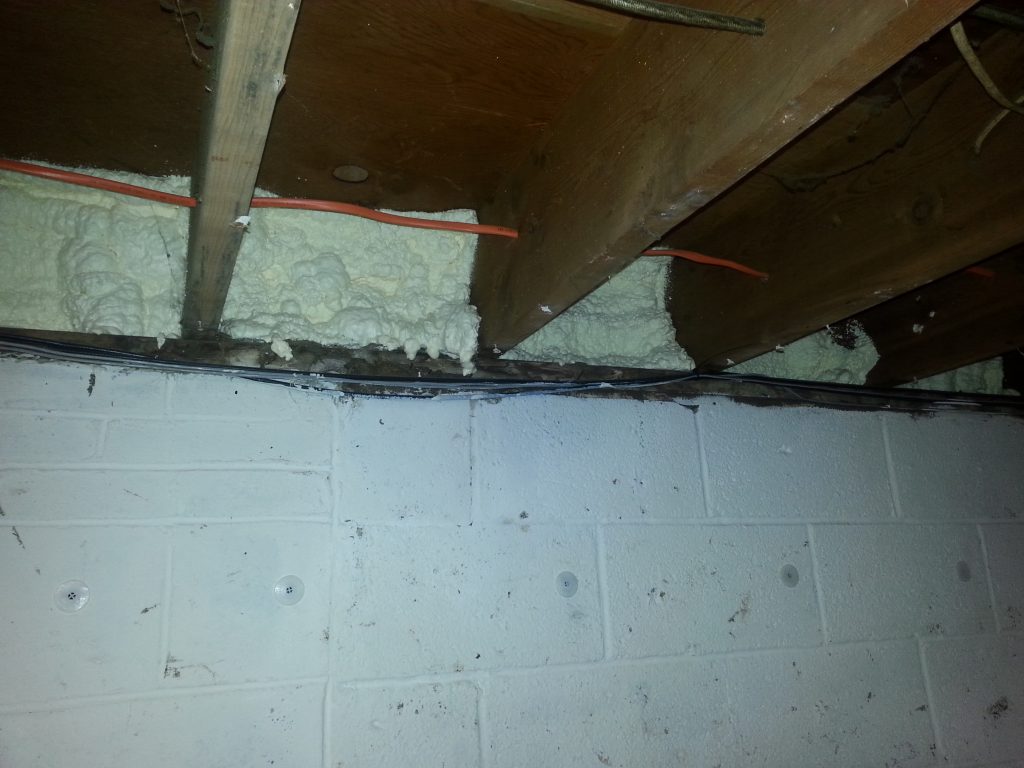
Closed-cell foam across the rim joist bays and the sill, and around every hose bib, dryer vent, line set and wire where it comes through the wall. This stops the moving cold air, which is the fast way pipes freeze. Rim joist insulation →
3
Dense-pack the exterior walls
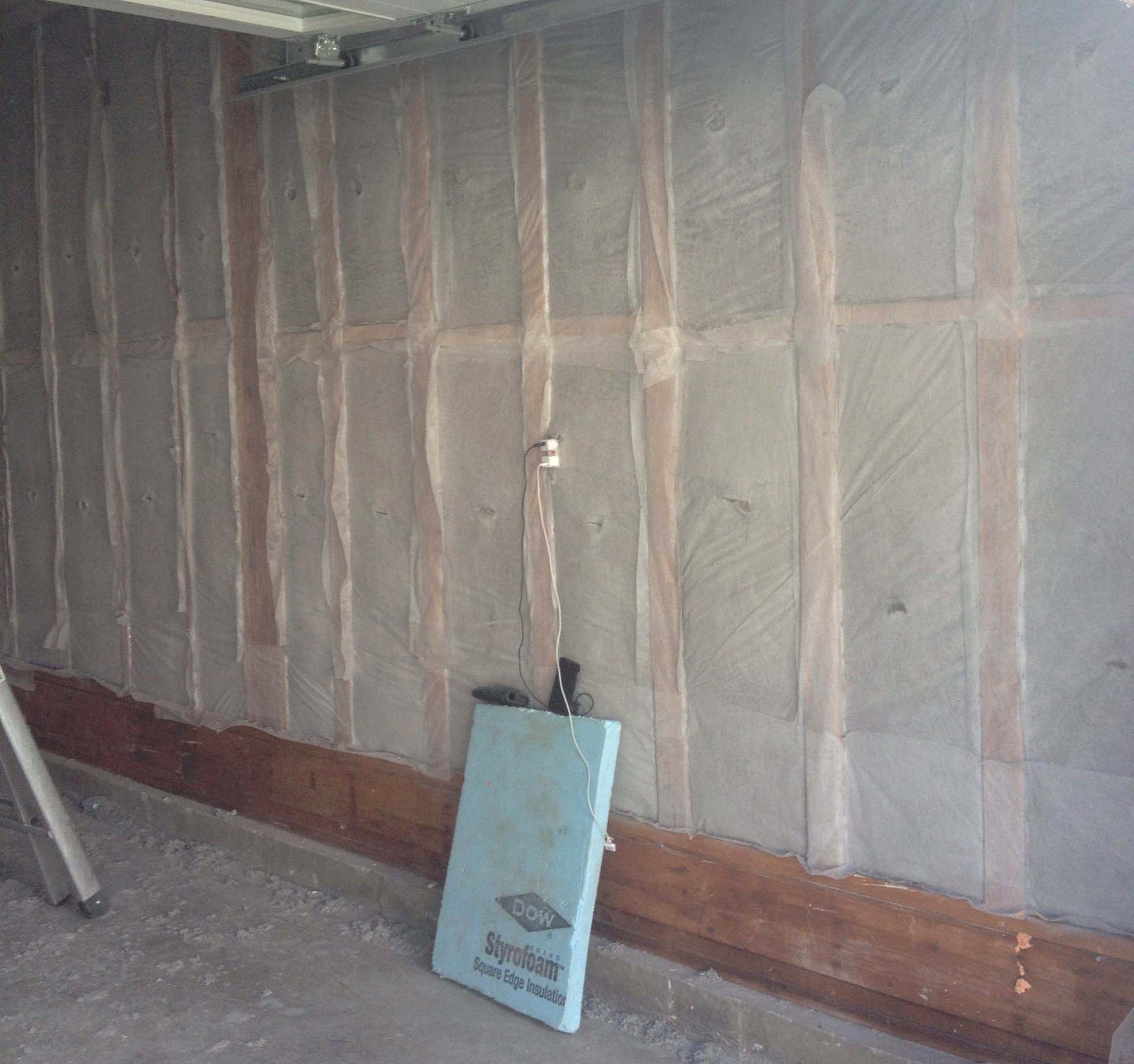
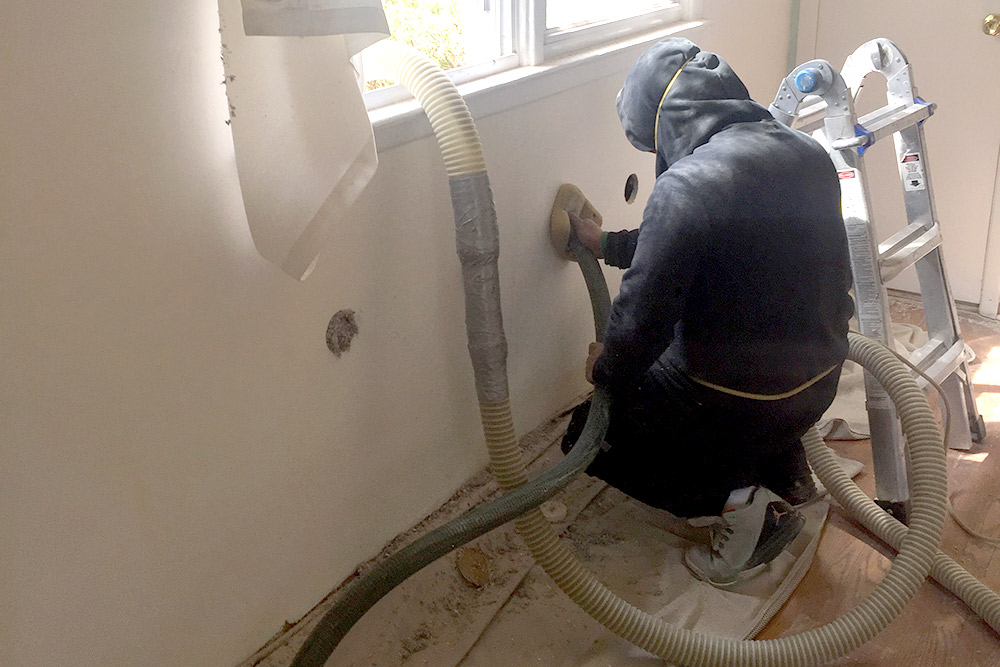
Cellulose blown into each stud bay at a density that fills it completely, around the pipe, from the outside through small plugged holes or from inside. The pipe ends up buried in insulation on the cold side and open to the room on the warm side. Exterior dense-pack →
4
Bring the crawl space inside
Foam on the crawl space walls and the vents sealed, so the pipes down there are in a space that stays above freezing instead of one that tracks the weather. Crawl space insulation →
5
Garage ceilings and cantilevers
Closed-cell foam on the garage ceiling under a bathroom, and the cantilever or bay window floor opened and foamed, so the plumbing above is on the heated side.
6
Verify and file
A second blower door reading and a second look with the camera. For New York homes the paperwork goes to NYSERDA. If a pipe is genuinely routed through a space that cannot be enclosed, we say so and recommend a plumber reroute it; that is the honest answer for a small share of houses.
If a Pipe Is Frozen Right Now
The order of operations in the next hour. Then, when it thaws, the fix above.
valve
1. Find the main shutoff
Know where it is before you need it. If the pipe has split, the water only comes once it thaws, and you want the valve closed before that happens.
water_drop
2. Open the faucet
Open the tap the frozen line feeds. It relieves pressure as the ice expands and lets you see the moment flow returns.
heat
3. Warm it gently
A hair dryer, a heating pad, warm towels, a space heater aimed at the wall, working from the faucet back toward the frozen section. No torches, no open flame, ever.
plumbing
4. Call a plumber if it split
If the pipe bulged, cracked, or water appears once it thaws, close the main and call a plumber. Then call us, because the same pipe will freeze next month otherwise.
The Work That Keeps Pipes Above Freezing
Our photos, from our jobs. These are the cavities that were freezing pipes.

The Same Work Is What NYSERDA Comfort Home Pays For
Frozen pipes are a symptom of the same leaks and empty cavities that drive up a heating bill, so the fix is the same scope NYSERDA incentivizes. We do this work in Yonkers, New Rochelle, Mount Vernon, Pelham, Eastchester, Scarsdale, White Plains, Ossining, Croton-on-Hudson, Peekskill and the rest of Westchester; across Rockland, Orange and Dutchess; and in Mahwah, Ramsey, Ridgewood, Wyckoff, Franklin Lakes, Paramus and the rest of Bergen County, along with Essex, Passaic and Hudson counties in New Jersey.
Metro NY Insulation is a NYSERDA participating contractor and BPI accredited. We file the paperwork. New York only — New Jersey homes go through Home Performance with ENERGY STAR, which has its own incentive structure, and we work in both states.
Westchester County, NY
Rockland County, NY
Orange County, NY
Dutchess County, NY
Bergen County, NJ
Essex County, NJ
Passaic County, NJ
Hudson County, NJ
Comfort Home Package A
$2,500 — attic and rim joist
Foaming the rim joist, where basement pipes freeze, is part of Package A along with the attic.
Comfort Home Package B
$3,000 — adds walls or floor
Dense-packing the exterior walls, or insulating the crawl space or basement walls, is the wall-and-floor scope that moves a project to Package B. We confirm which package your home falls under during the assessment.
Westchester bonus · through December 31, 2026
Up to $5,000 combined
Westchester homeowners add $2,000 as Con Edison customers, or $1,000 on other utilities, on top of their Comfort Home package. Con Edison's own Weather Ready program is closed; this adder is fulfilled by NYSERDA.
The Jobs Behind the Fix
Frozen pipe prevention is wall, rim joist and crawl space work. These are the pages for each.
layers
Wall Insulation
Dense-pack cellulose for the empty exterior walls of older Westchester and Bergen County houses.
foundationRim Joist Insulation
The leakiest few inches of the house, and where most basement pipes freeze.
water_damageCrawl Space Insulation
Walls, not floor: bringing the crawl space and everything running through it inside the envelope.
speedHome Energy Assessment
The blower door and infrared pass that find the cold cavities before the pipes do.
Frozen Pipe Questions
Find the Cold Cavities Before January Does
An infrared pass on a cold day shows every pipe run and every air leak on the walls. We will tell you which cavities are at risk, what it takes to bring them inside, and which NYSERDA package the work falls under.