
Crawl Space Insulation Contractor in Westchester & Northern NJ
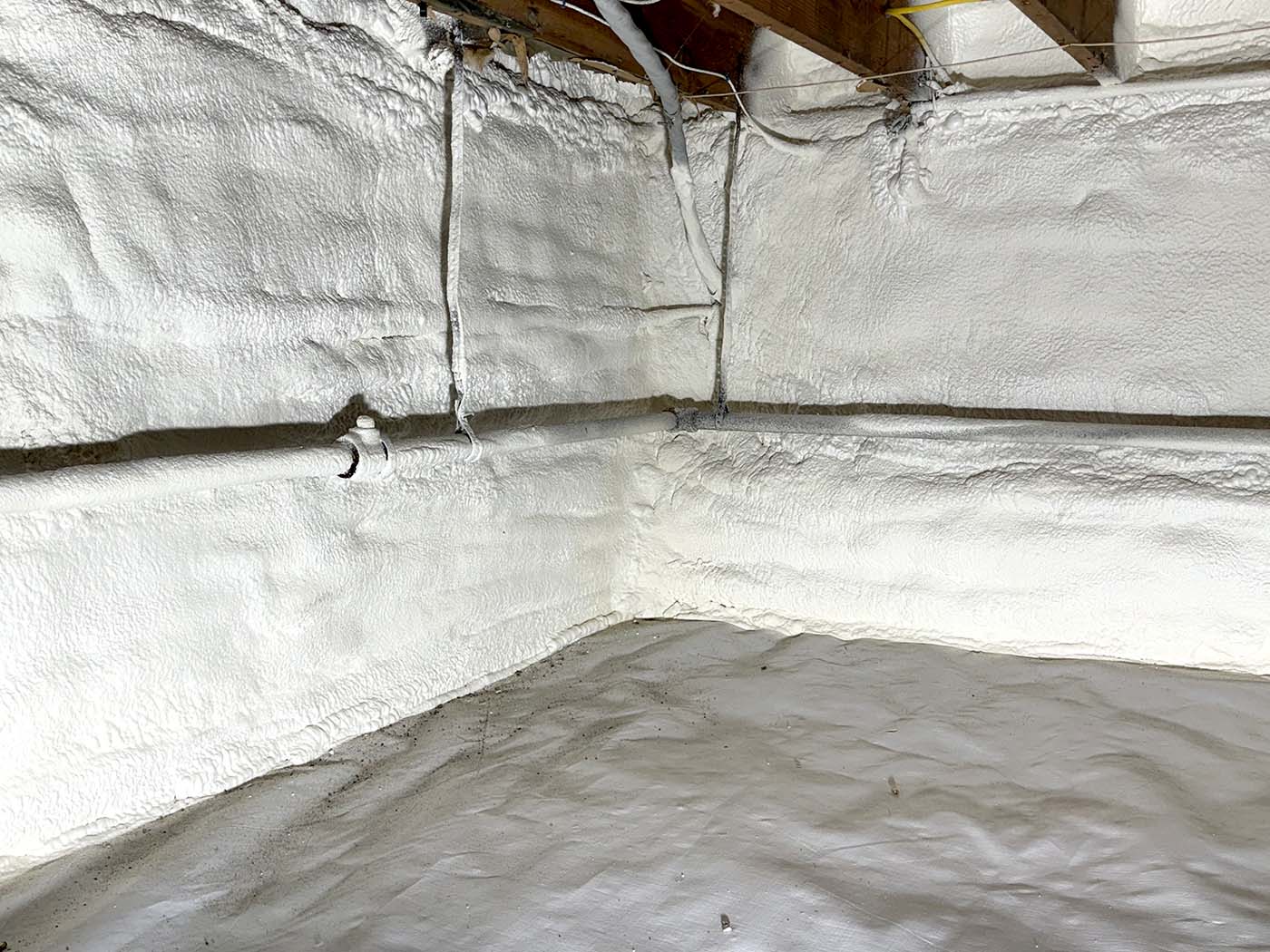
Most crawl spaces around here were insulated with fiberglass batts between the floor joists, and twenty years on the batts are hanging, wet or on the dirt. We remove what has failed, air seal the rim joist and insulate the foundation walls with closed-cell spray foam, where it stays dry.
workspace_premiumBPI Accredited
ecoNYSERDA Participant
diversity_1Woman Owned, Family Run
verifiedServing NY & NJ since 2005
Where the insulation goes
The walls, not the floor
Crawl space insulation is really a decision about where the bottom of your house's thermal boundary goes. You can insulate the floor above the crawl space and leave the space itself outdoors, or you can insulate the crawl space walls and bring the space inside. Both are allowed by code. In the Hudson Valley and northern New Jersey climate, only one of them keeps working past the first few summers.
This page is about the insulation itself: walls versus floor, closed-cell foam versus rigid board versus fiberglass, what to do with what is already down there, and what NYSERDA contributes. If your crawl space is also damp, smells, or has had water in it, and you want the whole space sealed, lined and dried, that is a full crawl space encapsulation, which we cover on its own page.
Walls or Floor: Where the Insulation Goes
The single decision that determines whether crawl space insulation works here or fails. Everything else follows from it.
vertical_align_top
Insulate the floor (vented crawl space)
Batts between the floor joists, vents left open, the crawl space stays outdoors. This is how nearly every ranch, split-level and raised ranch in Westchester and Bergen County was built, and it is the insulation we most often find on the ground when we open the hatch.
Why it fails here: humid summer air comes through the vents and the fiberglass soaks it up, loses most of its R-value, gets heavy and lets go of the staples. Every duct, water line and drain in the space stays outside the insulation, so the ducts leak conditioned air and the pipes are the ones that freeze. And fiberglass does not stop air, so the floor keeps leaking at every plumbing and wiring hole no matter how thick the batts are.
When it is still the right call: the vents cannot be closed, the space floods, or nothing runs through it. Then we insulate between the joists with a material that tolerates moisture and air seal the subfloor first.
foundation
Insulate the walls (sealed crawl space)
Closed-cell spray foam on the foundation walls and across the rim joist, vents closed and sealed, a vapor retarder over the dirt, and the underside of the floor left bare. The crawl space becomes a short basement: cool, dry, and inside the house.
Why it works here: the walls are a fraction of the surface area of the floor, so there is far less to insulate and nothing to fall down. Foam does not absorb moisture. The ducts and pipes end up inside the envelope, which is worth as much as the insulation itself in a house with the air handler down there. And because foam air seals as it insulates, the floor above stops being the coldest surface in the house.
Our recommendation for nearly every home in Westchester, Rockland and Bergen County. It is also the scope NYSERDA treats as wall insulation under Comfort Home Package B.
Why the Fiberglass Under Your Floor Failed
It is not that it was installed badly. Fiberglass between the joists of a vented crawl space fails on schedule in this climate.
water_drop
It got wet
July air at 70 percent humidity comes through the vents and meets a subfloor that is twenty degrees cooler. It condenses in the batts. Wet fiberglass insulates about as well as a wet sweater, and the kraft paper facing holds the moisture against the joists, which is where the staining and the soft wood come from.
arrow_downward
It fell
Water is heavy, staples are small, and gravity does not stop. Batts hanging from the joists in a U shape, or lying on the dirt, is the single most common thing we photograph during a crawl space assessment. An insulation batt that has pulled away from the subfloor is doing nothing at all.
air
It never stopped the air
Fiberglass slows heat, not air. The floor over a vented crawl space has a hole for every drain, supply line, wire and duct boot, and the house pulls air up through all of them. The batts were losing to that draft even when they were new and dry. That is why the floor felt cold with insulation in it.
delete_sweep
Removing the old insulation is part of the job
Wet, stained, sagging or mouse-damaged fiberglass comes out before anything new goes in. We bag it in the crawl space and carry it out; it does not get pushed into a corner. Dry batts still tight to the subfloor can sometimes stay when the walls are being foamed, but in most of the crawl spaces we open in this area they are past that point.
Which Insulation Belongs in a Crawl Space
A crawl space is damp, irregular and hard to reach. The material has to handle all three.
Code for our climate zones asks for continuous insulation on crawl space walls that closed-cell foam reaches in a couple of inches. We size the thickness to the zone and the house during the assessment.
How We Insulate a Crawl Space
Usually one day on site for a typical ranch or split-level, two if there is a lot to take out first.
1
Assess and decide walls or floor
A blower door on the house, moisture readings in the joists and sill, a look at what is running through the space and what the vents can do. This is where the walls-or-floor call gets made and where we tell you if there is a water problem that needs a waterproofer first.
2
Remove the failed insulation
Old fiberglass, debris, and anything wet or chewed is bagged and carried out. Joists get checked while they are exposed. The space is left clean and bare so the foam has something to bond to.
3
Seal the vents, rim joist and penetrations
Foundation vents are closed and sealed from inside. Every pipe, wire, duct and dryer vent through the walls and rim gets sealed individually. The rim joist bays are foamed; this is the same rim joist work we do in basements.
4
Foam the walls
Closed-cell spray foam from the sill down the foundation wall to the floor, in one continuous layer with the rim joist above it. Where the floor approach is the right one instead, this is where the subfloor gets air sealed and the joist bays insulated.
5
Cover the ground
A vapor retarder over the exposed dirt, lapped up the walls and sealed at the foam. An unvented crawl space needs one by code. If the space also needs a sealed liner and a dehumidifier, that is the point where the job becomes an encapsulation.
6
Verify and file
A second blower door reading to show what the air sealing did, which goes in your file and on the NYSERDA paperwork we submit for New York homes. New Jersey homes go through Home Performance with ENERGY STAR.
Crawl Spaces We Have Insulated
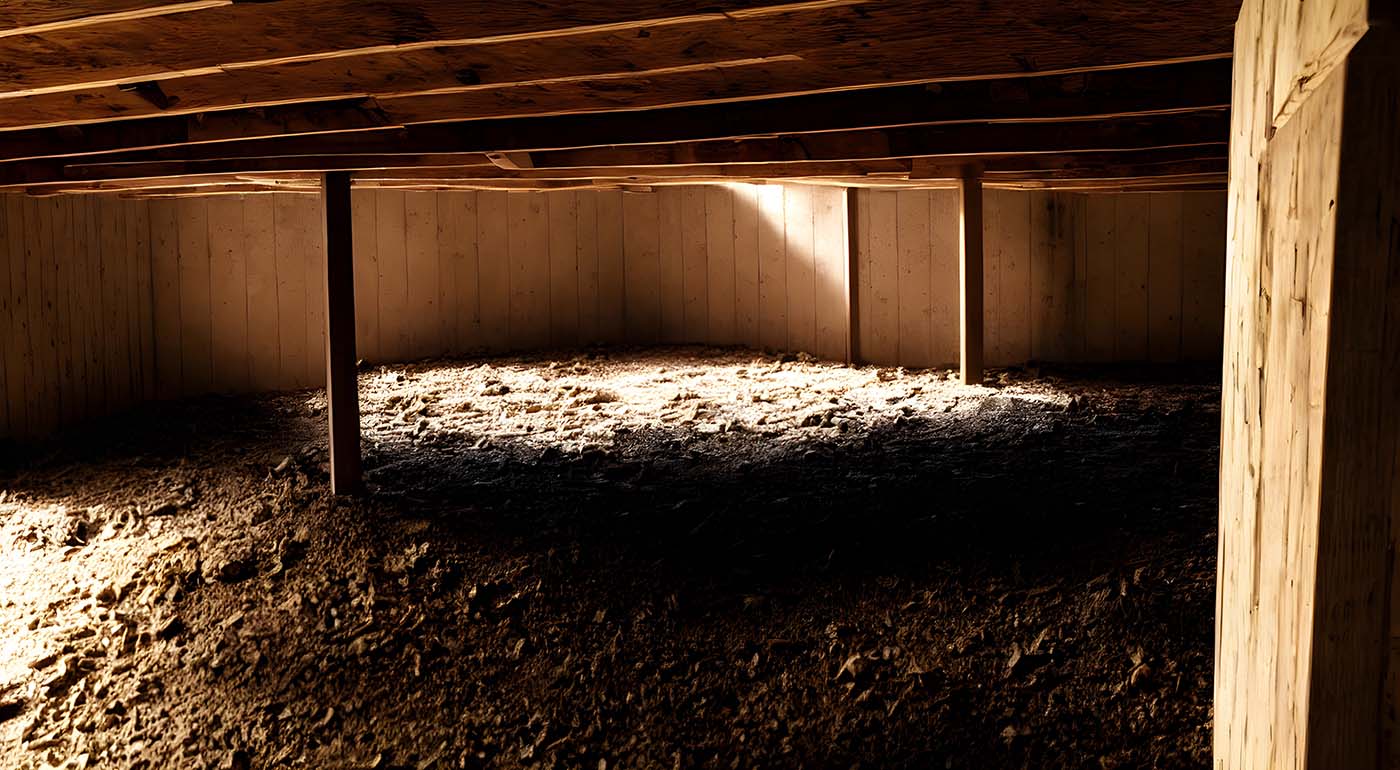
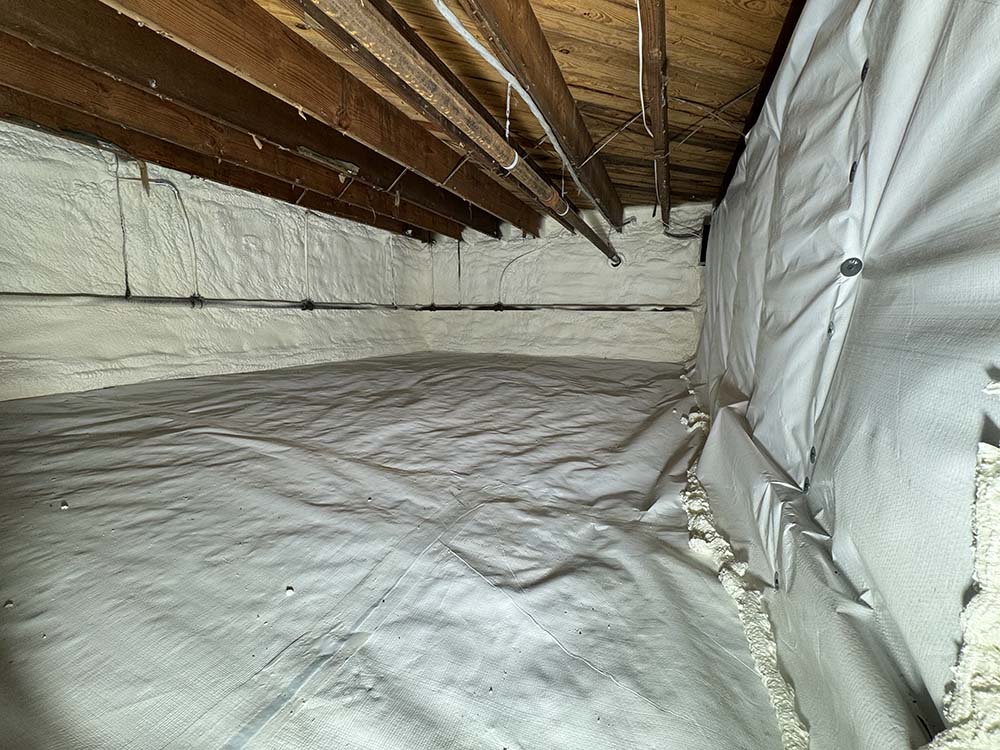
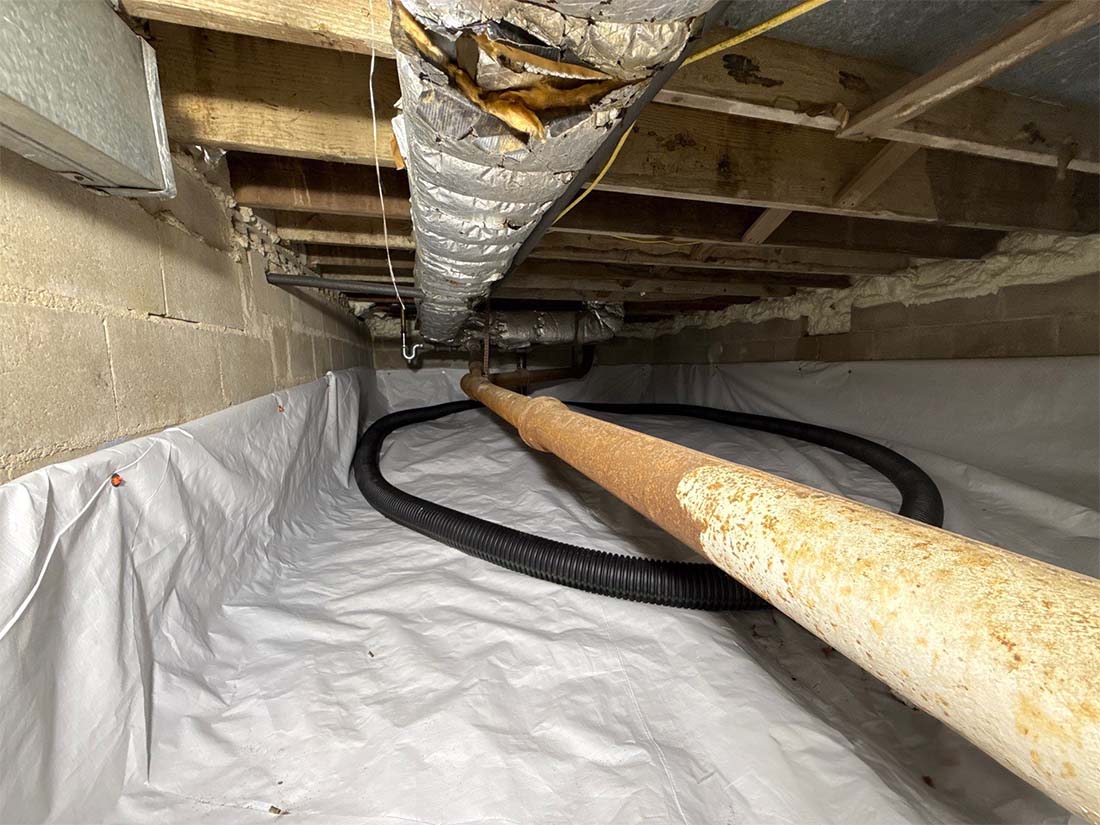
Our photos, from our jobs in Westchester and northern New Jersey. The one at the top of the page is a finished wall job.

Crawl Space Walls Are the Scope That Moves You to Package B
We insulate crawl spaces in Mamaroneck, Larchmont, Harrison, Pelham, Eastchester, Ardsley, Dobbs Ferry, Irvington, Croton-on-Hudson, Somers and Katonah in Westchester; across Rockland, Orange and Dutchess; and in Mahwah, Ramsey, Ridgewood, Franklin Lakes, Wyckoff and Paramus in Bergen County, along with Essex, Passaic and Hudson counties in New Jersey.
Metro NY Insulation is a NYSERDA participating contractor and BPI accredited. We file the paperwork. New York only — New Jersey homes go through Home Performance with ENERGY STAR, which has its own incentive structure, and we work in both states.
Westchester County, NY
Rockland County, NY
Orange County, NY
Dutchess County, NY
Bergen County, NJ
Essex County, NJ
Passaic County, NJ
Hudson County, NJ
Comfort Home Package A
$2,500 — attic and rim joist
The rim joist at the top of the crawl space wall is part of this. It gets sealed and foamed in step three of every crawl space job.
Comfort Home Package B
$3,000 — adds walls or floor
Insulating the crawl space walls, or the floor above the crawl space, is the wall-and-floor scope that moves a project to Package B. We confirm which package your home falls under during the assessment.
Westchester bonus · through December 31, 2026
Up to $5,000 combined
Westchester homeowners add $2,000 as Con Edison customers, or $1,000 on other utilities, on top of their Comfort Home package. Con Edison's own Weather Ready program is closed; this adder is fulfilled by NYSERDA.
Insulation or Encapsulation?
Two related jobs that get confused. Here is the line between them and how to tell which one your crawl space needs.
Crawl space insulation (this page)
- check_circleOld insulation removed
- check_circleVents, rim joist and penetrations sealed
- check_circleClosed-cell foam on the walls (or the floor where walls are not possible)
- check_circleVapor retarder over the ground
- check_circleBlower door before and after
Right for: a dry crawl space with cold floors, high bills, failed batts, or pipes and ducts that need to come inside the envelope.
Crawl space encapsulation
- check_circleEverything on the left
- add_circleHeavy reinforced liner sealed up the walls and around every column and pipe
- add_circleDehumidifier plumbed to a drain, or a conditioned air supply
- add_circleMoisture readings in the framing before and after
Right for: a crawl space that is damp, smells, shows mold or staining, or has ever had water in it. Read about encapsulation →
The Rest of the Bottom of the House
Crawl space walls are one piece of the envelope. These are the jobs that usually go with them.
shield
Crawl Space Encapsulation
The full seal-line-and-dry version, for crawl spaces with a moisture problem as well as an insulation problem.
foundationRim Joist Insulation
The band of framing on top of the crawl space or basement wall. The leakiest few inches in the house, and part of NYSERDA Package A.
layersSpray Foam Insulation
Why closed-cell foam is the material for below-grade walls, and where open-cell and cellulose fit instead.
thermostatWhy Your Floors Are Cold
The longer explainer on what a cold first floor is telling you about the crawl space or basement under it.
Crawl Space Insulation Questions
Find Out What Is Under Your Floor
A blower door test, moisture readings and photos of what is actually down there. We will tell you whether the walls or the floor is the right boundary, what should come out, and which NYSERDA package the work falls under.