
Crawl Space Encapsulation Contractor Serving Westchester & North Jersey
A vented crawl space in this climate pulls humid summer air in to condense on the pipes and framing, and makes the floor above it the coldest surface in the house all winter. We seal it, insulate the walls and rim joist with closed-cell foam, line it, dry it and measure the result.
workspace_premiumBPI Accredited
ecoNYSERDA Participant
diversity_1Woman Owned, Family Run
verifiedServing NY & NJ since 2005
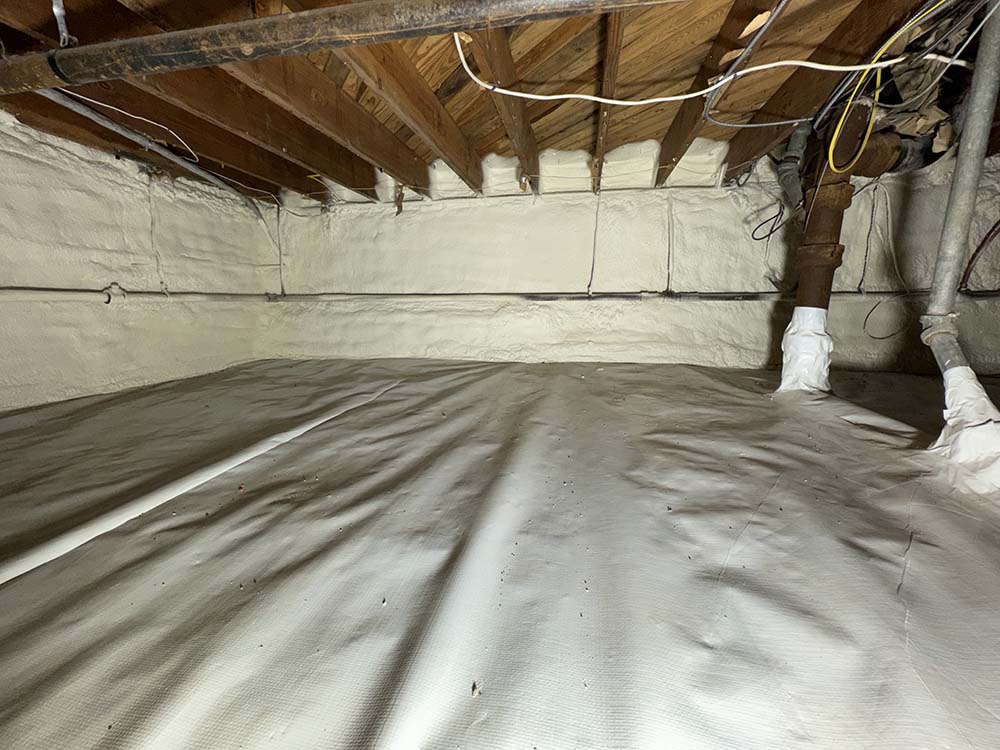
A complete encapsulation
Sealed · Insulated · Lined · Dried
Crawl space encapsulation seals the space under your house off from the ground and the outdoors and brings it inside the building envelope. The foundation vents and every penetration get closed and sealed, the walls and rim joist get insulated with closed-cell spray foam, a heavy vapor barrier goes down across the ground and up the walls, and a dehumidifier keeps the sealed space dry. The crawl space stops behaving like the outdoors and starts behaving like a basement.
Most of the companies that sell this in Westchester and Bergen County are waterproofers, and they treat it as a moisture job. We treat it as what it also is: the largest uninsulated, unsealed surface in the house. Done as energy work, by a BPI-accredited participating contractor, it is measured with a blower door before and after and it is eligible for NYSERDA Comfort Home incentives. Done as a moisture job, it is not.
What a Vented Crawl Space Does to Your House
Crawl spaces were vented on the theory that outside air would dry them out. In a Hudson Valley summer, outside air is the moisture.
water_drop
The musty smell and the mold
July air at 70% humidity comes through the vents and hits pipes, ducts and joists that are twenty degrees cooler. It condenses. Wet wood grows mold, the mold smell rises into the living room, and over enough summers the joists start to soften.
thermostat
Cold floors and the bill that goes with them
In January the vents let the crawl space drop toward outdoor temperature, and the floor above it becomes the coldest surface in the house. Warm air escaping through the attic pulls replacement air up from the crawl space, so the whole first floor is being fed from below.
hvac
Everything that lives down there
Ductwork, water lines, the air handler in a lot of split-levels and ranches. Ducts running through a crawl space that is outdoors in all but name lose conditioned air on every cycle, and the pipes are the ones that freeze.
Vapor Barrier, Waterproofing, or Encapsulation
Three different jobs get sold under the same name. Here is what each one actually includes and who should be doing it.
If water is coming in, call a waterproofer first and then call us. If the problem is damp air, a smell, cold floors and bills, encapsulation is the job, and it is the one we do. If the space is dry and the problem is only cold floors and failed batts, crawl space insulation on its own may be all it needs.
How We Encapsulate a Crawl Space
Usually one to two days on site, depending on the size of the space and what has to come out of it first.
1
Assess and measure
Moisture readings in the joists and sill, a look at drainage and grading, a blower door on the house. If there is liquid water, we tell you that needs a waterproofer before anything else.
2
Clear and prepare
Old fiberglass hanging from the joists comes out, along with debris and anything wet. Damaged or moldy material is removed and the space is left clean and bare.
3
Seal the vents and penetrations
Foundation vents are closed and sealed from inside. Every pipe, wire, duct and dryer vent through the walls and rim gets sealed individually.
4
Foam the walls and rim joist
Closed-cell spray foam on the foundation walls and across the rim joist bays. It insulates, air seals and acts as the vapor retarder in one layer, and it does not hold moisture the way batts do.
5
Line the ground
A heavy reinforced vapor barrier across the entire floor, seams taped, run up the walls and sealed to the foam, wrapped and sealed around every column and pipe.
6
Dry it and verify
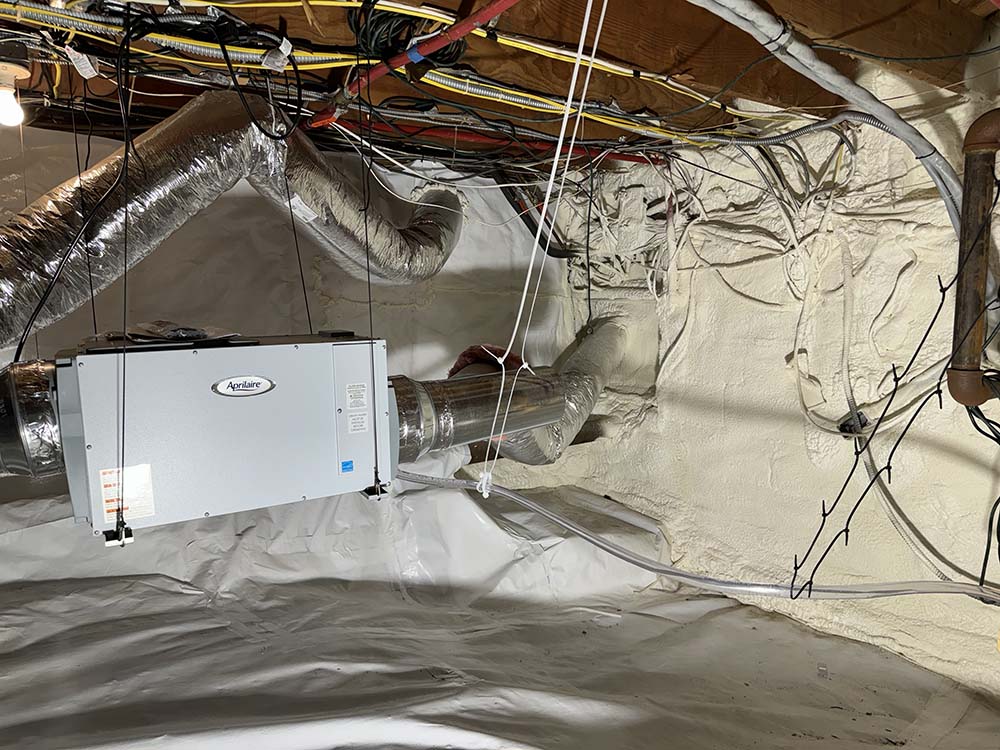
A crawl space dehumidifier plumbed to a drain, set to hold the space in the 50% range. Then a second blower door reading, which goes in your file and on the NYSERDA paperwork we submit for you.
Crawl Spaces We Have Encapsulated
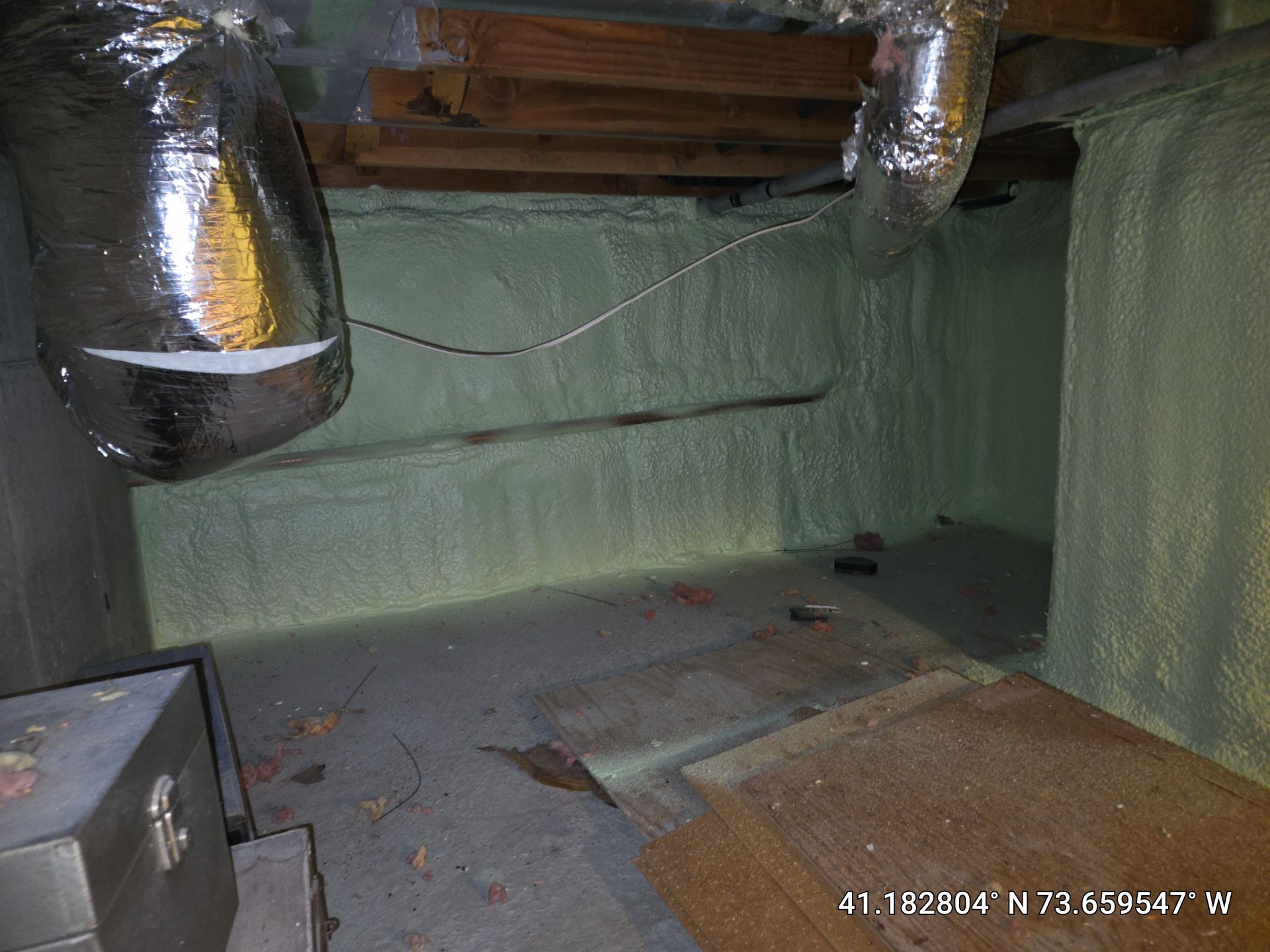
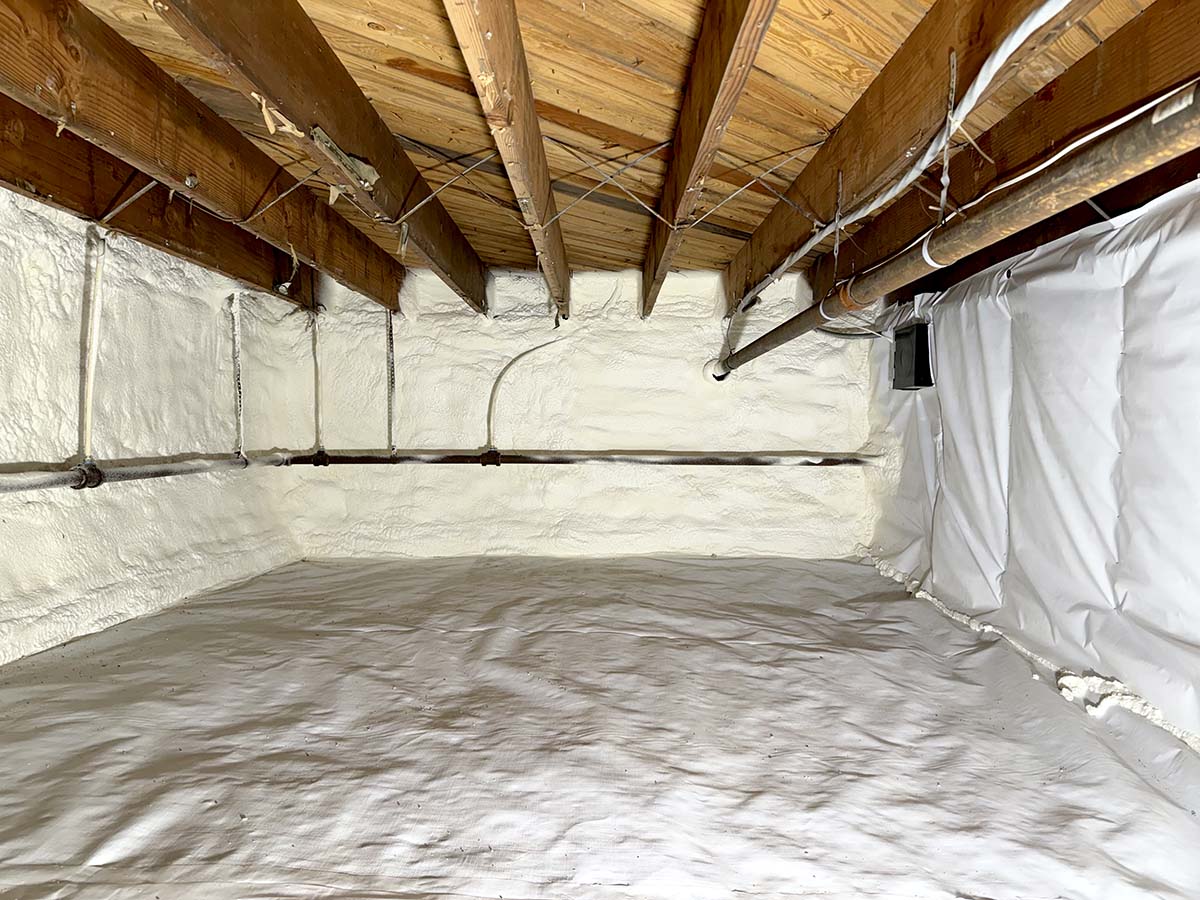
Our photos, from our jobs. The one at the top of the page is a finished encapsulation; these show the walls, the ductwork and the equipment along the way.

Encapsulation Is Energy Work — Which Is Why NYSERDA Pays for It
The ranches, split-levels and raised ranches across Westchester, Rockland and Bergen County were built on crawl spaces, and most of them still have the original vents open. We encapsulate crawl spaces in Yonkers, White Plains, Scarsdale, New Rochelle, Rye, Tarrytown, Chappaqua, Mount Kisco, Bedford, Yorktown and Cortlandt in Westchester; across Rockland, Orange and Dutchess; and in Bergen, Essex, Passaic and Hudson counties in New Jersey.
Metro NY Insulation is a NYSERDA participating contractor and BPI accredited. We file the paperwork. New York only — New Jersey homes go through Home Performance with ENERGY STAR, which has its own incentive structure, and we work in both states.
Westchester County, NY
Rockland County, NY
Orange County, NY
Dutchess County, NY
Bergen County, NJ
Essex County, NJ
Passaic County, NJ
Hudson County, NJ
Comfort Home Package A
$2,500 — attic and rim joist
The rim joist in a crawl space is part of this. Sealing the vents and the rim is where every encapsulation starts.
Comfort Home Package B
$3,000 — adds walls or floor
Insulating the crawl space walls and the floor above them is the wall-and-floor scope that moves a project to Package B. We confirm which package your home falls under during the assessment.
Westchester bonus · through December 31, 2026
Up to $5,000 combined
Westchester homeowners add $2,000 as Con Edison customers, or $1,000 on other utilities, on top of their Comfort Home package. Con Edison's own Weather Ready program is closed; this adder is fulfilled by NYSERDA.
The Crawl Space Is the Bottom of the Envelope
Air that comes in below goes out above. The crawl space, the rim joist and the attic get assessed together, because sealing one end without the other is half a job.
foundation
Rim Joist Insulation
The band of framing on top of the crawl space wall. Foamed as part of every encapsulation, and its own job in a basement.
roofingAttic Air Sealing
The top of the stack effect that pulls crawl space air up through the house. Package A pairs it with the rim joist.
menu_bookWhat Is Crawl Space Encapsulation?
The longer explainer: how vented crawl spaces came to be, and why the theory behind them fails in this climate.
speedHome Energy Assessment
The blower door and infrared pass that put a number on where the house is leaking before anything is sealed.
Crawl Space Encapsulation Questions
Find Out What Your Crawl Space Is Doing
Moisture readings, a blower door test and a look at what is actually down there. If encapsulation is the answer, we will tell you what it covers and which NYSERDA package it falls under.