
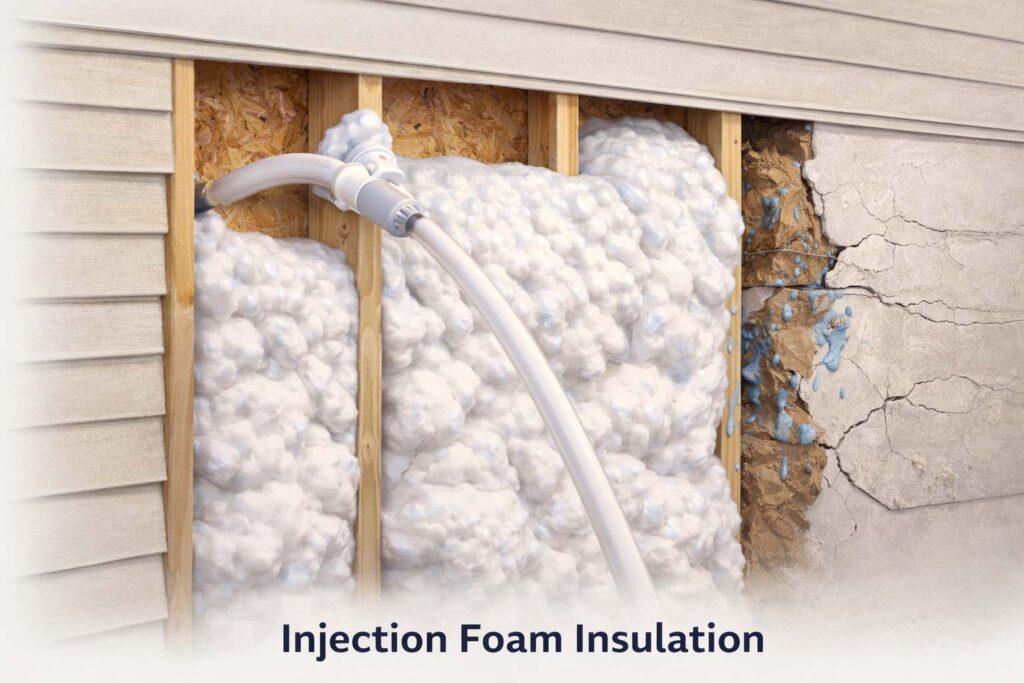
Injection foam insulation can work in some wall cavities, but it may create risks in older homes. Expansion pressure can stress plaster walls, and foam can reduce the natural drying ability of historic wall assemblies. Because of these factors, many insulation contractors prefer dense-pack cellulose for homes built before the 1980s.
Older homes across New York and New Jersey have a unique character. Many were built long before modern insulation standards existed. If you live in one of these homes, you probably know the feeling.
The house may feel cold in winter, hot in summer, and certain rooms never seem to stay comfortable.
When homeowners start researching insulation upgrades, one option they often encounter is injection foam insulation. It’s commonly advertised as a way to insulate walls without removing drywall or siding.
But an important question comes up quickly:
Is injection foam insulation actually safe for older homes?
The answer depends heavily on how the home was built and how the wall system manages moisture and airflow.
What Is Injection Foam Insulation?
Injection foam insulation is a type of retrofit insulation installed by drilling small holes in wall cavities and injecting expanding foam into the space.
The foam expands to fill the cavity and is intended to:
• reduce air movement
• improve thermal resistance
• fill irregular wall spaces
Some companies promote this system as a solution for homes that have little or no wall insulation.
However, the performance of injection foam can vary significantly depending on the structure of the home.
Why Older Homes Behave Differently Than Modern Homes
Homes built before the 1980s were constructed very differently than modern houses.
Many older homes in New York and New Jersey have:
• plaster and lath walls
• balloon framing
• wood sheathing
• no dedicated vapor barrier
• walls designed to dry naturally
These assemblies rely on airflow and drying potential to manage moisture.
When insulation materials change that drying behavior, the wall system can react differently than expected.
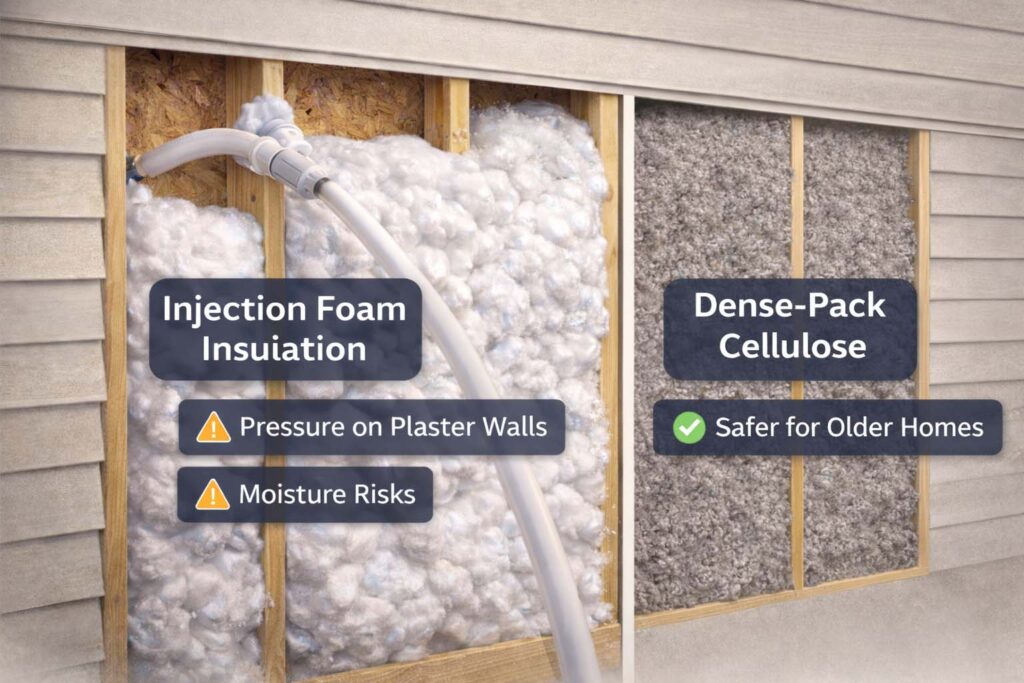
Expansion Pressure on Plaster Walls
Injection foam expands as it cures.
In homes with drywall this usually isn’t a problem, but in plaster and lath walls the pressure can sometimes cause:
• hairline cracking
• plaster key failure
• separation from the lath
Older finishes are often fragile, which increases this risk.
Reduced Wall Drying Potential
Older homes often rely on the ability for walls to dry inward or outward.
Foam insulation can reduce permeability in the cavity. If moisture enters the wall from a roof leak, flashing issue, or condensation, it may take longer to dry.
Over time this can increase the chance of hidden moisture damage.
Installation Sensitivity
Injection foam installations are highly dependent on installer experience.
If foam is injected too quickly or unevenly, cavities may develop:
• voids
• uneven density
• incomplete filling
Once foam cures inside a wall cavity, correcting these issues can be difficult.
When Injection Foam May Be Appropriate
Injection foam can perform well in certain situations.
Examples include:
• newer homes with drywall construction
• wall cavities with predictable framing
• assemblies designed for lower permeability
A professional insulation contractor should evaluate wall construction, moisture conditions, and ventilation before recommending any retrofit insulation method.
Why Many Contractors Recommend Dense-Pack Cellulose Instead
Dense-pack cellulose insulation is often recommended for older homes because it works more naturally with historic wall assemblies.
Cellulose is installed by drilling small access holes and blowing recycled fiber insulation into the wall cavity at high density.
When installed properly, it can:
• improve thermal performance
• reduce air movement within the wall
• maintain the wall’s ability to dry
• work safely with plaster and lath construction
Because of these characteristics, dense-pack cellulose is widely used in retrofit insulation projects for older homes.
Do We Install Injection Foam Insulation?
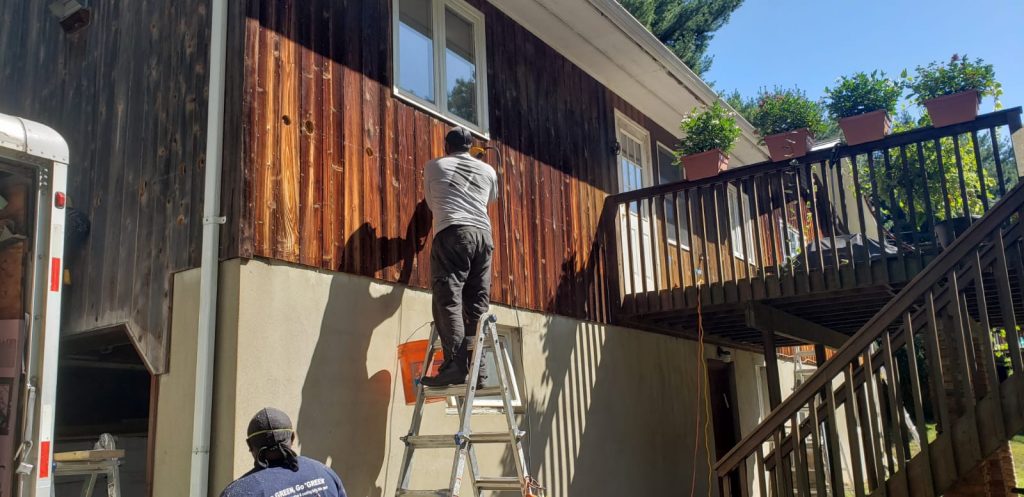
At MetroNYInsulation, we specialize in dense-pack cellulose insulation for older homes.
While injection foam is offered by some contractors, our focus is on insulation solutions that work best with the types of wall assemblies commonly found in homes built before the 1980s in New York and New Jersey.
Our goal is always long-term durability, comfort, and energy efficiency.
How to Choose the Right Wall Insulation for an Older Home
Every home is different. Before installing wall insulation, it’s important to evaluate:
• wall construction
• existing insulation
• moisture conditions
• ventilation
• framing style
A professional insulation assessment can determine which retrofit approach will provide the best performance without creating unintended issues.
If your home feels cold in winter or overheated in summer, the problem may be hidden inside the walls.
At MetroNYInsulation, we help homeowners across New Jersey and Westchester County understand how their homes work and what insulation solutions will improve comfort and efficiency.
Schedule a home insulation assessment today and let us help you create a more comfortable, energy-efficient home.
For more information on insulation services for your home or business call our top-rated team at (845) 445-8255 today.
Contact Our Insulation Experts
Frequently Asked Questions
Injection foam insulation can place pressure on plaster walls as it expands. In some cases this expansion may lead to hairline cracks or separation of plaster from the lath structure. Older plaster finishes are often more fragile than drywall.
Foam insulation can reduce airflow and drying potential inside wall cavities. If moisture enters the wall system from leaks or condensation, it may take longer for the wall to dry, which can increase moisture risks over time.
Dense-pack cellulose insulation is commonly recommended for older homes because it works well with plaster walls and allows the wall assembly to maintain its natural drying ability.
Both materials have advantages depending on the structure of the building. In many older homes, cellulose insulation is often preferred because it is compatible with historic wall assemblies and is less likely to stress plaster walls.
Yes. Many retrofit insulation methods allow insulation to be installed through small access holes drilled in the wall. The appropriate method depends on the wall structure and the condition of the home.