
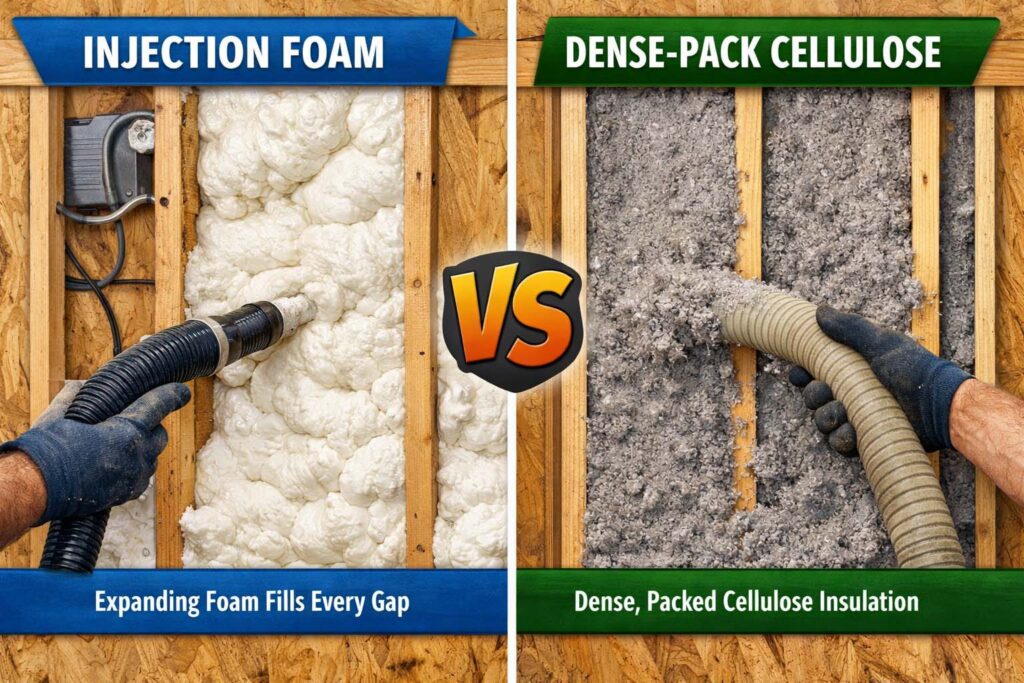
Let’s Compare Injection Foam vs Cellulose Insulation
Injection foam and dense-pack cellulose are both used to insulate existing wall cavities, but they behave very differently. Injection foam expands inside the wall as it cures, while dense-pack cellulose is blown into the cavity as tightly packed fiber insulation. In many older homes with plaster walls, dense-pack cellulose is often preferred because it fills the cavity without expansion pressure and maintains the wall’s natural drying ability.
If you live in an older home in New Jersey or New York, you may already know the challenge.
The house feels cold in winter. Certain rooms stay chilly even when the heat is running. In the summer, the upper floors can become hot and uncomfortable.
Many homeowners eventually discover that the problem may be hidden inside the walls.
Homes built before the 1980s often have little or no wall insulation. When homeowners start researching ways to improve comfort and energy efficiency, two insulation options often appear:
- Injection foam insulation
- Dense-pack cellulose insulation
Both methods allow insulation to be added to existing walls without removing drywall or siding. However, they perform very differently depending on the construction of the home.
Understanding these differences is important when choosing the right insulation for older houses.
Understanding Wall Insulation in Older Homes
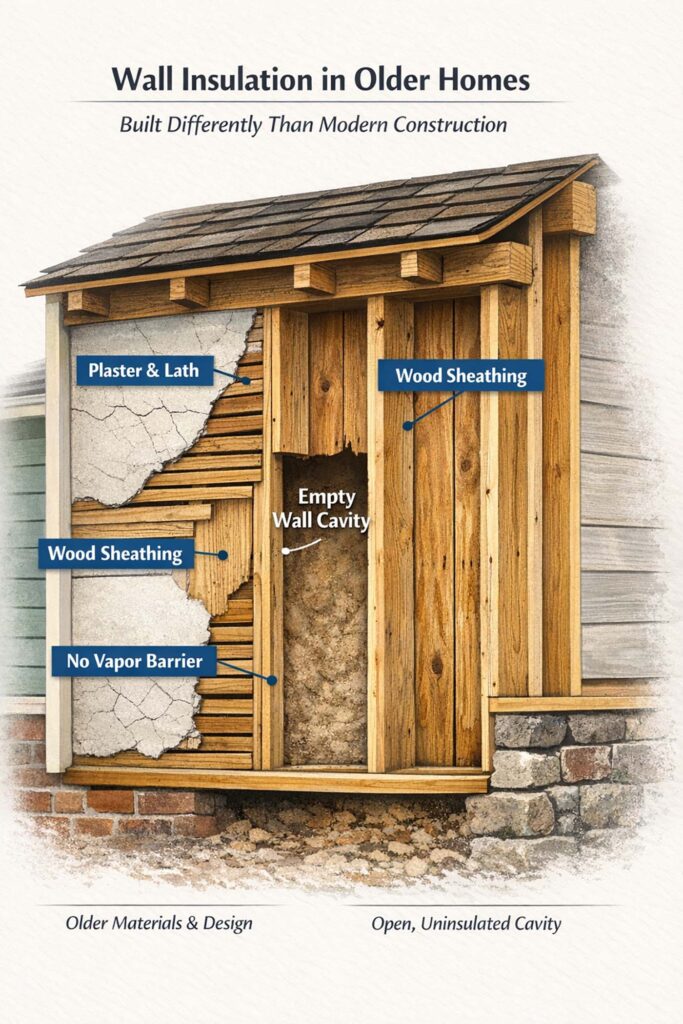
Many older homes throughout the Northeast were built with wall systems that function differently from modern construction.
These homes often include:
• plaster and lath walls
• wood sheathing
• balloon framing
• no vapor barrier
• empty wall cavities
Because of these features, insulation materials must work with the wall system rather than change how the wall behaves.
Some insulation materials expand inside the cavity. Others are packed into place without expansion.
This difference is one of the key factors when comparing injection foam and dense-pack cellulose.
What Is Injection Foam Insulation?
Injection foam insulation is installed by drilling small holes into the wall cavity and injecting liquid foam into the space.
Once injected, the foam expands and fills the cavity between the wall studs.
This expansion allows the foam to fill gaps and irregular areas inside the wall.
Injection foam insulation is often used to improve energy efficiency in existing homes without removing interior finishes.
Homeowners researching this option often ask whether injection foam insulation is safe for older homes. We discuss that topic in detail in our guide:
What Is Dense-Pack Cellulose Insulation?
Dense-pack cellulose insulation is made from recycled paper fibers treated for fire resistance.
Instead of expanding like foam, cellulose is installed by blowing the material into wall cavities under high pressure.
The insulation becomes tightly packed inside the cavity, reducing air movement and improving thermal performance.
Because the material is fiber-based rather than expanding foam, it behaves differently inside older wall systems.
Injection Foam vs Cellulose Insulation
Both materials can improve the comfort and efficiency of a home, but their performance can vary depending on the structure of the building.
Installation Method
Injection foam is installed as a liquid that expands after being injected into the wall.
Dense-pack cellulose is blown into the cavity until the space is tightly filled with insulation fibers.
Expansion Inside the Wall
Injection foam expands after installation as the material cures.
Dense-pack cellulose does not expand after installation. Instead, it remains tightly packed within the cavity.
Compatibility with Older Walls
Older homes frequently contain plaster and lath walls, which are more fragile than modern drywall.
Because cellulose does not expand after installation, it can be more compatible with these older finishes.
Compatibility with Older Walls
Older homes frequently contain plaster and lath walls, which are more fragile than modern drywall.
Because cellulose does not expand after installation, it can be more compatible with these older finishes.
| Feature | Injection Foam | Dense-Pack Cellulose |
|---|---|---|
| Installation | Liquid foam injected into the wall cavity | Blown-in fiber insulation packed densely into the cavity |
| Expansion | Expands as it cures inside the wall | No expansion after installation |
| Material Type | Foam-based insulation | Recycled fiber insulation treated for fire resistance |
| Compatibility with Plaster Walls | May place pressure on fragile plaster surfaces | Well suited for older plaster and lath walls |
| Moisture Behavior | Can reduce airflow and wall drying potential | Maintains more of the wall’s natural drying ability |
| Best Fit | Some modern wall systems and select retrofit applications | Many older homes and retrofit wall insulation projects |
Which Insulation Is Better for Older Homes?
Every house is different, but many insulation professionals prefer dense-pack cellulose for older homes.
This is largely because cellulose insulation:
• works well with plaster walls
• does not expand after installation
• conforms easily to irregular framing
• maintains the wall’s natural drying ability
For homes built before modern insulation standards, these characteristics often make cellulose insulation a more compatible solution.
When Injection Foam May Be Used
Injection foam insulation may still be used in certain situations.
Examples may include:
• homes with drywall wall systems
• newer construction retrofits
• wall assemblies designed for lower permeability
In these cases, foam insulation may perform well depending on the structure of the home.
Evaluating the construction of the house is always important before choosing a wall insulation method.
How Metro NY Insulation Approaches Older Homes
At Metro NY Insulation, we focus on insulation solutions that work best with the types of homes found throughout New Jersey and Westchester County.
Many homes in this region were built decades before modern energy codes existed.
Because of that, dense-pack cellulose insulation is often a preferred approach for wall retrofits in older homes.
Our goal is to improve comfort and energy efficiency while respecting how these homes were originally built.
Contact Our Insulation Experts
If your home feels cold in winter or hot in summer, the problem may be inside your walls.
Many homeowners are surprised by how much comfort improves once empty wall cavities are properly insulated.
At Metro NY Insulation, we help homeowners throughout New Jersey and Westchester County understand how their homes work and what insulation solutions will provide the best long-term results.
Schedule a home insulation assessment and discover how insulation can transform the comfort of your home. Call our top-rated team to learn more about the differences between injection foam vs cellulose insulation today at (845) 445-8255