If you've been asking yourself how much insulation do I need in your NJ or Westchester home, you're not alone — it's one of the most common questions we get. The answer depends on your attic's current depth, your home's age, and your climate zone. Here's what you need to know.
Quick Answer
Most NJ and Westchester attics need R-49 to R-60 of insulation, which is roughly 15–19 inches of cellulose or 13–17 inches of fiberglass. Homes built before 1980 typically have R-11 or less — well below current standards. A free home energy assessment will confirm exactly what your attic needs.
What Is R-Value and Why Does It Matter for Your Home?
R-value measures how well insulation resists heat flow. The higher the number, the better the insulation performs — meaning your home stays cooler in summer and warmer in winter without overworking your heating and cooling systems.
Think of it this way: a well-insulated attic acts like a lid on a thermos. Without it, heat pours through your ceiling in summer and escapes in winter. Your HVAC runs longer to compensate, and your energy bills climb whether or not you adjust the thermostat.
When your attic's R-value is too low, the symptoms are predictable: upstairs rooms that never feel comfortable, an AC unit that runs constantly without cooling the house down, and monthly bills that seem to go up every year for no clear reason.
Most homeowners don't know what R-value they have — and many are surprised to find out they've been running on a fraction of what their home actually needs.
What R-Value Does Your NJ or Westchester Attic Need?
The U.S. Department of Energy divides the country into climate zones based on heating and cooling demand. New Jersey and New York fall in Climate Zones 4 and 5 — a range that requires significantly more insulation than warmer states.
For attics in NJ and Westchester, the DOE recommends:
| Location | Recommended Attic R-Value |
|---|---|
| New Jersey (all counties) | R-49 to R-60 |
| Westchester County, NY | R-49 to R-60 |
| Rockland / Dutchess County, NY | R-49 to R-60 |
For walls, the target is R-13 to R-21. For floors over unconditioned spaces like crawl spaces, R-25 to R-30 is recommended.
These numbers reflect what's needed to keep your home efficient year-round — not just warm in winter. Most homes in this area fall well short of these targets, particularly in the attic.
How Much Insulation Do I Need — And How Do I Check What I Have?
You don't need an energy audit to get a rough sense of where your home stands. There are three quick checks any homeowner can do:
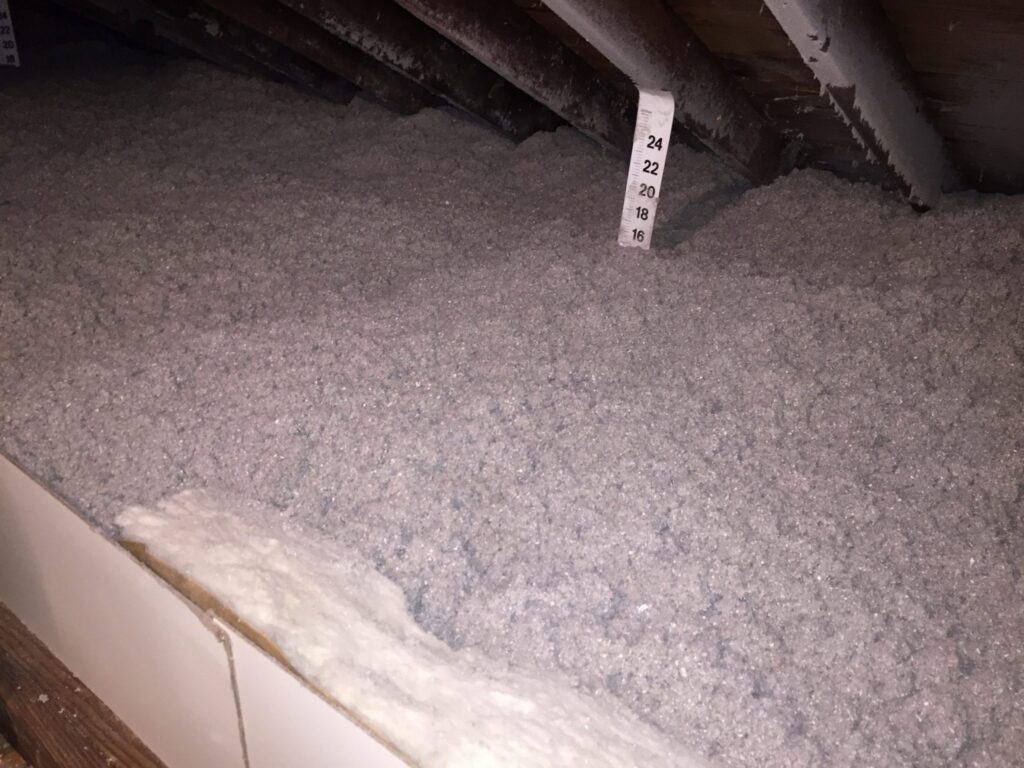
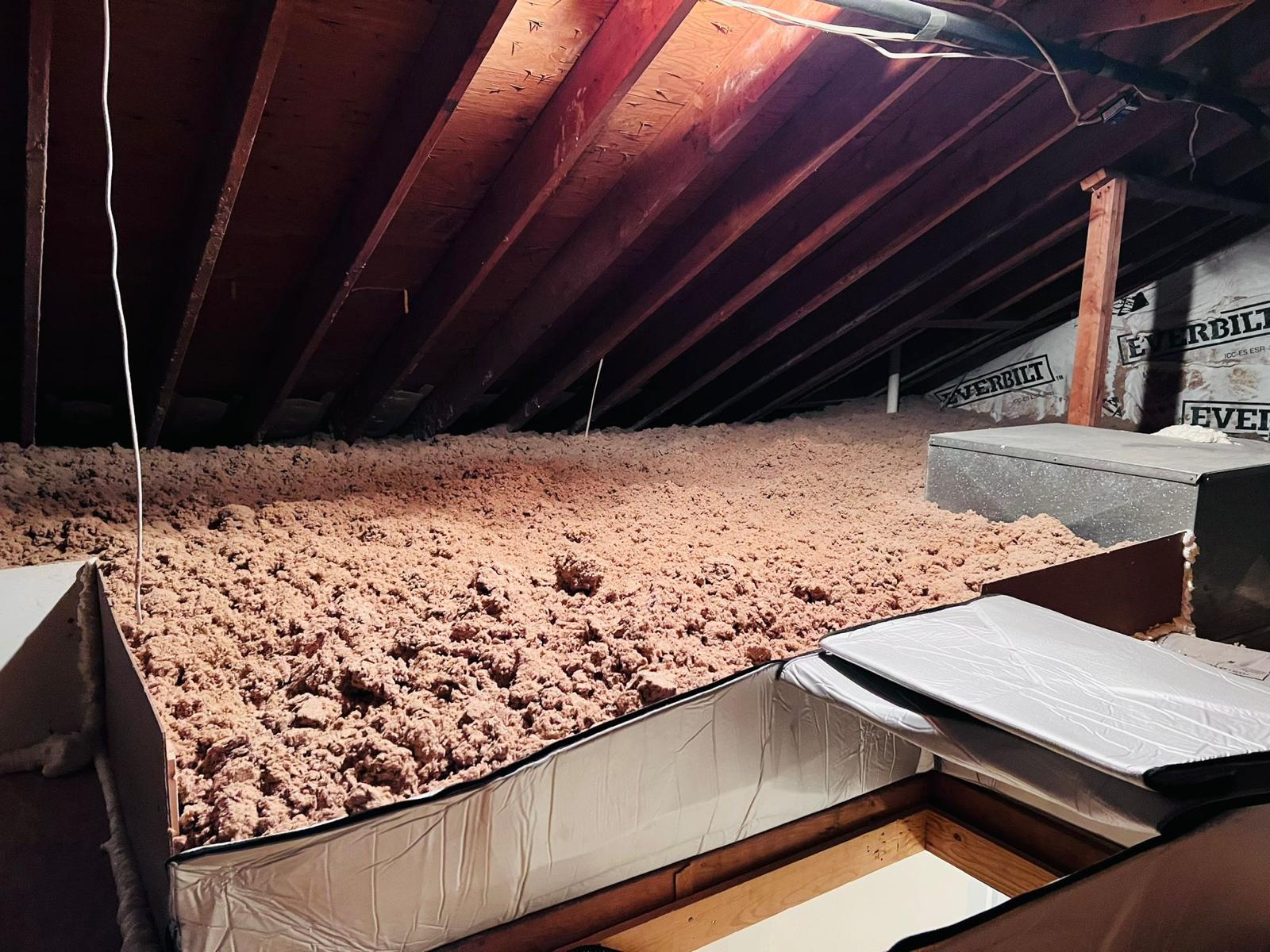
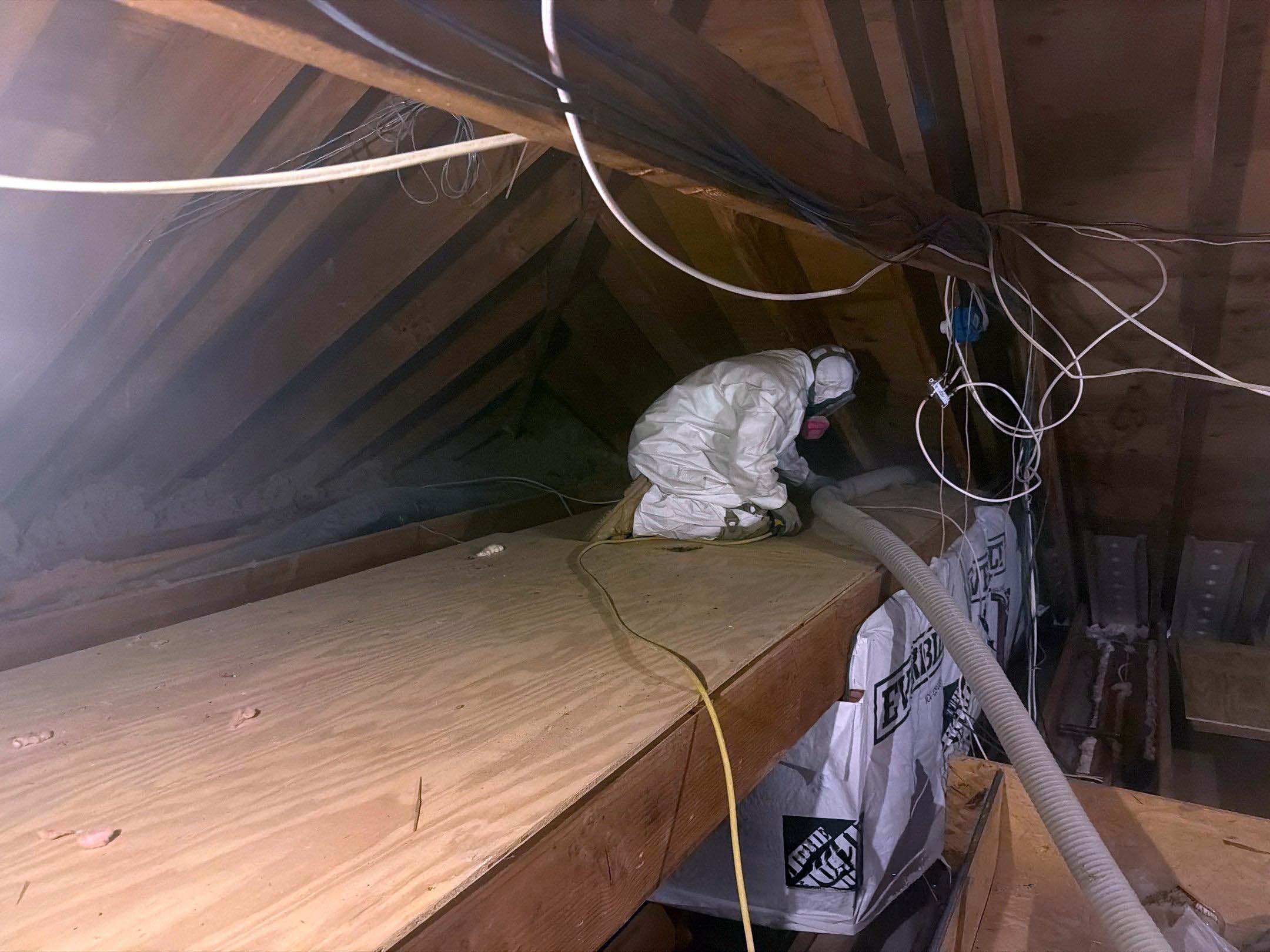
1. The attic depth check. Go into your attic and look at the insulation depth. Cellulose (the gray, shredded material) and fiberglass batts (the pink or yellow fluffy material) are both common. If you can see your attic floor joists, or if insulation only reaches the top of them, you're almost certainly under-insulated. At R-49, cellulose should be about 15 inches deep. If it's 6 inches or less, you're likely at R-11 to R-19 — less than half of what's recommended.
2. The comfort test. Does your second floor or top floor get noticeably hotter than the rest of the house in summer? Do you adjust the thermostat constantly to compensate? Heat radiates through an under-insulated attic ceiling and into living spaces — no matter how good your AC is.
3. Your energy bill trend. Compare your summer cooling bills over the last three years. A slow, steady increase — without a corresponding change in how you use the home — often points to an insulation or air sealing problem, not an equipment issue.
If any of these ring true, a free home energy assessment will give you a precise measurement and a clear picture of what's needed.
How Much Insulation Does an Older NJ or Westchester Home Need?
If your home was built before 1980, there's a very good chance it was insulated to the standards of that era — which were significantly lower than what's recommended today. Homes from the 1950s, '60s, and '70s commonly have R-11 attic insulation, sometimes less.
This matters because the housing stock in Bergen County NJ, Westchester County, Rockland County, and Passaic County is largely pre-1980 construction. Cape Cods, split-levels, and colonials built in that period are the most common home types we service — and the most likely to be running on inadequate insulation.
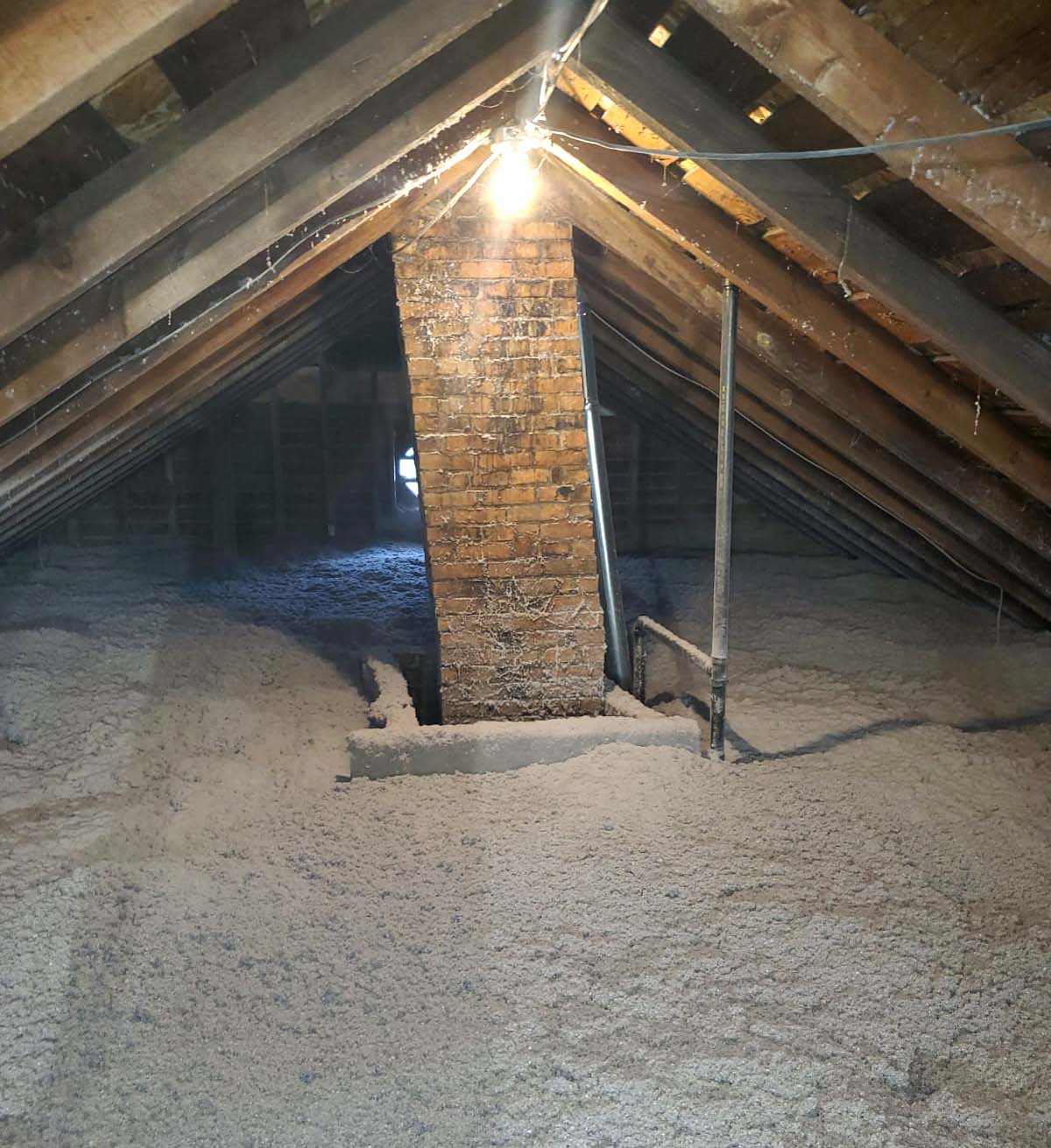
For these homes, upgrading from R-11 to R-49 means adding roughly 10 to 12 inches of cellulose on top of existing insulation (when the existing material is still in good condition and doesn't need to be removed). It's one of the highest-return upgrades a homeowner can make — both in comfort and in monthly energy cost reduction.
A home built after 2000 may be closer to current standards, but is still worth checking. Building codes set minimums, not optimums.
Cellulose vs. Spray Foam — Which Adds R-Value Faster?
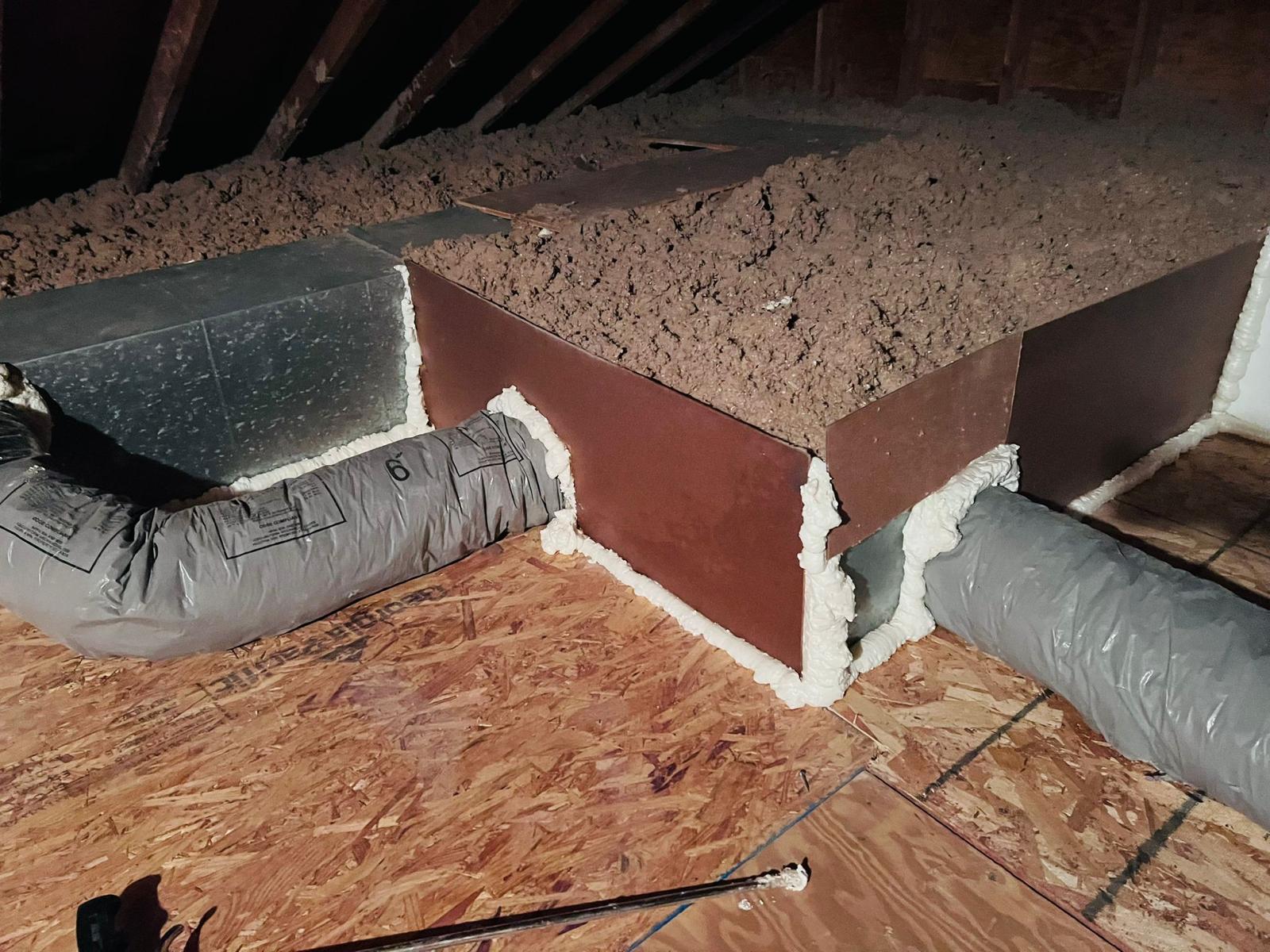
For attic top-ups in NJ and Westchester homes, cellulose is typically the fastest and most cost-effective option. It installs quickly over existing insulation, reaches the required depth in a single day, and is made from recycled material — which also makes it one of the more environmentally sound choices.
Spray foam — either open-cell or closed-cell — is the better call when you need to air seal and insulate in one step. Rim joists, crawl spaces, and cathedral ceilings are the most common applications. Spray foam creates an air barrier that cellulose alone cannot, which matters a great deal in older homes where air leakage is a significant driver of heat loss and gain.
Most homes in this area benefit from a combination: cellulose for the attic top-up, spray foam for the harder-to-reach spots. We cover both — and a free assessment will tell you exactly which applies to your home.
Full comparison: Spray Foam vs. Cellulose — Which Is Right for NJ & Westchester Homes?
Can Insulation Rebates Cover the Cost in NY and NJ?
In New York, NYSERDA offers rebates through the Home Performance with ENERGY STAR program for qualifying insulation upgrades. ConEd offers additional rebates for eligible Westchester customers. Income-qualified households may qualify for the EmPower+ program, which can cover insulation at no cost.
Metro NY Insulation is NYSERDA-approved and handles all NY rebate paperwork as part of every project. You don't need to navigate the programs yourself — we file everything on your behalf.
If you're in New Jersey, we provide the same BPI-certified installation, the same expertise, and the same free home energy assessment that NY homeowners get. The insulation savings show up in your energy bill — and a more efficient home pays for itself over time.
Full guide: NY Insulation Rebates 2026 — NYSERDA, ConEd & How to Claim Them
How to Get a Free Attic Insulation Assessment
If you're not sure what your attic has — or what it needs — the easiest next step is a free home energy assessment. We'll measure your current insulation depth, check for air sealing gaps, and give you a clear picture of what's needed and what it costs.
Metro NY Insulation has been serving NJ and Westchester homeowners since 2005. We're BPI-certified, NYSERDA-approved, and woman-owned. Every assessment is free, and there's no obligation.
See our work and read verified reviews from homeowners across NJ and Westchester: Metro NY Insulation on Google.
Schedule your free assessment →
Frequently Asked Questions
What R-value do I need in my attic in New Jersey?
NJ attics should have R-49 to R-60, per DOE recommendations for Climate Zones 4 and 5. Most homes built before 1980 have R-11 or less — well below the current standard. A free home energy assessment will give you the exact number for your home.
How do I know if my attic has enough insulation?
Check the depth: if your attic floor joists are visible or your insulation is less than 12–15 inches deep, you're likely under-insulated. Other signs include hot upper floors, an AC that runs constantly, and rising energy bills.
How much does it cost to insulate an attic in Westchester County NY?
Costs vary based on attic size, access, and current insulation condition. NY state rebates through NYSERDA and ConEd can significantly offset the investment. The best way to get an accurate number is a free home energy assessment — we'll measure what you have and quote what you need.
Does Metro NY Insulation offer free assessments?
Yes. We offer free home energy assessments with no obligation. We measure your current insulation, identify air sealing gaps, and walk you through exactly what your home needs. BPI-certified, NYSERDA-approved, serving NJ and Westchester since 2005.
What insulation qualifies for NYSERDA rebates in New York?
Attic insulation, wall insulation, air sealing, and crawl space encapsulation can all qualify depending on your home's current conditions and your utility provider. Metro NY Insulation handles all the paperwork — you don't need to navigate the programs yourself.
Metro NY Insulation · BPI-certified · NYSERDA-approved · Woman-owned · Serving NJ & Westchester since 2005