
Home Energy Audits in Westchester and Northern New Jersey
A home energy audit measures where your house actually loses heat instead of guessing. We use a blower door to put a number on the air leakage and an infrared camera to see through finished walls, then hand you a ranked list of what to fix and which NYSERDA package pays for it.
Required first step
NYSERDA Comfort Home
A home energy audit is a diagnostic visit that finds and measures where a house loses energy. A technician inspects the attic, basement, crawl space and living areas, uses a blower door to measure how much air leaks in and out, and uses an infrared camera to see missing insulation behind finished surfaces. What you get back is a specific list of leak points and insulation gaps ranked by what each one is costing you, rather than a general recommendation to add insulation.
It is also the gate to every incentive worth having. NYSERDA will not pay a Comfort Home rebate on work that was never assessed by a participating contractor, so the assessment has to come first. This page explains the four kinds of assessment we run, what the measurements actually mean, what you receive afterward, and how the December 31, 2026 Westchester deadline affects the timing if you are planning to use the rebate.
What an Assessment Actually Finds
Almost every house we test loses energy in the same handful of places. The assessment is about finding which of them your house has, and how badly.
The attic floor
Top plates, recessed light cans, the attic hatch, plumbing and chimney chases, bath fan ducts dumping into the attic. This is where the largest single volume of heated air usually escapes, and insulation laid over the top of it does not stop it.
The rim joist and sill plate
The band of framing where the house sits on the foundation. It is rarely insulated in homes built before the 1990s, it runs the entire perimeter, and it is cold enough to feel from the basement stairs.
Walls with nothing in them
Houses built before the 1950s in this area often have empty stud cavities. Infrared shows this immediately in winter: the studs read warm and the bays between them read cold.
The crawl space
Open vents, missing ground cover and uninsulated walls make the crawl space the same temperature as outside, which makes the floor above it cold and pulls damp air up into the house.
Duct and flue leakage
Supply ducts running through unconditioned attics and crawl spaces lose heated air before it reaches a room. Combustion testing also checks that flues are drafting properly.
Rooms that never match the thermostat
A room over a garage, a finished attic, a bonus room, an addition. These are usually an insulation or air-barrier gap at a specific junction, not a heating-system problem.
Four Kinds of Assessment
Not every homeowner needs the same depth. These are the four we offer and who each one is for.
In-person assessment
A technician walks the house with you, inspects the attic, basement and crawl space, and gives you a professional opinion and a scope of work. This is the standard starting point for insulation and air sealing work and for scoping a NYSERDA Comfort Home package. No charge.
Virtual assessment
You send photographs and measurements of the relevant areas following our direction, and we review them and come back with a preliminary scope. Useful when scheduling is difficult or you want a first opinion before booking a visit. No charge.
Infrared camera inspection
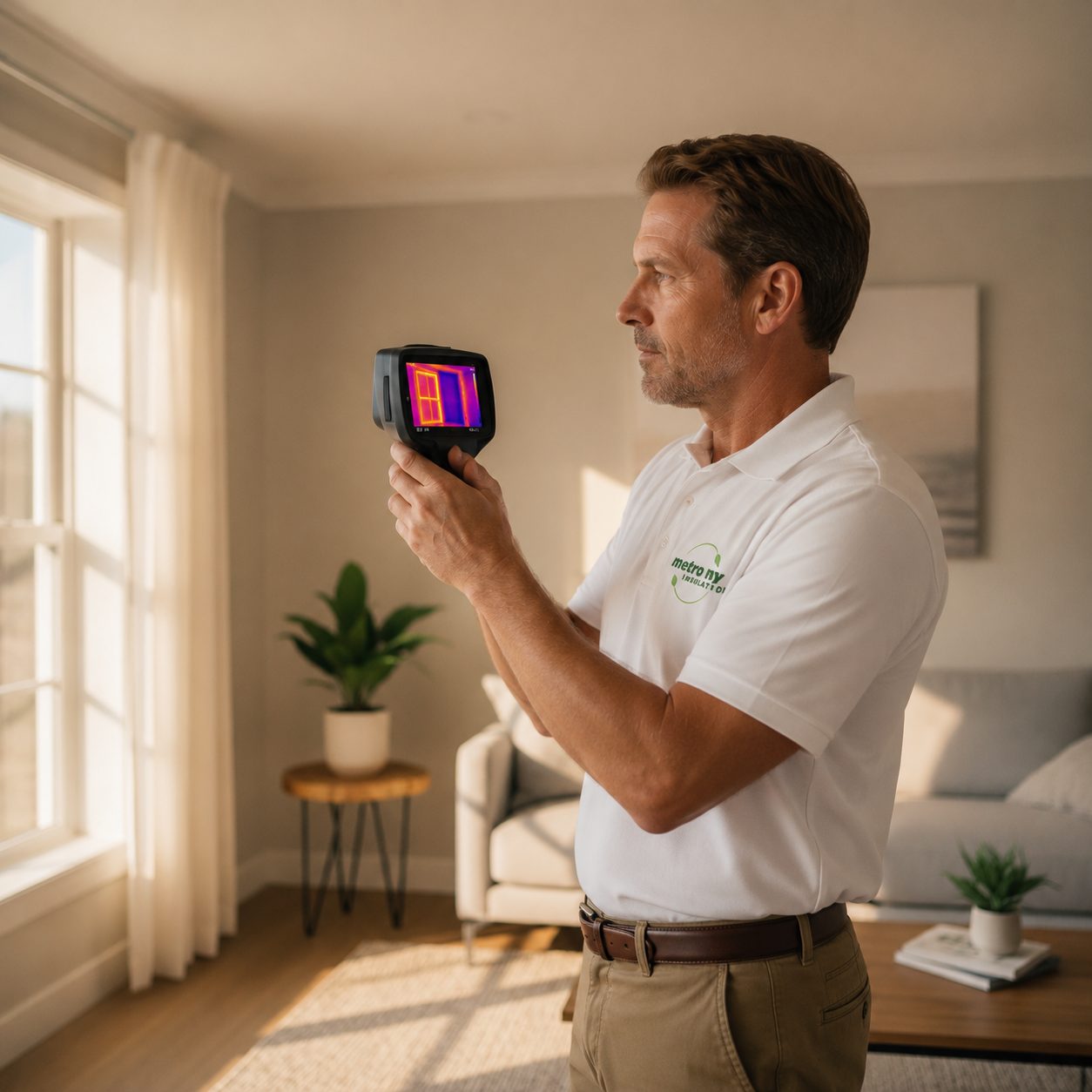
A thermal imaging pass that shows missing insulation, wet insulation and air leak paths through finished walls and ceilings without opening anything up. Most accurate in cold weather, when the temperature difference across the wall is largest. Fee based.
BPI home performance audit
The full standards-based audit. Blower door diagnostic for measured air leakage, combustion safety testing on every fuel-burning appliance, infrared imaging, and a written report issued within five business days that you own and can take anywhere. Fee based.
Most homeowners scoping insulation work start with the in-person assessment. The BPI audit is for people who want measured documentation, a second opinion on someone else’s proposal, or a whole-house plan that goes beyond the building envelope.
What the Blower Door Number Means
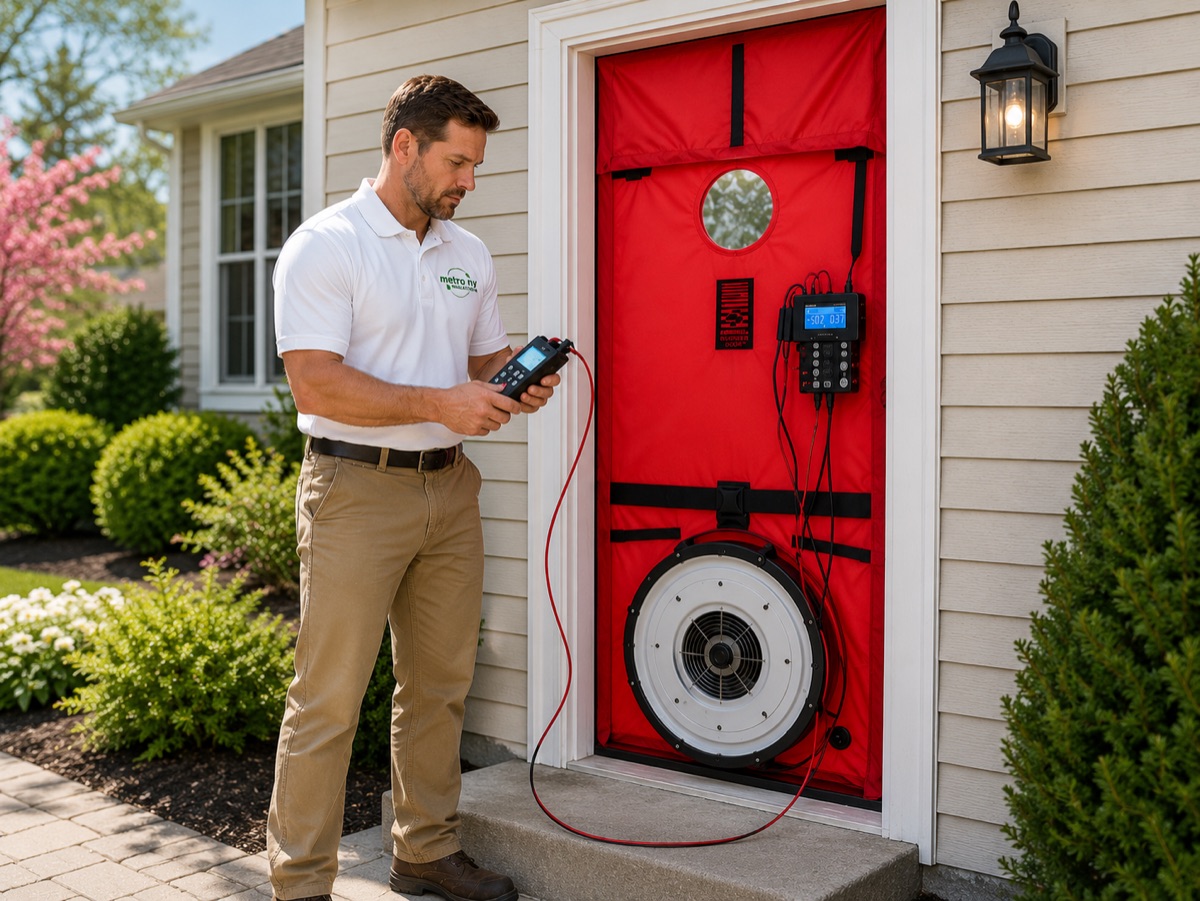
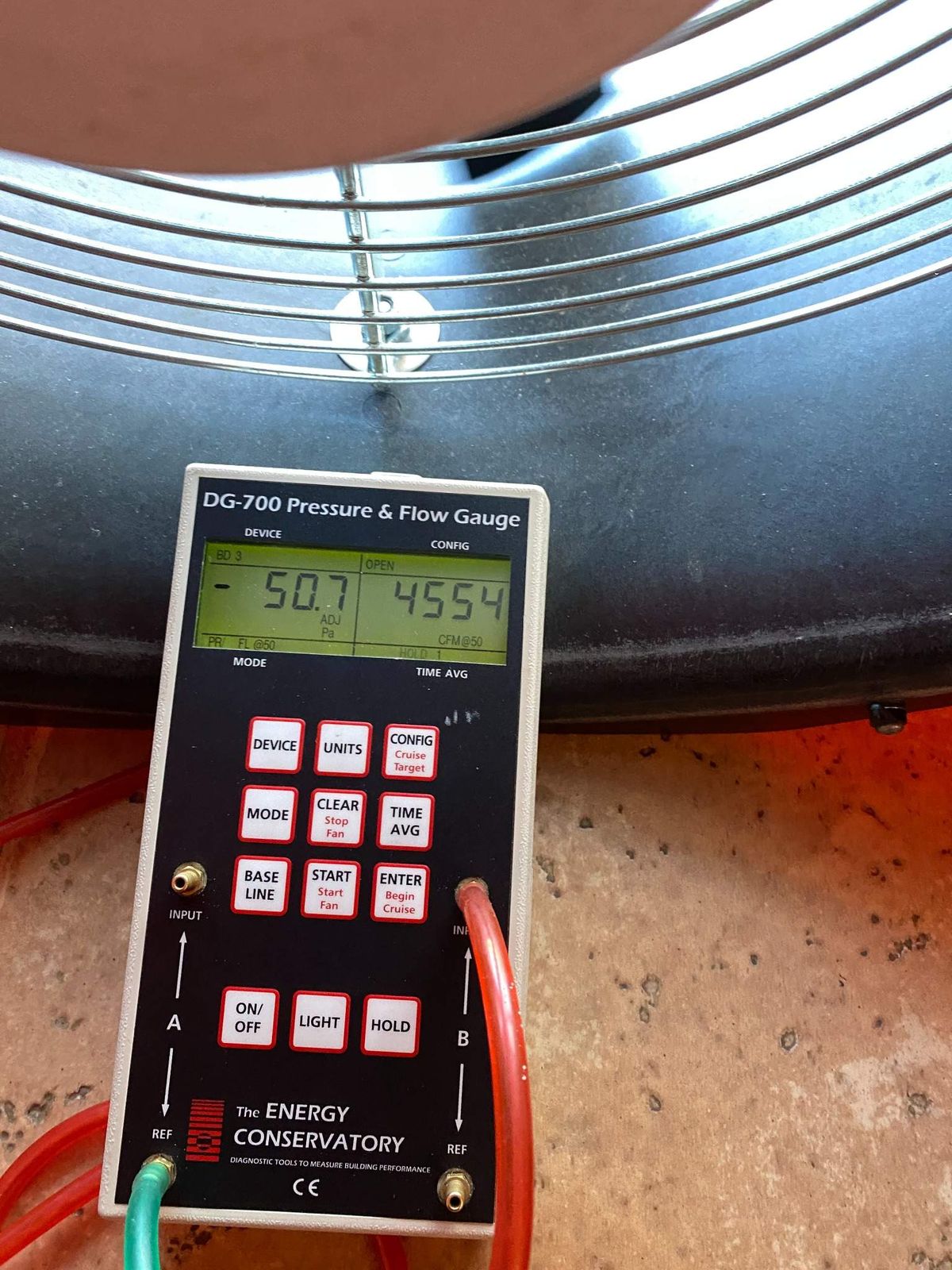
A blower door is a calibrated fan that seals into an exterior doorway and depressurises the house. The fan has to replace every cubic foot of air escaping through the building shell, so the speed it settles at is a direct measurement of how leaky the house is. The two numbers that come out of it are CFM50, the volume of air moving at a standard 50 pascal pressure difference, and ACH50, how many times per hour the entire volume of air in the house is being replaced at that pressure.
The value of the test is that it converts “the house feels drafty” into something you can compare. We test before the work and after it, and the difference between the two readings is the part of the job you can actually verify. While the fan is running, the leaks are pulling air hard enough to find by hand and to see clearly on the infrared camera, which is why the blower door and the thermal pass are run together.
We have written a full explanation of the readings, including what a typical older home in this area scores and what counts as a meaningful improvement, on our blower door test page.
What You Get Afterward
The point of an assessment is a decision you can act on, in an order that makes sense.
1
Findings
Where the house is losing energy, named by location rather than described in general terms, with the infrared images and blower door readings that support each one.
2
A sequence
Air sealing before insulation, attic before walls, and so on. Doing these in the wrong order wastes part of the work, which is the most common problem we are called in to correct.
3
The package
Which NYSERDA Comfort Home package the recommended scope falls under, and the incentive that applies to it.
4
The paperwork
If you proceed with us, we file the rebate documentation. If you do not, the findings are still yours to use.
The Assessment Is the First Step, and the Clock Is Running
NYSERDA’s Comfort Home program pays against a defined package of measures, and a participating contractor has to assess the home and document which measures it qualifies for before any work is approved. That ordering matters: insulation installed first and submitted afterward does not qualify. The Westchester adder — $2,000 for Con Edison customers, $1,000 on other utilities — runs through December 31, 2026, so Westchester homeowners who want the combined amount need the assessment done now rather than in late December.
Metro NY Insulation is a NYSERDA participating contractor and BPI accredited. We file the paperwork. New York only — New Jersey homes go through Home Performance with ENERGY STAR, which has its own incentive structure, and we work in both states.
Comfort Home Package A
$2,500 — attic and rim joist
Air sealing plus insulation to R-49 in the attic, and the rim joist in the basement. The assessment establishes whether your home qualifies for this package.
Comfort Home Package B
$3,000 — adds walls or floor
If the assessment finds empty wall cavities or an uninsulated crawl space or basement wall as well, the project moves to Package B.
Westchester bonus · through December 31, 2026
Up to $5,000 combined
Westchester homeowners add $2,000 as Con Edison customers, or $1,000 on other utilities, on top of their Comfort Home package. Con Edison's own Weather Ready program is closed; this adder is fulfilled by NYSERDA.
What the Assessment Usually Leads To
The work we are most often scoping when we walk out of an assessment.
Blower Door Testing
What CFM50 and ACH50 mean, what a typical older home scores, and what counts as a real improvement.
roofingAttic Air Sealing
The first measure on almost every report. Every penetration through the ceiling plane sealed before insulation goes in.
layersAttic Insulation
Dense-pack cellulose to R-49 over a sealed attic floor, baffled at the eaves.
savingsNYSERDA Programs
Comfort Home, EmPower+ and the Westchester adder, and which one a given household qualifies for.
Home Energy Audit Questions
The U.S. Department of Energy publishes a homeowner guide to home energy assessments that covers what to expect from a professional audit.
Find Out What Your House Is Actually Doing
We will measure the air leakage, show you the infrared images, tell you what to seal and insulate and in what order, and confirm which NYSERDA package your home falls under while the incentive is still available.