
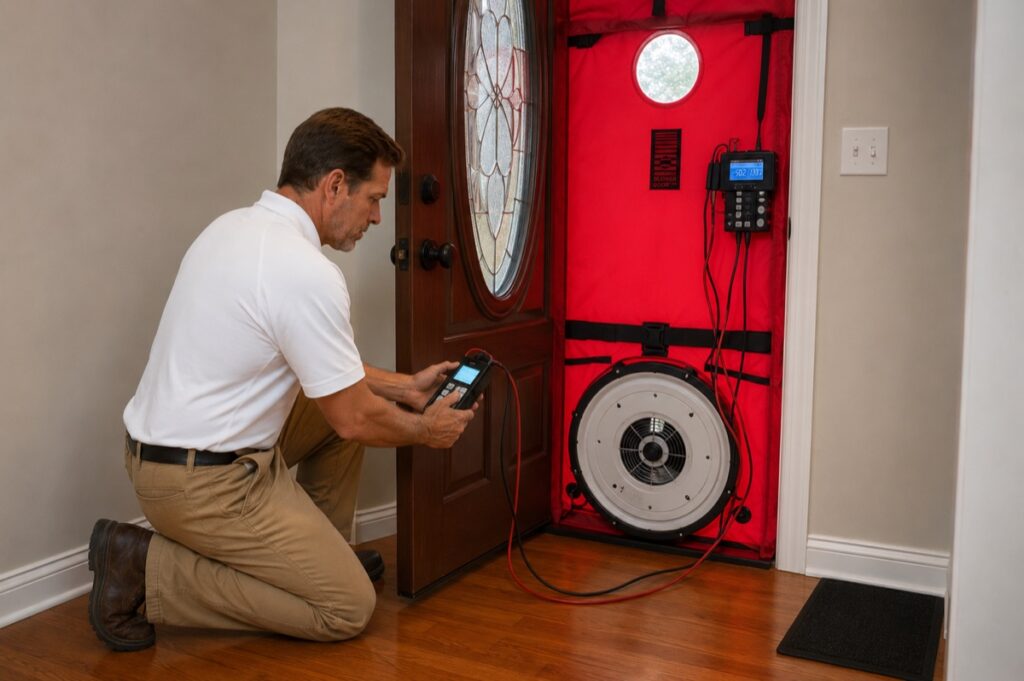
A blower door test measures how much air leaks into and out of your home. A calibrated fan depressurizes the house and reports the result as ACH50 and CFM50 — numbers that show how “leaky” your home is, where conditioned air is escaping, and where air sealing and insulation will make the biggest difference.
If you’ve ever had a home energy assessment or researched ways to make your home more comfortable and energy efficient, you’ve probably heard the term “blower door test.” But what exactly does it tell you?
Many homeowners assume it simply shows whether their home is drafty. That’s part of it — but a blower door test actually measures how your home performs as a whole. It pinpoints hidden air leaks, explains why some rooms are uncomfortable, and reveals why your heating and cooling systems work harder than they should.
At Metro NY Insulation, blower door testing is a core part of how our BPI-certified technicians understand where a home loses energy and which improvements will deliver the greatest return.
What Is a Blower Door Test?
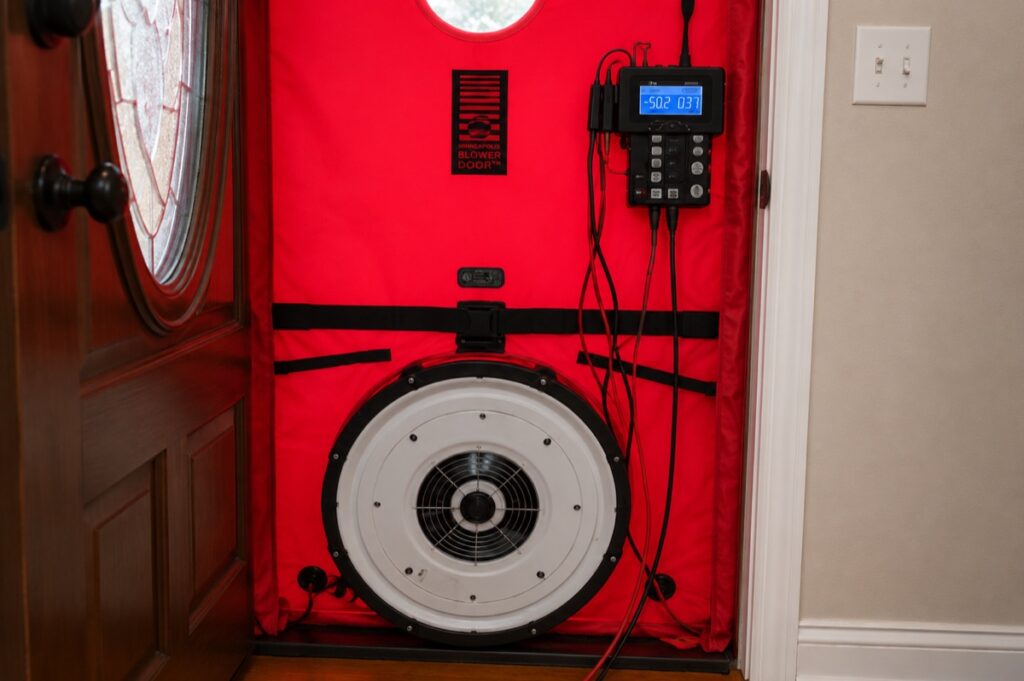
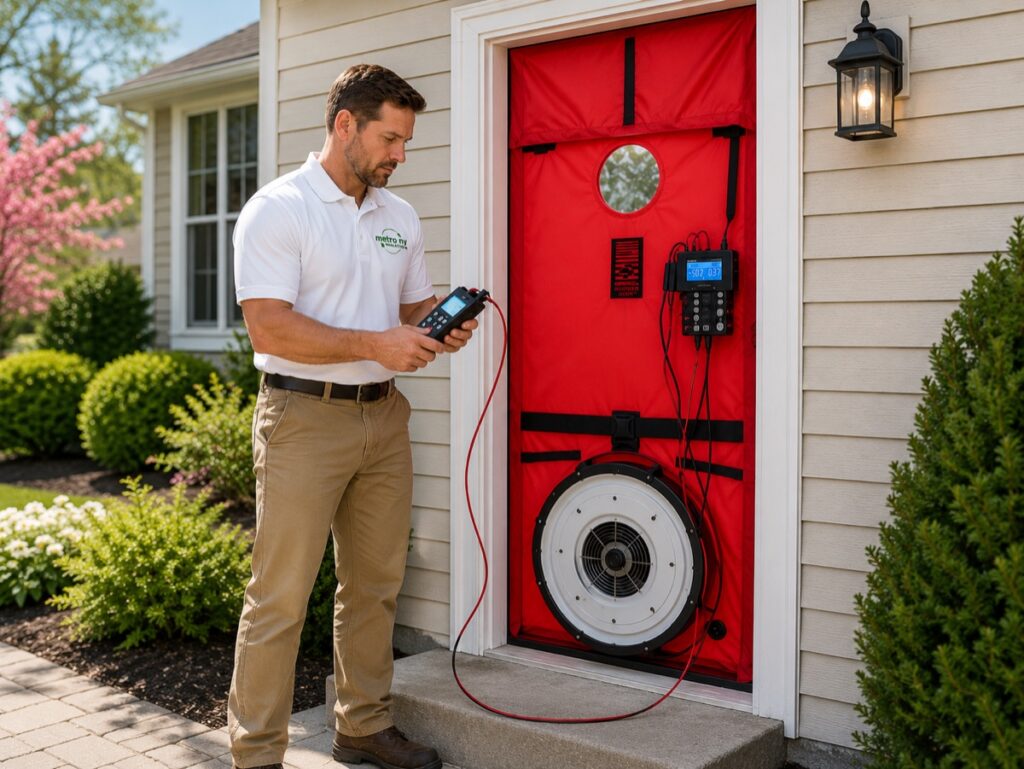
A blower door test uses a powerful, calibrated fan mounted in an exterior doorway to lower the air pressure inside your home. As the fan pulls air out of the house, outside air is drawn in through every gap, crack, and unsealed opening in the building envelope.
This lets energy professionals locate exactly where conditioned air is escaping and outside air is getting in. The test is safe, non-invasive, follows the standardized ASTM E779 / RESNET protocol, and usually takes under an hour as part of a comprehensive home energy audit.
What Does the Test Actually Measure?
The primary purpose of a blower door test is to measure air leakage — in plain terms, how leaky your home is. Results are reported two ways:
- CFM50 (cubic feet per minute at 50 pascals) — the raw volume of air moving through all the leaks in your home while the fan holds it at a standard pressure of 50 pascals.
- ACH50 (air changes per hour at 50 pascals) — how many times the entire volume of air in your home is replaced in one hour at that pressure. This is the number most contractors use to compare homes.
Here’s roughly how ACH50 results read:
| ACH50 | What it means |
|---|---|
| 10+ | Very leaky — common in older, un-sealed homes |
| 7–10 | Below average |
| 5–7 | Typical existing home |
| 3–5 | Tight, well-sealed home |
| Under 3 | Very efficient (modern energy-code build) |
| 0.6 | Passive House standard |
The results help answer questions like:
- Is my home losing a significant amount of heated or cooled air?
- Are drafts contributing to comfort problems?
- Why are my energy bills higher than expected?
- Why does my HVAC system seem to run constantly?
- Why are some rooms hotter or colder than others?
How Much Does a Blower Door Test Cost?
As a standalone service, a blower door test typically runs about $150–$600 nationally, depending on home size and region. (That’s a general industry range for context — not a Metro NY Insulation quote.)
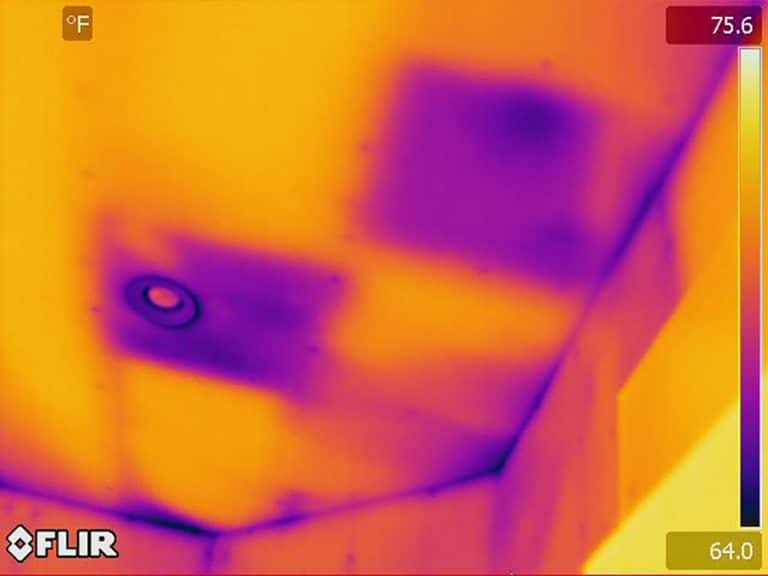
In practice, though, most homeowners don’t pay for it à la carte. The blower door test is almost always performed as part of a comprehensive home energy audit, where it’s one piece of a full diagnostic that also includes infrared imaging and a building-envelope assessment.
For many New York homeowners, the test can be included at no or reduced cost through a NYSERDA-supported home energy assessment. If you’re exploring that route, see our New York insulation programs and rebates. New Jersey homeowners don’t have the same state-funded assessment, but envelope improvements still pay for themselves through lower energy bills.
The actual cost for your home depends on its size and configuration — the best way to get a number is to schedule an assessment.
Where Does Air Usually Leak?
Air leakage often happens in places homeowners rarely see.
Attic openings
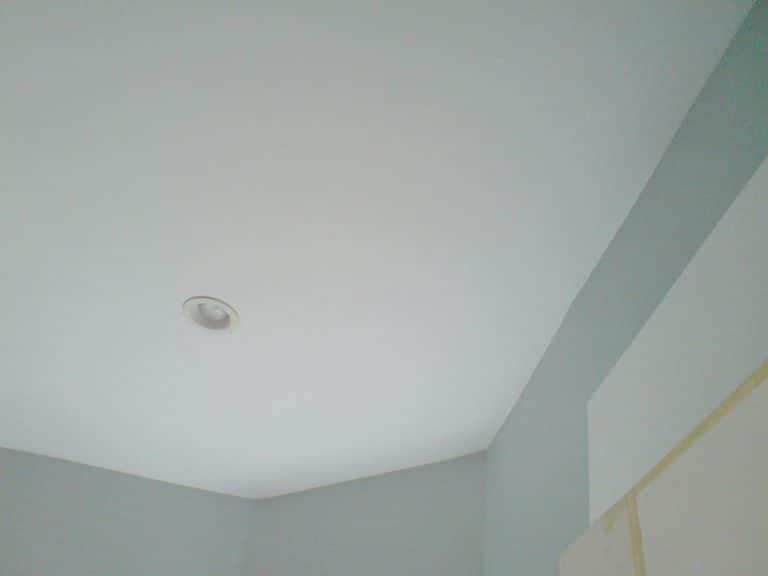
The attic is frequently the single largest source of air leakage. Gaps around recessed lights, plumbing penetrations, electrical wiring, exhaust fans, and attic hatches let large amounts of conditioned air escape.
Basement and crawl space areas
Leaks also occur around rim joists, foundation penetrations, utility openings, and crawl space access points.
Windows and doors
Many people blame windows and doors first, but they’re usually only part of the problem. In most homes, the larger leaks are hidden inside attics, wall cavities, and basements.
What Does a High Air Leakage Result Mean?
A blower door test doesn’t just produce a number — it tells a story about how your home performs. Higher air leakage typically means:
- Higher heating costs in winter and cooling costs in summer
- Drafty rooms and uneven temperatures
- Reduced indoor comfort
- More wear and runtime on your HVAC equipment
For homeowners across Westchester County and the surrounding region, these issues get especially noticeable during extreme summer heat and winter cold — particularly in the area’s older, often balloon-framed housing stock, which tends to leak heavily.
How Do Contractors Use the Results?
The results help prioritize improvements. Instead of guessing where energy is being lost, contractors can target the work most likely to deliver a return. A blower door test may reveal that:
- Attic air sealing should be completed before adding insulation
- Existing insulation has gaps that reduce its effectiveness
- Crawl space improvements are needed
- Wall insulation is missing or underperforming
This lets homeowners make decisions based on real data rather than assumptions.
Why Air Sealing Often Comes First
One of the most common findings is excessive air leakage through the attic floor and other hidden openings.
Think of your home like a bucket. If the bucket has holes, you seal the holes before adding more water. Insulation works the same way: if conditioned air escapes freely through gaps and cracks, insulation alone won’t deliver the comfort and efficiency you expect. That’s why air sealing and insulation work best together.
Do You Always Need a Blower Door Test?
Not always. If you’re confident you simply need insulation in a specific area — say, an under-insulated attic — a targeted home energy evaluation focused on the building envelope may be all you need.
A full blower door test shines when you want to understand whole-home performance: diagnosing persistent drafts, comfort problems across multiple rooms, or unexplained energy bills. It’s the dividing line between a lighter targeted evaluation and a comprehensive audit.
What Happens After the Test?
Once testing is complete, the findings become part of a larger home-performance plan. Depending on results, recommendations may include attic air sealing, attic insulation upgrades, exterior wall insulation, crawl space insulation, rim joist air sealing, and other weatherization improvements. The goal isn’t just to cut energy use — it’s a home that feels comfortable year-round.
Is a Blower Door Test Worth It?
For most homeowners, yes. It uncovers hidden issues a visual inspection can’t. If your home feels drafty, your upstairs runs hotter than the rest of the house, your energy bills keep climbing, or certain rooms never feel comfortable, a blower door test provides real answers.
Get a Home Assessment in Westchester County, NY & NJ
Metro NY Insulation helps homeowners throughout Westchester County and the surrounding Hudson Valley (Rockland, Orange, Dutchess, Ulster) — plus northern New Jersey — uncover hidden energy loss and improve comfort through home energy assessments, air sealing, and insulation upgrades. As a participating NYSERDA contractor, we can also help eligible NY homeowners access available incentives.
If you’re tired of drafts, uneven temperatures, or high energy bills, schedule a home energy assessment or call (845) 445-8255 to find out what’s really happening behind your walls and above your ceiling.