Schedule A Consultation 845-445-8255

845-445-8255

Schedule A Consultation

Exterior Dense Pack Cellulose Insulation White Plains NY

Exterior Dense Pack Cellulose Insulation Installation in White Plains, NY

Quick Answer

Many finished attics in older White Plains homes have little or no insulation inside their sloped ceilings and exterior walls. In this project, Metro NY Insulation used exterior dense-pack cellulose insulation โ€” sometimes called “drill and fill” โ€” to fill those hidden cavities without removing any drywall. A blower door test before the work measured roughly 3,881 CFM50 of air leakage, and the insulation and air-sealing improvements produced a verified reduction in uncontrolled air movement, along with more even temperatures upstairs in both summer and winter.

Project at a Glance

LocationWhite Plains, Westchester County, NY
HomeOlder home with a finished attic, built decades before modern energy codes
ProblemFinished attic too hot in summer, too cold in winter; empty wall and sloped-ceiling cavities
SolutionExterior dense-pack cellulose (drill and fill) โ€” walls and roof slopes filled through small access holes
Interior impactNo demolition โ€” only small access holes where needed, patched flush
VerificationBlower door testing, before and after (pre-test: ~3,881 CFM50)
ExteriorAccess holes plugged and sealed, siding restored to original appearance
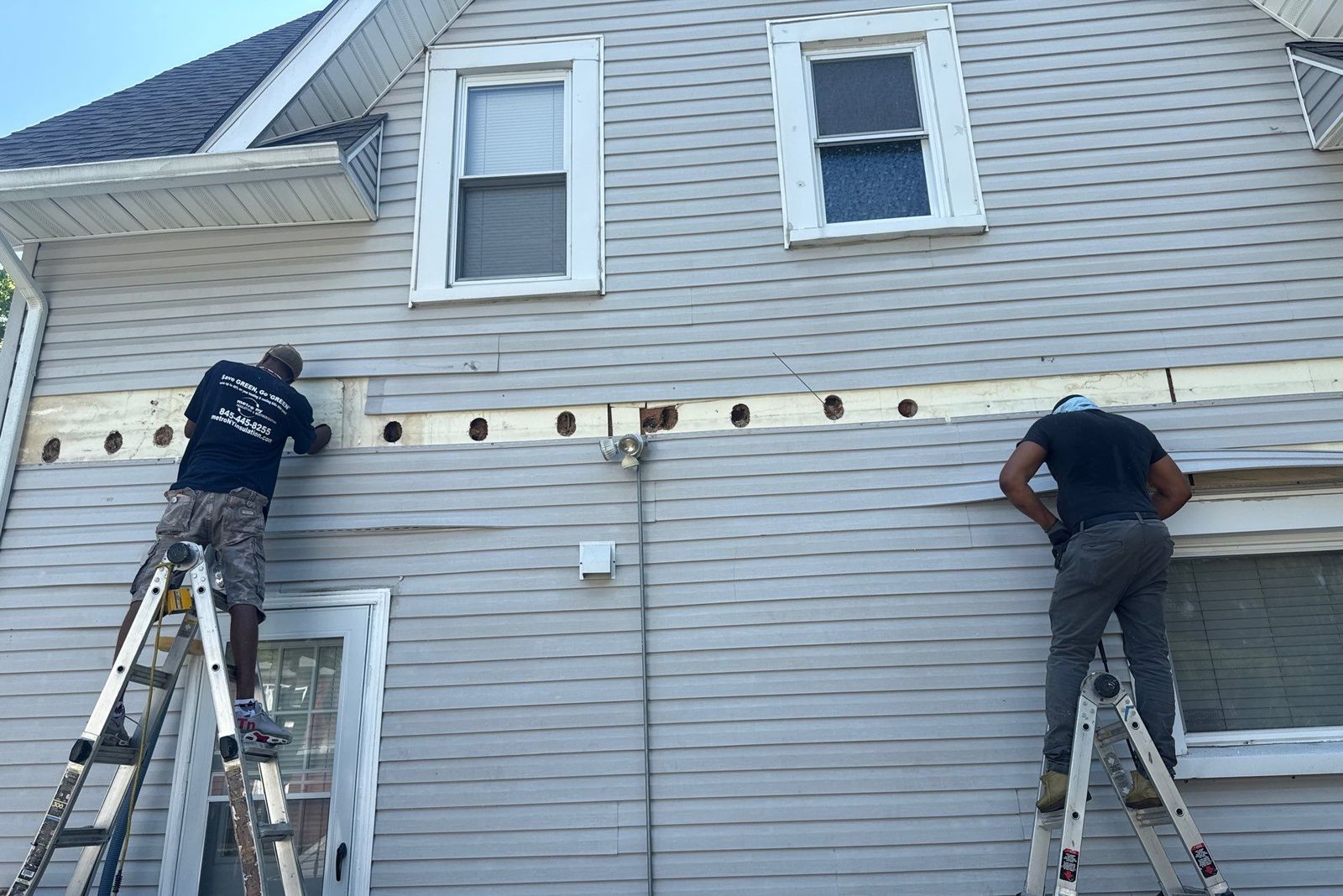
Metro NY Insulation crew removing siding bands and dense-packing exterior wall cavities of an older White Plains NY home
Our crew accessing wall cavities from outside โ€” small holes drilled through the sheathing, one per stud bay.

The Problem: A Finished Attic That Was Never Comfortable

If your upstairs feels like an oven in July and an icebox in January, your heating and cooling system may not be the problem.

That was exactly the situation for this homeowner in White Plains. The finished attic rooms heated up quickly on summer days and stayed hot long after sunset. In winter, the same rooms turned cold and drafty, with exterior walls that were noticeably cold to the touch.

When we evaluated the home, we found what we find in a large share of Westchester County homes built before the 1980s: the exterior wall cavities and sloped ceiling cavities had little to no insulation in them. Insulation simply wasn’t required by building codes when many of these homes went up, so the wall assemblies were left as empty air gaps between the interior plaster and the exterior sheathing.

An empty wall cavity does two damaging things at once. It lets heat conduct straight through the assembly โ€” into the rooms in summer, out of them in winter โ€” and it gives air a channel to move freely inside the wall, carrying even more heat with it. That’s why an upstairs that gets hot in the summer is so often the same upstairs that’s cold in the winter: the cause is the envelope, not the HVAC.
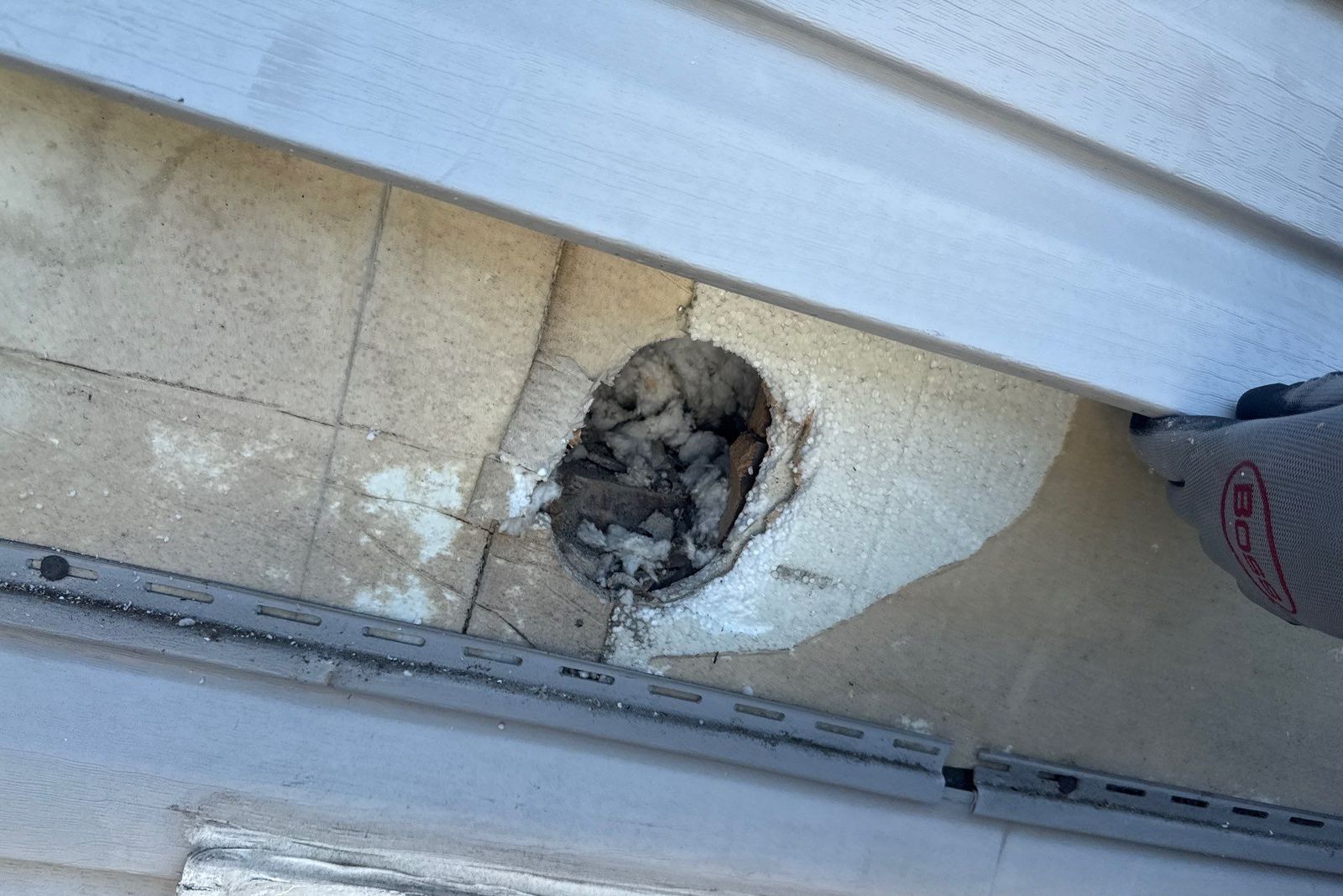
Access hole in exterior sheathing revealing an under-insulated wall cavity with only scraps of old insulation, White Plains NY
What we found inside: decades-old scraps of insulation leaving most of the cavity as an empty air gap.

Measuring the Problem: A 3,881 CFM50 Blower Door Result

Before any insulation went in, we ran a blower door test to measure how leaky the house actually was.

The result: approximately 3,881 CFM50 โ€” meaning that with the house depressurized to the standard 50-pascal test pressure, air was moving through the building envelope at roughly 3,881 cubic feet per minute. As a rule of thumb, that’s comparable to the leakage you’d get through a hole of well over two square feet โ€” like leaving a window partly open in every season.
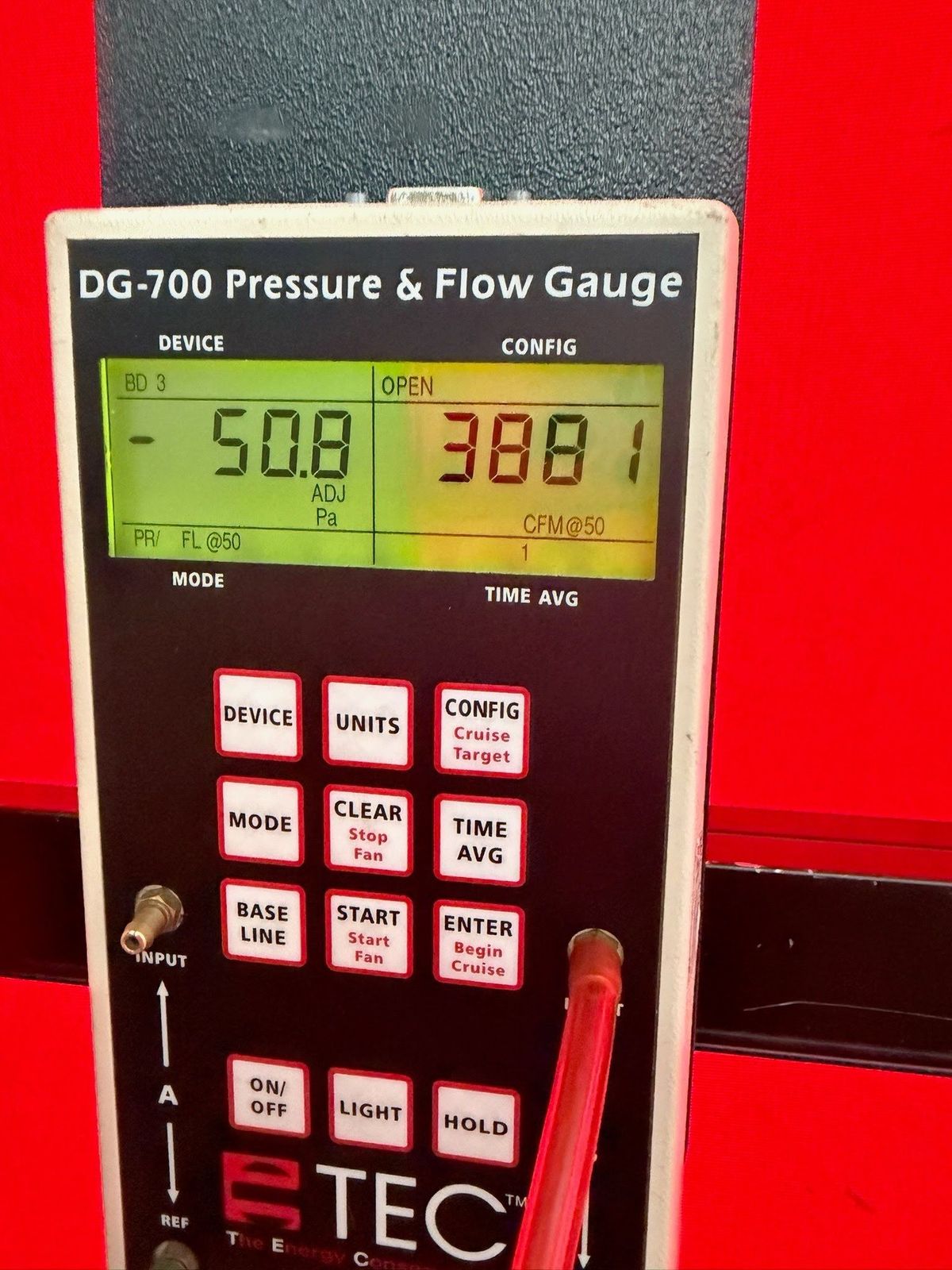
Blower door test gauge measuring 3,881 CFM50 of air leakage before insulation work in White Plains NY
The pre-project blower door test: 3,881 CFM50 of air leakage at the standard 50-pascal test pressure.

A blower door number matters for two reasons. It tells us where the priorities are before the work starts, and it gives us an objective baseline so the improvement can be verified with a follow-up test instead of guesswork. Air sealing paired with insulation is also the sequence NYSERDA-affiliated home performance programs expect: seal the leaks, then insulate.

After the dense-pack installation and air-sealing measures were completed, follow-up testing confirmed a meaningful reduction in uncontrolled air leakage through the walls and slopes we treated.

The Solution: Exterior Dense-Pack Cellulose (Drill and Fill)

Because the attic rooms were finished, tearing out drywall and plaster to insulate from inside wasn’t practical โ€” it would have meant demolition, dust, and refinishing costs throughout the living space.

Instead, we used a dense-pack installation, often called drill and fill. Most cavities were filled from outside the home; where a slope or knee wall could only be reached from inside, the crew drilled the same small access holes through the interior surface and patched them flush afterward. Either way, there’s no drywall or plaster demolition. Here’s how the process worked on this project:

Step 1: Accessing the Wall Cavities from Outside

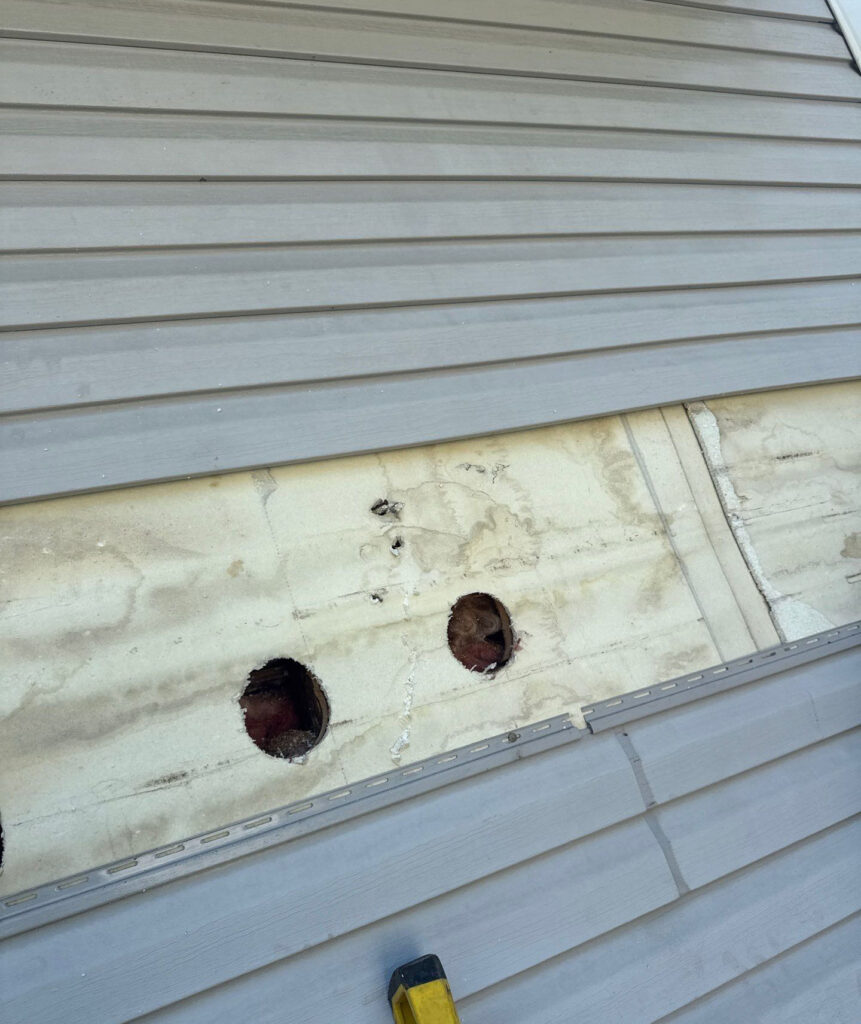
Our crew removed sections of exterior siding to expose the wall sheathing, then drilled a small access hole into each stud cavity. Each hole becomes an insertion point for the dense-pack hose. The layout is methodical โ€” every cavity gets its own fill point, including the hard-to-reach framing bays inside the sloped ceilings.
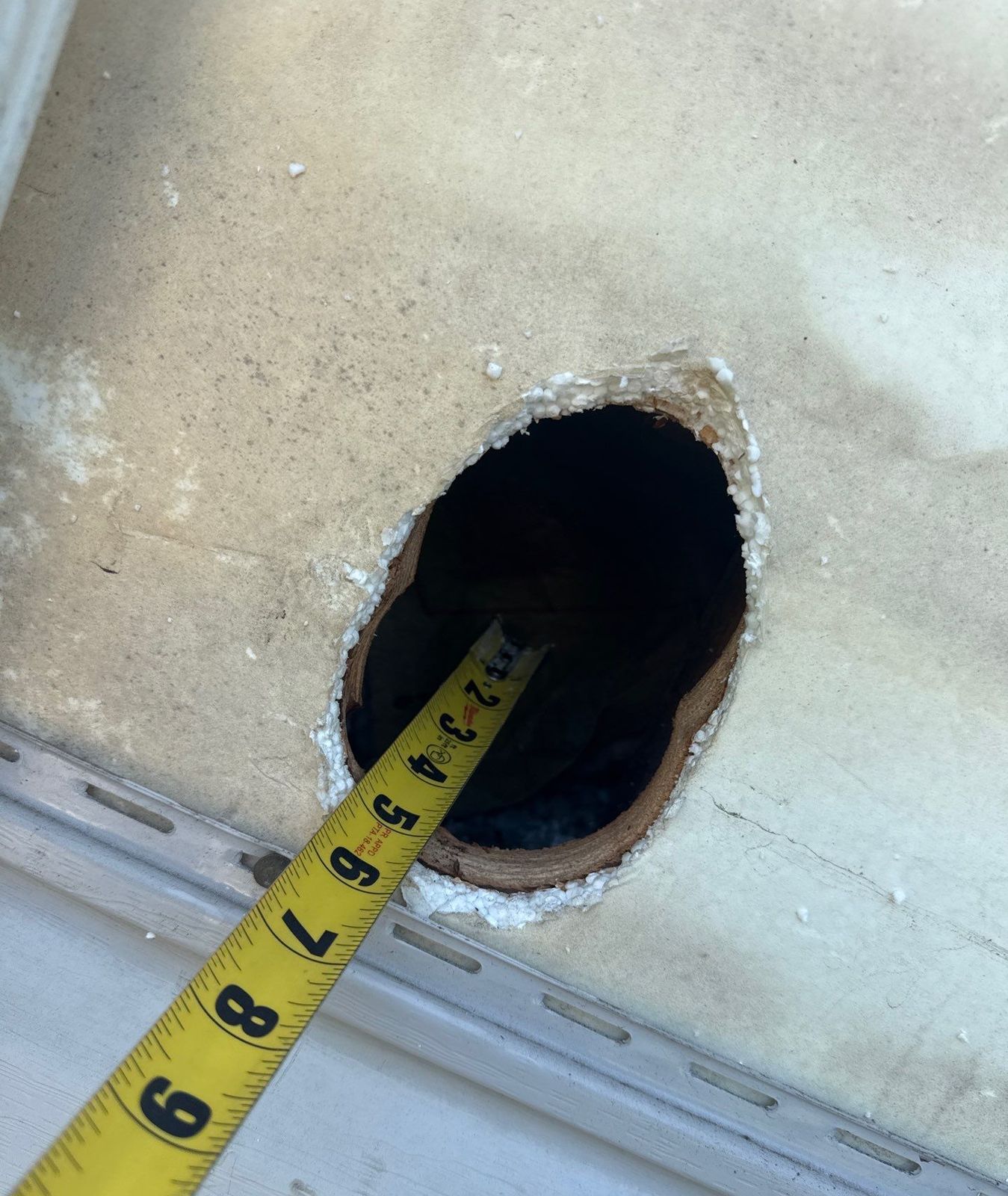
Small drill-and-fill access hole in exterior wall sheathing measured for dense pack cellulose insulation, White Plains NY
Each access hole is only a few inches across โ€” just enough for the dense-pack fill tube.

Step 2: Dense-Packing the Walls and Roof Slopes

Using a blowing machine and fill tube, cellulose insulation was packed into each cavity under pressure to roughly 3.5 pounds per cubic foot โ€” the industry-standard density at which cellulose resists settling and largely stops air from moving through the cavity.

Unlike standard loose-fill blown insulation, dense-pack cellulose completely fills the space it’s installed in:

  • around wiring and plumbing penetrations,
  • around framing members and blocking,
  • through irregular, non-uniform cavities common in older framing,
  • and up into sloped ceiling bays that would otherwise require interior demolition to reach.
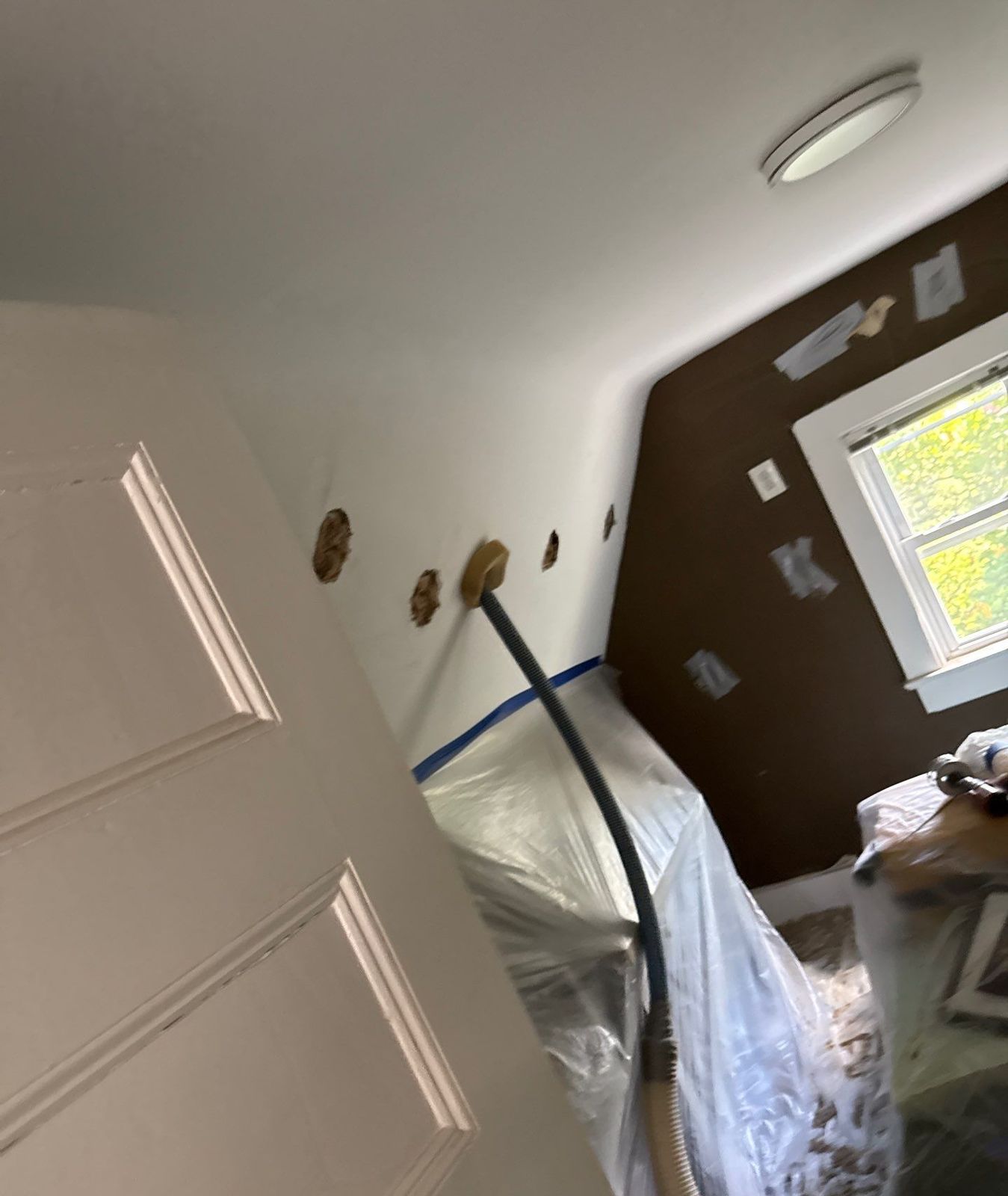
Dense pack cellulose insulation hose filling a finished attic sloped ceiling cavity in a White Plains NY home
Dense-packing a finished-attic slope: the fill tube packs cellulose into each framing bay under pressure while furnishings stay protected.

The result is a continuous thermal blanket through assemblies that had been empty air gaps for decades. If you want a deeper look at the method itself, see our guide to how wall insulation is installed without opening up your walls.

Step 3: Sealing, Plugging, and Restoring the Exterior

Once each cavity was verified full, the access holes were plugged and sealed, and the siding was reinstalled. Inside, the handful of interior access points were patched flush, ready for a coat of paint. From the street, there is no visible sign that insulation work took place โ€” and inside, the difference is typically felt in the first stretch of hot or cold weather.
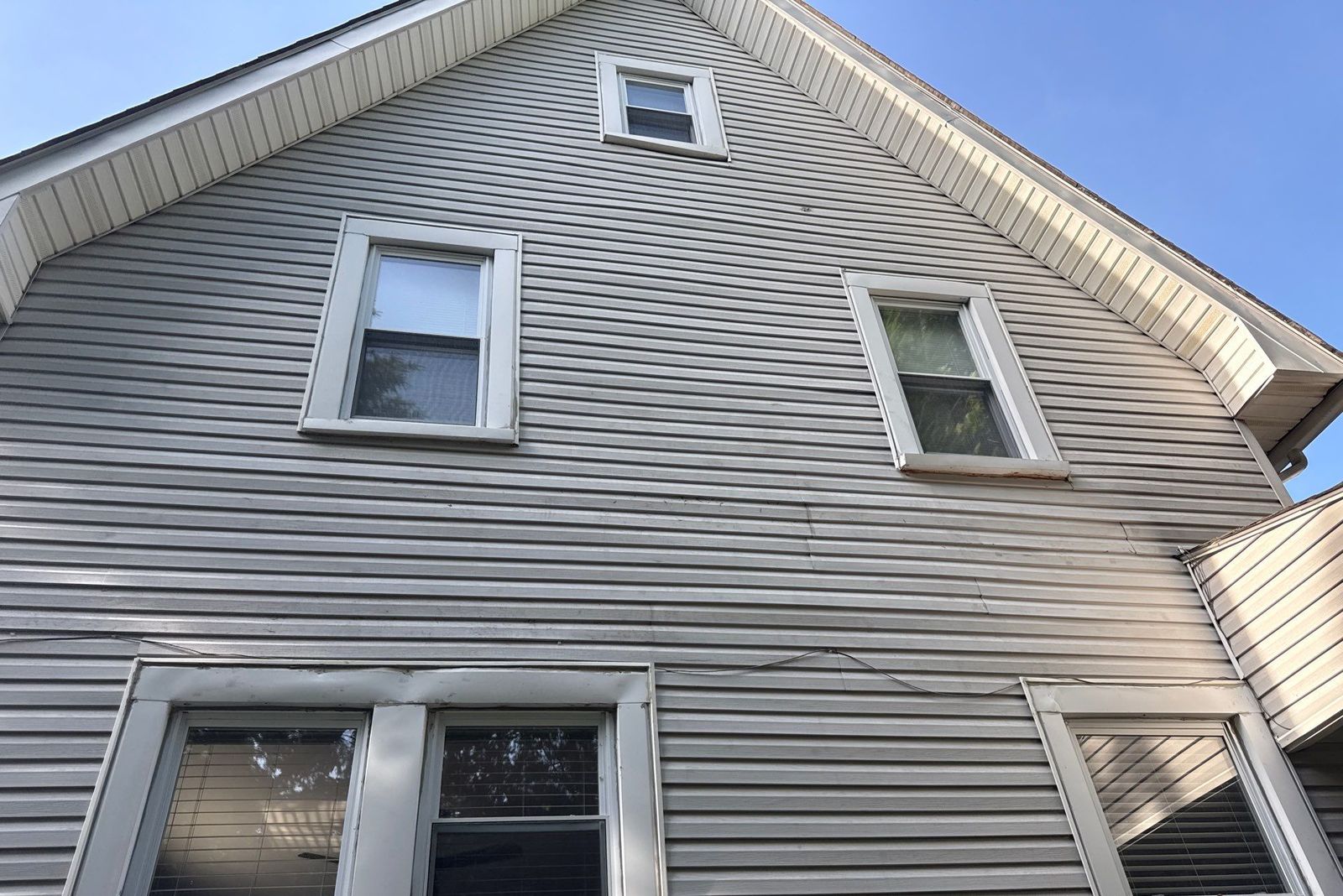
Exterior siding fully restored after dense pack cellulose insulation project on older White Plains NY home
After: access holes plugged and sealed, siding reinstalled โ€” no visible sign of the work from outside.

Why Dense-Pack Cellulose Is the Right Retrofit for Older White Plains Homes

Homes in White Plains and the surrounding Westchester towns frequently share a set of traits that make dense-pack cellulose the best-fit retrofit:
  • Balloon framing and irregular cavities. Dense-pack conforms to whatever shape the cavity actually is, and at proper density it also chokes off the convective air loops that balloon-framed walls are notorious for.
  • Plaster interiors worth preserving. Drill and fill works entirely from outside, so original plaster walls stay intact.
  • Finished attics and knee-wall rooms. Sloped ceiling bays can be packed without opening a single interior surface.
  • No expansion risk. Cellulose doesn’t expand after installation the way injection foam can, which matters in old, brittle plaster assemblies โ€” here’s our full comparison of injection foam vs. cellulose for older homes.
For a broader look at the special challenges these houses present, see insulating older homes: challenges and solutions.

What the Homeowner Gains

With the walls and slopes dense-packed and air-sealed, this home’s envelope now slows heat transfer in both directions. In practice, homeowners see three categories of improvement: Summer: cooler upstairs rooms, less heat radiating off the ceiling slopes in the evening, shorter air-conditioner run times, and more even temperatures floor to floor. Winter: warmer wall surfaces, fewer drafts around windows and knee walls, and a heating system that cycles less because the house holds its heat. Year-round: lower utility bills, smaller temperature swings between rooms, and a quieter house โ€” dense-pack cellulose is also an effective sound damper.

NYSERDA Incentives for This Kind of Work (New York Homeowners)

For New York homeowners, dense-pack wall and slope insulation installed by a participating NYSERDA contractor can qualify for meaningful incentives โ€” currently up to $3,000 through NYSERDA statewide. Metro NY Insulation is a participating NYSERDA contractor and handles the paperwork as part of the project. See our full guide to NYSERDA insulation rebates for Westchester homes. (Incentives apply to New York State residents; program terms change, so we confirm current eligibility during your assessment.)

Serving White Plains and Westchester County Since 2005

If your upstairs is always hotter than the rest of the house, your walls feel cold in winter, or your energy bills keep climbing, the problem may be hidden inside your walls โ€” and as this project shows, it can be fixed without tearing your home apart. Metro NY Insulation has helped homeowners throughout White Plains and Westchester County diagnose and fix comfort problems since 2005, using building-science testing to verify results rather than guessing. You can see more of our work in projects like this attic insulation upgrade in Mount Kisco, NY. Call (845) 445-8255 or request a free assessment to find out whether exterior dense-pack insulation is the right fix for your home.

Frequently Asked Questions

Yes. Dense-pack insulation โ€” also called drill and fill โ€” fills closed wall cavities through small access holes. On the exterior, sections of siding are removed, a hole is drilled into each stud cavity, cellulose is packed in under pressure, and the holes are plugged and the siding restored. Where a cavity can only be reached from inside, the same small holes are drilled through the interior surface and patched flush afterward. Either way, no drywall or plaster is torn out. This White Plains project insulated an entire finished attic level this way with zero demolition.

In most older Westchester homes, it’s because the roof slopes and upper walls have little or no insulation, so summer heat conducts straight through, and air leaks let hot attic air move into the living space. The HVAC system usually gets blamed, but if the envelope is empty, no amount of air conditioning keeps up. A blower door test and inspection can confirm the cause before you spend money on equipment.

For homes with empty wall cavities, it’s one of the highest-impact upgrades available โ€” it adds insulation value and cuts air movement through the walls at the same time, without renovation. It conforms to irregular old-house framing, doesn’t expand against brittle plaster the way injection foam can, and typically qualifies for NYSERDA incentives for New York homeowners.

Mostly from outside. The sloped ceiling bays and knee walls of a finished attic can usually be reached by removing siding or roof-edge trim and dense-packing each framing bay with cellulose through small access holes. Sections that can’t be reached from outside are filled through small interior holes that are patched flush afterward. That’s how this White Plains project was done โ€” with no demolition in the finished rooms.

CFM50 measures how much air leaks through a home’s envelope when it’s depressurized to 50 pascals โ€” 3,881 CFM50 means air was moving at roughly 3,881 cubic feet per minute, comparable to a hole of well over two square feet in the shell of the house. Testing before and after insulation work turns “it feels better” into a measured, verified result.

Yes, for New York homeowners. Dense-pack wall insulation installed by a participating NYSERDA contractor can qualify for up to $3,000 through NYSERDA. Metro NY Insulation handles the eligibility paperwork as part of the project.

Expert Insulation Services In New Jersey & Westchester Since 2005

Schedule A Home Assessment With Our Insulation Experts