
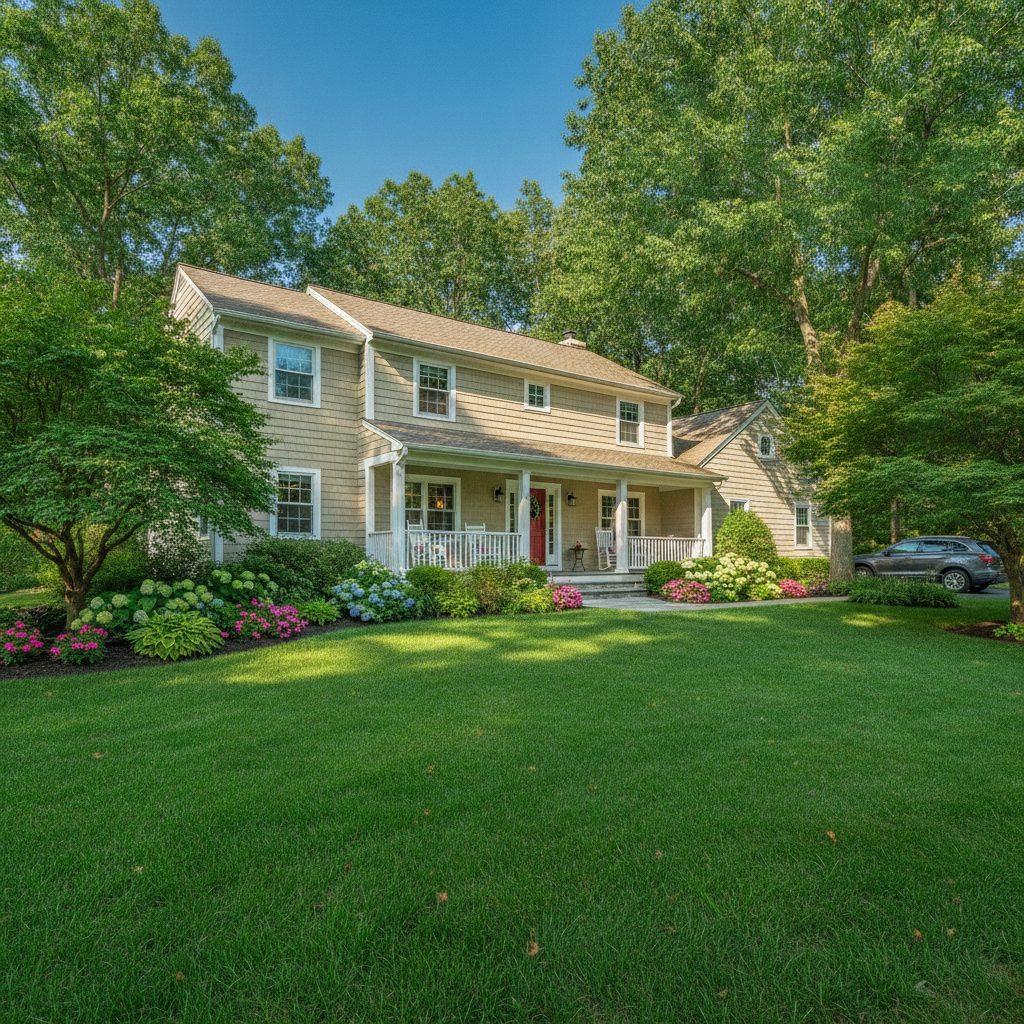
Quick answer: Insulation to keep home cool.
For summer cooling, spray foam is usually the better choice where air leakage and moisture drive the heat — attic roof decks, rim joists, and crawl spaces — because it air-seals completely and delivers a higher R-value per inch (about R-6 to R-7 for closed-cell). Cellulose is the better value for large attic floors and existing walls, giving strong, dense thermal protection (about R-3.2 to R-3.8 per inch) at a lower cost. Many older homes in Westchester and the New York metro area get the best results using both: spray foam to seal, cellulose to blanket. The only way to know which your home needs is a home energy assessment that finds where the heat is actually getting in.
If your home feels like an oven by mid-afternoon — even with the AC running full blast — the problem usually isn’t your cooling system. It’s what’s happening inside your walls, attic, and crawl spaces.
Insulation is the reason some homes stay comfortably cool all summer while others can’t keep up no matter how low the thermostat is set. When homeowners start looking into their options, two materials come up again and again: spray foam and cellulose. Both are excellent insulators, both can make a real difference in summer comfort, but they work differently and suit different situations. Here’s what you need to know.
Why summer comfort starts with insulation
Most people think of insulation as a winter solution — something that keeps heat in when it’s cold. But insulation works in both directions. In summer, it works to keep heat out.
The sun beats down on your roof. Heat radiates through your walls. Hot air finds every gap and crack it can. On a sunny day an under-insulated attic can reach 120–150°F, and without a proper thermal and air barrier that heat pours into your living space while your AC fights it constantly. (That’s exactly why the top floor suffers first — more on that in why your upstairs gets hot in summer, and why the AC never catches up in why your air conditioner runs constantly.)
Good insulation changes that equation — and the type you choose plays a big role in how effectively it does the job.
Spray foam vs. cellulose: side-by-side
| Factor | Spray Foam | Cellulose |
|---|---|---|
| R-value per inch | ~R-6 to R-7 closed-cell; ~R-3.5 open-cell | ~R-3.2 to R-3.8 |
| Air sealing | Complete — expands to seal gaps | Good (dense-pack); not a full air seal |
| Moisture control | Closed-cell resists moisture & humidity | Manages some moisture; not a vapor barrier |
| Best summer uses | Attic roof deck, rim joists, crawl spaces, irregular areas | Attic floors, existing walls, large flat areas |
| Relative cost | Higher upfront investment | More budget-friendly |
| Eco profile | High performance, less recycled content | Made mostly from recycled paper fiber |
Spray foam insulation: the airtight approach
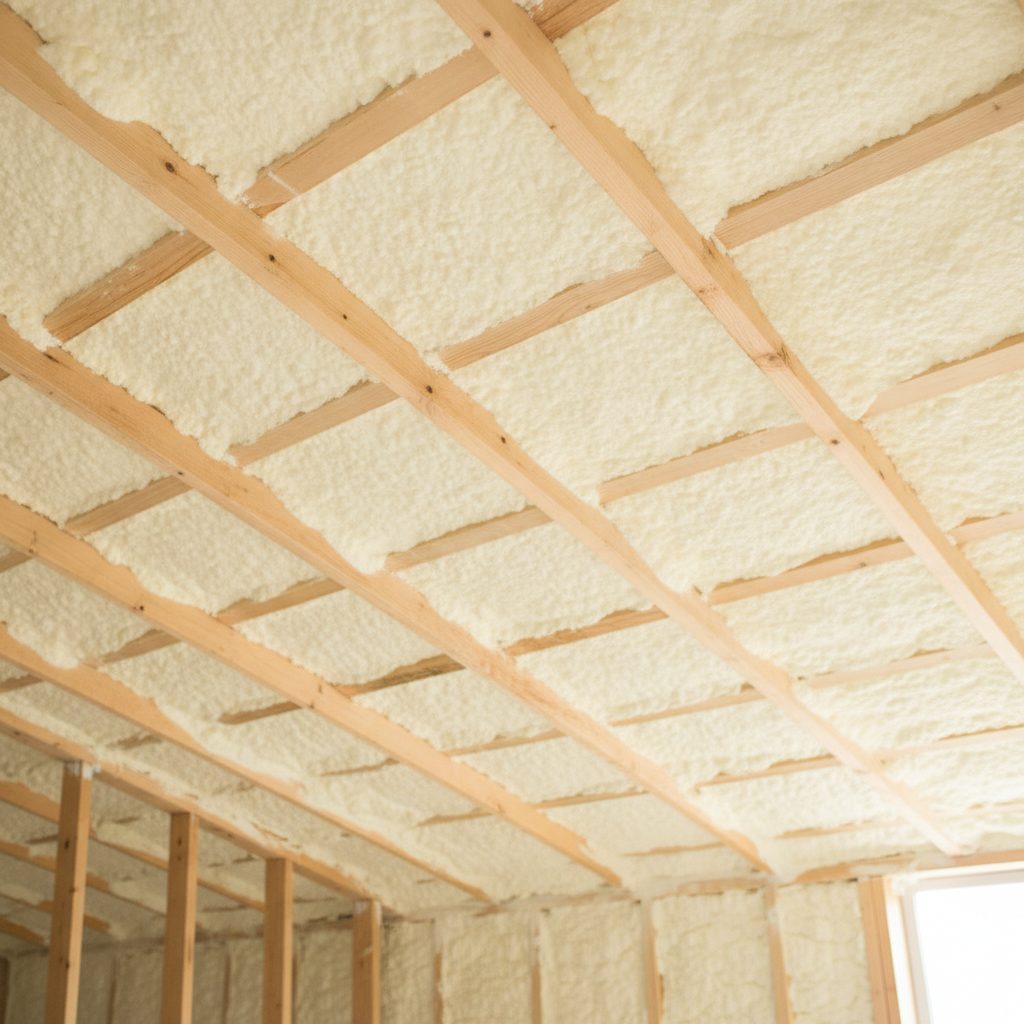
Spray foam insulation is applied as a liquid that expands and hardens on contact, filling every cavity, crack, and gap it touches. That last part is what makes it so effective in summer.
Heat doesn’t just conduct through building materials — it also rides on moving air. Every gap around a window frame, every unsealed penetration in your attic floor, every crack where two surfaces meet is an invitation for hot summer air. Spray foam seals those pathways completely, which is why it doubles as one of the best air-sealing materials available.
There are two types worth knowing. Closed-cell spray foam is denser, carries a high R-value (about R-6 to R-7 per inch), and acts as both an air barrier and a moisture retarder — ideal for humid Northeast summers. Open-cell is lighter and lower cost (about R-3.5 per inch), still air-seals, but stays vapor-permeable.
Where spray foam excels for summer comfort:
- Attics — Applied to the attic roof deck, spray foam creates a sealed, conditioned space that dramatically reduces the heat load on your home.
- Rim joists and crawl spaces — Hot, humid air infiltrating from below hurts comfort and air quality. Spray foam seals it out. (Pair it with crawl space encapsulation for the biggest gain.)
- Irregular and hard-to-reach areas — Because it expands to fill any space, it covers spots other materials can’t reach consistently.
The tradeoff is cost: spray foam is the higher upfront investment. But for many homeowners the energy savings and comfort make the numbers work over time.
Cellulose insulation: the proven, practical performer
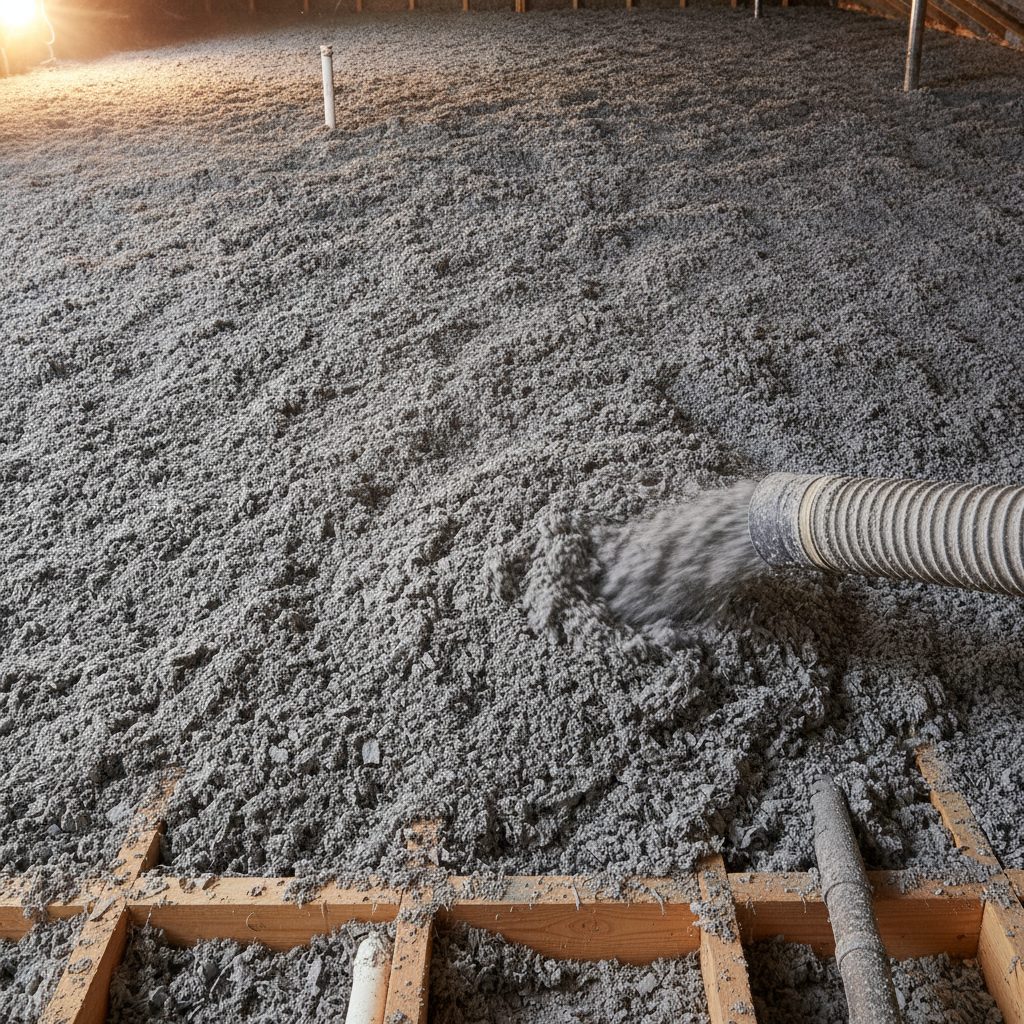
Cellulose insulation has been around for decades, and for good reason. It’s made mostly from recycled paper fiber — an environmentally responsible material treated for fire and pest resistance — and it’s dense, effective, and well suited to the older housing stock throughout the New York metro area.
Where cellulose excels for summer comfort:
- Attic floors — Blown-in cellulose creates a thick, dense blanket that slows heat transfer from a hot attic into the rooms below, keeping upper floors noticeably cooler. See attic insulation services.
- Existing walls — Cellulose can be dense-packed into wall cavities through small holes with minimal disruption — often the most cost-effective way to improve comfort in an older home.
- Large surface areas — For wide attic floors and substantial wall cavities, it installs efficiently and performs reliably.
Dense-pack cellulose also provides meaningful air resistance — not the complete seal spray foam creates, but a big improvement over fiberglass batts — and its thermal mass helps moderate temperature swings through the day. For strong performance at a more accessible price, cellulose is often the right answer. Where air leakage is the main issue, pairing it with attic air sealing closes the gap.
So which one is right for your home?
The honest answer: it depends on your home, your priorities, and where the comfort problems are actually coming from. Here’s a practical way to think about it.
Spray foam tends to be the better fit when:
- Air leakage is a major factor (in most older homes, it is)
- You’re insulating an attic roof deck, rim joists, or crawl space
- You want the highest possible performance in a limited space
- Moisture control matters alongside thermal performance
Cellulose tends to be the better fit when:
- You’re adding insulation to existing walls without opening them
- You’re covering a large attic floor area
- You want strong performance at a more budget-friendly investment
- Environmental impact is important to you
And sometimes the best solution is both. It’s common for a home to benefit from spray foam in one area — the attic roof deck or rim joists — and cellulose in another, like existing walls or the attic floor. For a full head-to-head breakdown of the two materials, see our cellulose vs. spray foam comparison. A good assessment looks at your whole home and recommends what actually makes sense for each space.
What this looks like in Westchester and the New York metro area

Homes in our region have their own challenges. Many were built decades ago, when insulation standards were different and energy costs were an afterthought. Summers here are hot and humid; winters are cold. Your insulation has to perform in both directions, year-round. Current code for our climate (roughly IECC Climate Zone 4–5) calls for attic insulation around R-49 to R-60 — a level many older local homes fall well short of.
There’s also money on the table. New York homeowners may qualify for NYSERDA energy-efficiency incentives that help offset the cost of upgrading insulation — see insulation rebate programs in New York to check what applies to your home.
At Metro NY Insulation, we work with both spray foam and cellulose every week, because no single material is right for every home. As a participating NYSERDA contractor serving Westchester County and the surrounding area — Rockland, Orange, Dutchess, and Ulster in New York, plus Bergen, Essex, Passaic, and Hudson in New Jersey — our job is to understand what’s actually happening in your specific house: where the heat is getting in, where the air is leaking, and what the most effective fix looks like. We’ve helped homeowners across the metro area go from running the AC nonstop and still feeling uncomfortable to having a home that stays cool, stays consistent, and costs noticeably less to run.
Frequently asked questions
Which insulation is best for keeping a house cool in summer?
For summer cooling, spray foam is usually best where air leakage and moisture are the problem — attic roof decks, rim joists, and crawl spaces — because it air-seals and has a high R-value per inch. Cellulose is excellent over large attic floors and inside existing walls. Many homes benefit most from a combination of the two.
Is spray foam or cellulose better for an attic?
It depends on where in the attic. Spray foam on the roof deck creates a sealed, conditioned attic and is ideal when you want to stop heat and air infiltration at the roofline. Blown-in cellulose across the attic floor is a cost-effective way to blanket the living space below. Some homes use both.
Does cellulose insulation help keep a home cool?
Yes. Dense blown-in cellulose slows heat transfer from a hot attic into the rooms beneath it and adds thermal mass that moderates temperature swings, keeping upper floors noticeably cooler in summer.
Can you use both spray foam and cellulose in the same house?
Absolutely — and it’s common. A typical approach is spray foam to air-seal and insulate the attic roof deck, rim joists, or crawl space, with cellulose over the attic floor or dense-packed into existing walls.
How much does new insulation cost in the New York metro area, and are rebates available?
Cost depends on the material, the areas being treated, and your home’s condition, which is why we start with an assessment. New York homeowners may also qualify for NYSERDA incentives that reduce the cost — we’ll walk you through what applies during your assessment.
Ready to find out what your home actually needs?
If your home isn’t staying as cool as it should this summer, insulation is very likely part of the answer — the question is what type, where, and how much. That’s exactly what an energy assessment figures out. We’ll find where the heat is getting in and walk you through the options that fit your home and your budget.
Reviewed by the team at Metro NY Insulation — BPI-certified, participating NYSERDA contractor serving Westchester County and the New York metro area since 2005.