
Quick answer: cellulose vs. fiberglass insulation.
Cellulose delivers more R-value per inch (about R-3.5 to R-3.8 versus R-2.2 to R-2.7 for blown fiberglass), resists air movement far better at density, and fills the irregular framing found in older Westchester and New Jersey homes without leaving gaps. Fiberglass costs less per square foot, is non-combustible on its own, and does not absorb water. For most attic floors in this climate we install cellulose — and in many homes you can simply add cellulose on top of sound existing fiberglass rather than removing it.
Cellulose vs. fiberglass at a glance
| Factor | Cellulose | Fiberglass |
|---|---|---|
| R-value per inch | ~R-3.5 to R-3.8 | ~R-2.2 to R-2.7 blown; ~R-3.1 batts |
| Resists air movement | Very good at density — the fibers block airflow | Poor — air passes through it |
| Fills irregular framing | Excellent — flows around wiring and bracing | Poor with batts; fair blown |
| Fire rating | Class A / Class 1 (borate treated) | Non-combustible, but melts at high heat |
| Pest deterrent | Yes — borate is a natural insecticide | No — rodents nest in it readily |
| Sound control | Better — density absorbs sound | Fair |
| Handles water | Absorbs it — must stay dry | Does not absorb water |
| Recycled content | Up to 85–90% | Some, varies by manufacturer |
| Cost per sq ft | Moderate | Lowest |
What is cellulose insulation?
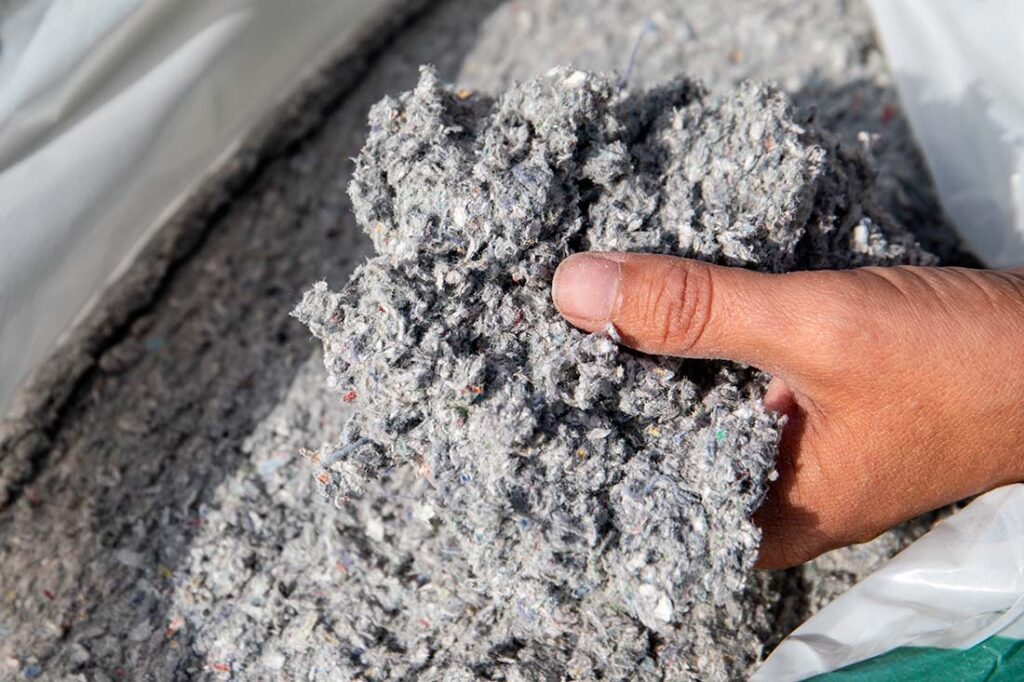
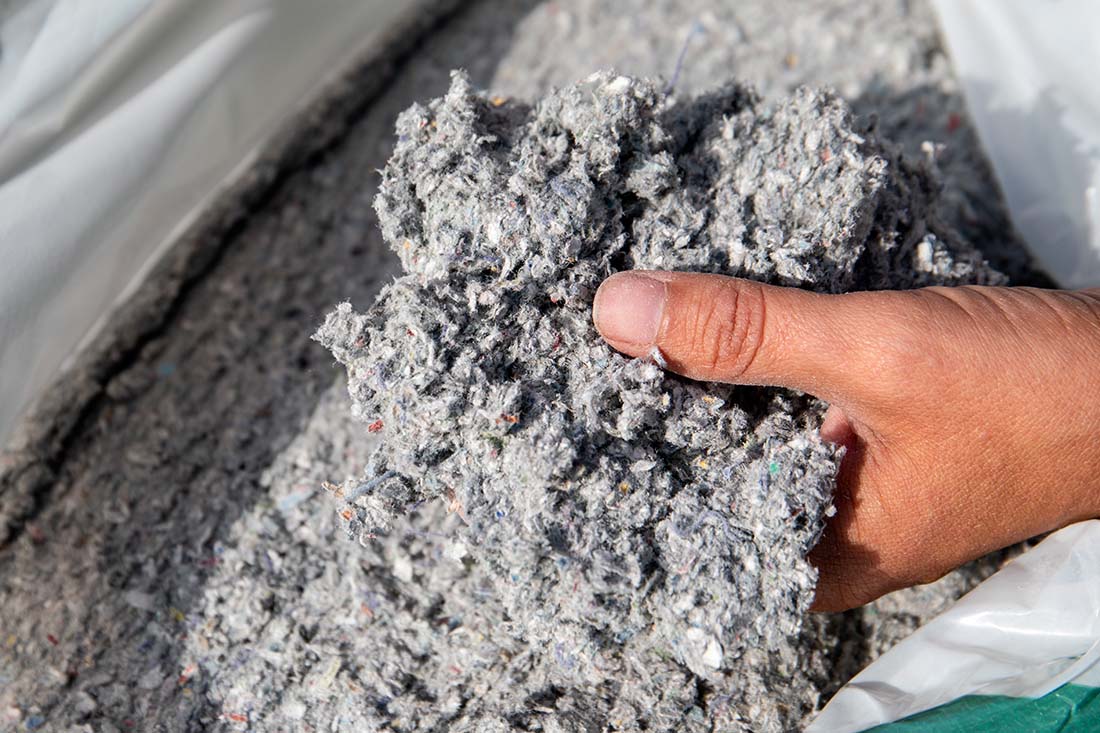
Cellulose is made primarily from recycled paper — mostly old newsprint and cardboard — ground into a fine fiber and treated with borate. The borate is what does the heavy lifting on safety: it gives cellulose a Class A fire rating, and it acts as a natural insecticide and fungal inhibitor. It is blown into attics, walls, floors and ceilings, where it settles into a dense layer that fills gaps rather than bridging them.
That density is the whole point. A blown material conforms to whatever it is poured around — wiring, bracing, plumbing, the odd framing of a 1920s colonial. Batts have to be cut to fit, and every imperfect cut is a gap.
What is fiberglass insulation?
Fiberglass is spun glass fiber, and it is still the most common insulation in American homes. It comes as batts and rolls cut to standard stud and joist spacing, and it can also be blown in loose. It is inexpensive, widely available, non-combustible on its own, and it does not absorb water — genuine advantages.
Its weakness is air. Fiberglass slows heat transfer but does very little to stop air moving through it, which is why a fiberglass-only attic can measure a respectable R-value on paper and still feel drafty in January.
Which one actually insulates better?
On R-value per inch, cellulose wins clearly: roughly R-3.5 to R-3.8 against R-2.2 to R-2.7 for blown fiberglass. To reach the R-49 to R-60 the Department of Energy recommends for attics in our climate zone, you need about 13 to 17 inches of cellulose — or 18 to 27 inches of blown fiberglass. In an attic with limited depth, that difference decides the outcome.
The bigger gap is air movement. Dense cellulose resists airflow in a way loose fiberglass does not, so it holds its rated performance on a cold windy night instead of degrading. In the older housing stock across Westchester and northern New Jersey — balloon framing, irregular joist bays, a century of modifications — that advantage compounds.
The honest caveat: fiberglass installed perfectly and cellulose installed perfectly are closer than the marketing on either side suggests. Cellulose is simply far more forgiving of imperfect conditions, and imperfect conditions are what we find in almost every home we open.
Can you add cellulose insulation over fiberglass?
Yes — in most attics you can, and it is often the most cost-effective upgrade available. If the existing fiberglass is dry, uncontaminated and not matted down, cellulose is blown directly over it and the R-values add together. You keep the value of what is already there and pay only for the difference.
When adding over works
Over time fiberglass batts settle, sag away from the framing and lose effective R-value, particularly in attics that swing through big temperature and moisture changes. Adding a dense layer of cellulose on top will:
- Raise the attic's overall R-value to current standards
- Block the small air paths that fiberglass alone cannot
- Even out the hot and cold spots between rooms
- Lower heating and cooling costs year-round
The one rule: the existing batts must not be compressed by the new material. Compressed insulation loses R-value proportionally, so squashing R-30 down defeats the point of adding on top of it.
How we do it
- Inspect the existing insulation. We check for damp, compressed or contaminated fiberglass and confirm it is dry and safe to cover.
- Air seal first. Top plates, plumbing chases, recessed lights, the attic hatch. Insulation is not an air barrier, and sealing after the fact is not possible once the new layer is down.
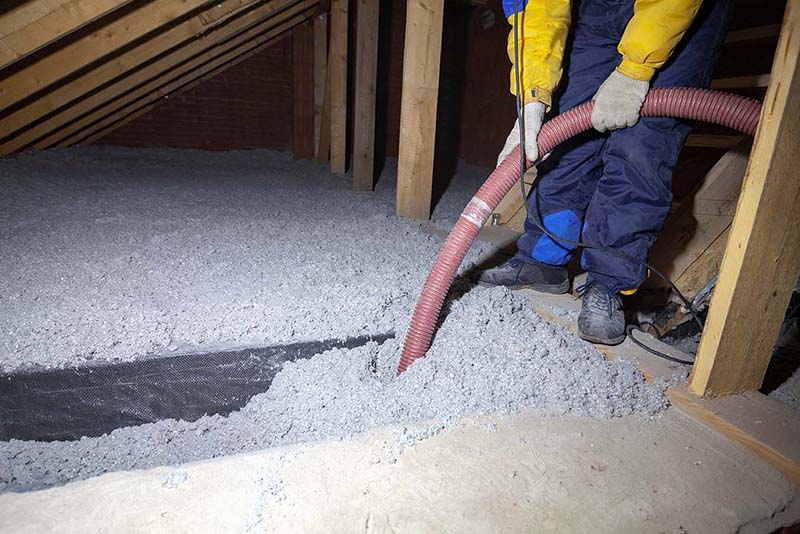
- Blow cellulose across the whole attic floor, evenly covering the existing layer, with baffles at the eaves so the soffit vents stay clear.
- Verify depth and R-value with gauges and leave depth markers, so the installed value is documented and checkable years later.
When replacement is the better call
If the fiberglass is wet, moldy, rodent-contaminated or dark with filtered dust, it comes out first. Wet insulation has already lost most of its R-value and will hold moisture against the framing; covering it traps the problem and rots the decking underneath. Dark grey staining across the surface is a specific tell — it means air has been pulled through the insulation, which is an air-sealing failure that adding more material will not fix.
Environmental impact
Cellulose is the clear winner. It is made from up to 85–90% recycled paper, diverts that paper from landfill, and takes far less energy to manufacture than melting and spinning glass fibre. Fiberglass has improved — many manufacturers now include recycled glass — but it does not close the gap.
Soundproofing
Density is what stops sound, and cellulose is denser. Blown into a wall or floor cavity it fills the space completely and absorbs sound rather than letting it pass. If you are insulating a shared wall, a home office, or a room facing a busy road, cellulose does meaningfully better than batts. More on cellulose for noise reduction.
Fire safety
This is where cellulose surprises people, because it is made from paper. The borate treatment gives it a Class A / Class 1 fire rating — the highest available for building insulation — and a dense layer actually slows fire spread better than unfaced fiberglass, because the density limits the oxygen reaching the framing. It chars rather than supporting a flame. Fiberglass is non-combustible in itself, but it melts at high temperature and does nothing to restrict airflow feeding a fire.
What each one costs
Fiberglass is cheaper per square foot, and that is a real advantage on a tight budget. In this market, blowing cellulose into an accessible attic typically runs about $1.50 to $2.50 per square foot installed, putting a 1,000 to 1,500 sq ft attic in the $2,000 to $4,000 range. Adding cellulose over sound existing fiberglass sits at the lower end, because there is no removal cost. If failed insulation has to come out first, budget roughly $1.00 to $2.00 per square foot for removal and disposal.
Rebates in New York and New Jersey
New York homeowners working with a NYSERDA participating contractor can receive up to $3,000 toward qualifying insulation and air sealing. Metro NY Insulation is a NYSERDA participating contractor and files the paperwork on your behalf. NYSERDA incentives are for New York homeowners only — New Jersey homeowners go through the Home Performance with ENERGY STAR program instead.
Westchester homeowners can add more on top: an extra $2,000 for Con Edison customers or $1,000 on other utilities, through December 31, 2026 — up to $5,000 combined. See New York insulation programs.
So which should you choose?
If you want the best thermal and air performance, better sound control, and the greener material — and especially if your home is older with irregular framing — cellulose is the stronger choice, and it is what we install in most homes. If budget is the deciding constraint, or the space is a clean, open, standard-spaced run where batts can be fitted precisely, fiberglass is a perfectly reasonable answer.
At Metro NY Insulation we have specialized in cellulose since 2005 because of how it performs in the housing stock we actually work on. Read more about our cellulose insulation service, or compare it against spray foam.
Frequently asked questions
Can you put cellulose insulation over fiberglass?
Yes, in most attics. If the existing fiberglass is dry, uncontaminated and not matted down, cellulose is blown directly over it and the R-values add together. The existing batts must not be compressed by the new material. If the fiberglass is wet, moldy or rodent-contaminated, it is removed first.
Can you put fiberglass insulation over cellulose?
It is possible but rarely the better option. Unfaced fiberglass batts laid over existing cellulose will add R-value, but the batts must be unfaced — a vapor barrier facing in the middle of an assembly traps moisture. In practice, adding more cellulose over cellulose gives a better result with fewer gaps.
Can you mix cellulose and fiberglass insulation?
Yes. Layering the two is common and perfectly sound building practice, as long as the lower layer is dry and uncompressed and no vapor barrier is trapped between them. The R-values simply add together.
Is cellulose insulation better than fiberglass?
For most attic floors and closed wall cavities in this climate, yes — higher R-value per inch, far better resistance to air movement, better sound control, and borate fire and pest resistance. Fiberglass wins on upfront cost and on tolerance of water. Both perform well when installed perfectly; cellulose is much more forgiving when conditions are not perfect.
Is cellulose insulation better for older homes?
Yes. Older homes have irregular framing, non-standard joist spacing and decades of modifications. Cellulose is blown in and conforms to all of it, where batts have to be cut to fit and every imperfect cut leaves a gap.
How much insulation do I need in my attic?
The Department of Energy recommends R-49 to R-60 for attics in the climate zones covering Westchester and northern New Jersey. That is roughly 13 to 17 inches of settled cellulose, or 18 to 27 inches of blown fiberglass.
Does cellulose insulation settle over time?
Loose-fill cellulose settles roughly 15 to 20% over its first years, which is why it must be installed to a settled-depth target rather than an initial depth. We blow to the depth that still measures R-49 or better after settling and leave depth markers so it can be verified. Dense-pack cellulose in walls is installed at about 3.5 lb/ft³ specifically so it cannot settle.
How long does cellulose insulation last?
Decades, if it stays dry. Cellulose does not break down or off-gas. What ends its life is water, rodents or compression — not age.
Will adding insulation block my attic ventilation?
Not when it is done properly. We install baffles or vent chutes at the eaves during installation so the soffit vents stay clear and the attic keeps breathing.
Is fiberglass insulation safe?
Generally yes, but it irritates skin, eyes and lungs during handling, so protective gear matters. Cellulose is not itchy or irritating in the same way, though any dry blown material creates dust during installation, which is why our crews wear respirators.
How long does an attic insulation upgrade take?
Most attic upgrades are completed in a single day, including air sealing.