Quick Answer
If your AC runs constantly but your home still feels hot, your house is likely losing cooled air through the attic, walls, or air leaks — not because your air conditioner is failing. Proper attic insulation and air sealing can reduce cooling loads by 15–25%, lower summer energy bills, and improve comfort throughout every room.
The AC has been running since 9 in the morning. It’s 4 in the afternoon and the upstairs bedrooms still feel like a greenhouse. You lower the thermostat another two degrees. The electric bill arrives and it doesn’t make sense.
If this sounds familiar, you’re not alone. Every summer, homeowners throughout New Jersey and Westchester County face the same frustration — an air conditioner that never stops running, rooms that never get comfortable, and energy bills that keep climbing. Most assume the AC unit is getting old. In many cases, the air conditioner is doing exactly what it was designed to do. The problem is the house itself.
When a home isn’t properly insulated or air sealed, cooled air escapes just as quickly as it’s produced. The AC runs constantly trying to compensate — driving up your bill without solving the underlying problem. Understanding where cool air goes and how to stop it from escaping is the most effective way to lower your AC bill this summer and every summer after it.
Why Your AC Bill Gets So High During the Summer
Air conditioners are sized based on the assumption that the home they’re cooling has adequate insulation and minimal air leakage. When those assumptions don’t hold — and in older New Jersey and New York homes, they often don’t — the system works much harder than it was designed to.
Several factors drive summer cooling costs higher than they need to be:
- Attic heat buildup. On a hot July day in Bergen County or Westchester, an uninsulated attic can reach 120–150°F. That heat radiates downward through the ceiling into the living space, constantly adding heat load to whatever your AC just cooled.
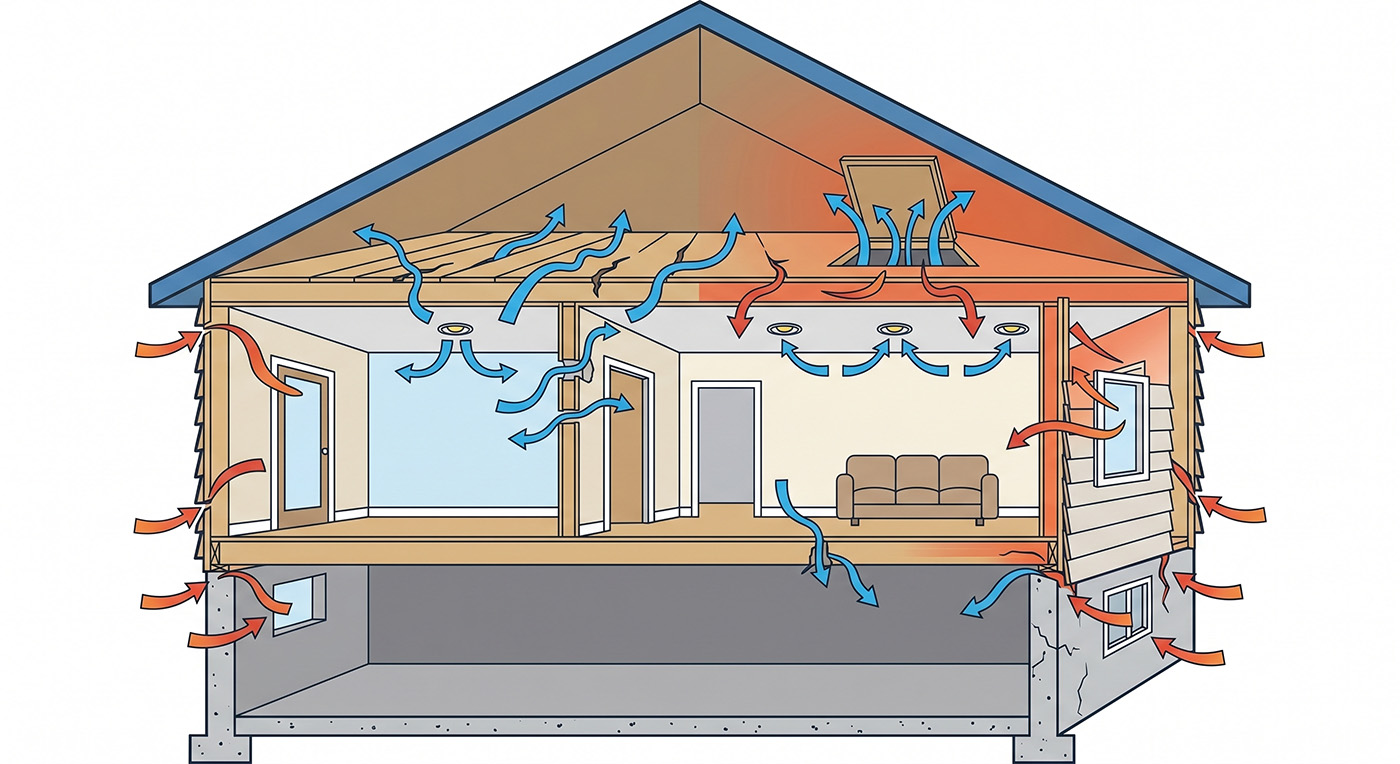
- Air leakage through bypasses. Gaps around plumbing, recessed lights, electrical wiring, attic hatches, and wall penetrations allow hot outdoor air to infiltrate and push cooled air out. The U.S. Department of Energy estimates air leakage accounts for 25–40% of a home’s total energy loss.
- Under-insulated walls. Many homes built in Bergen County, Essex County, Passaic County, and Westchester County before the 1980s have empty or poorly insulated wall cavities. Hot exterior walls radiate heat into rooms throughout the day.
- Second-floor overheating. Heat rises. Combined with proximity to the attic, upper-floor rooms tend to be significantly warmer — often 5–10°F hotter than the ground level — making them difficult to cool without running the AC at full capacity.
- Duct leakage. In homes with ductwork running through unconditioned attic spaces, leaking ducts dump cooled air into a 140°F attic rather than into the rooms they were meant to serve.
The Biggest Signs Your Home Is Losing Cool Air
Homeowners often live with these symptoms for years without connecting them to insulation. If any of these sound familiar, your home is likely losing cooled air faster than your AC can produce it:
- Upstairs rooms are noticeably hotter than downstairs
- The AC runs almost continuously on hot days
- Summer electric bills are significantly higher than neighbors with similar-sized homes
- Ceilings or interior walls feel warm to the touch in the afternoon
- Some rooms cool quickly while others never reach a comfortable temperature
- Humidity feels high indoors even when the AC is running
- The AC cycles on immediately after shutting off
- You find yourself lowering thermostat constantly without feeling relief
How Insulation Helps Lower Cooling Costs
Insulation works by slowing heat transfer — the movement of heat from hot areas to cooler ones. In summer, heat wants to move from your hot attic and sun-baked exterior walls into the cooler conditioned space inside. Insulation creates resistance to that movement, reducing how much heat enters the living space and how hard the AC has to work to maintain a comfortable temperature.
Different parts of the home require different insulation approaches:
Attic Insulation
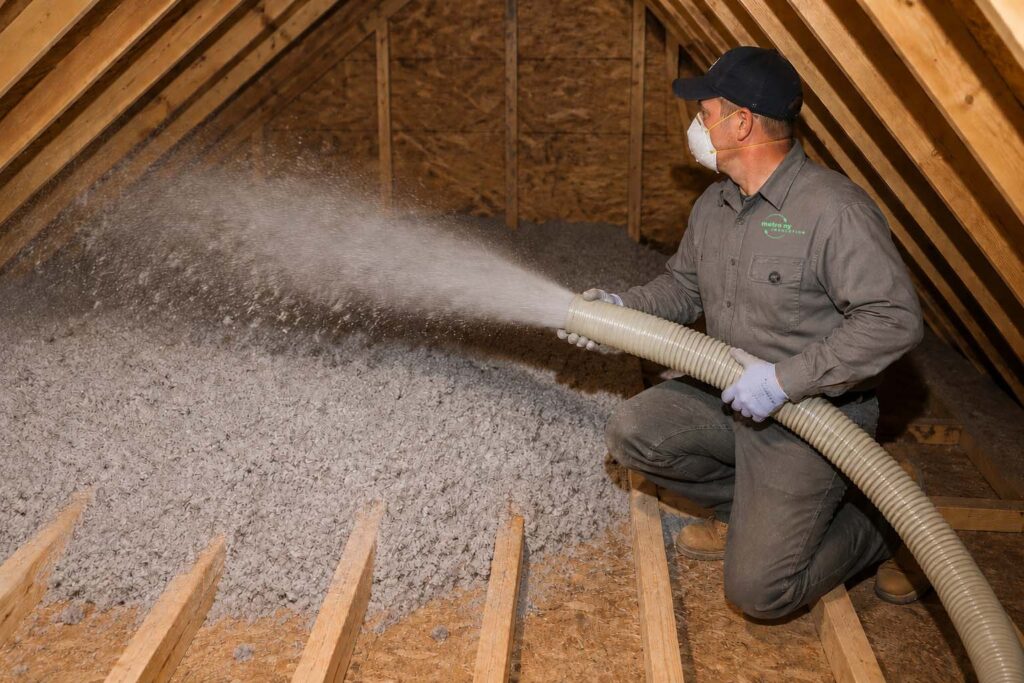
The attic is the most impactful upgrade for summer cooling. Adding blown-in cellulose insulation to the attic floor to the recommended R-49 for the NJ/NY climate zone significantly reduces the amount of heat radiating downward from a superheated attic. Most homes we assess in northern New Jersey and Westchester are well below this level. Learn more about our attic insulation services →
Wall Insulation
Exterioror Orange County: the sun beats down on dark roof shingles for hours, heating the roof deck to temperatures that can exceed 160°F. That heat radiates into the attic air, which can reach 120–150°F. Without adequate insulation on the attic floor, that heat radiates downward through the ceiling into the rooms below — continuously, throughout the afternoon and into the evening, even after the sun goes down.
The problem is compounded by attic bypasses — the small gaps and penetrations in the attic floor that allow hot attic air to flow directly into the living space. Every recessed light in a ceiling below the attic is a hole. Every plumbing stack, every wire run, every top plate gap is an opening. Hot air rises through these openings, pushing cooled air out through other gaps. The AC senses the temperature rising and kicks on again.
Cellulose blown-in insulation to R-49, combined with proper air sealing of the attic floor, addresses both the heat transfer and airflow problems simultaneously. In our experience serving homeowners throughout Bergen, Essex, Passaic, Hudson, Westchester, and Rockland counties, attic work consistently delivers the most significant reduction in summer cooling costs.
Air Sealing vs. Insulation: What’s the Difference?
The simple version: Insulation slows the movement of heat. Air sealing stops the movement of air. You need both — and air sealing must come first.
Insulation is a thermal barrier. It resists the transfer of heat through walls and ceilings by slowing conduction. But insulation is not an air barrier. Even a thick layer of cellulose cannot stop air from flowing through the gaps around it.
Air sealing closes those gaps before insulation goes in. Using two-part spray foam for larger openings, fire-rated caulk around fixtures and wiring, and intumescent sealant at chimney chases, air sealing creates a continuous barrier that blocks the direct movement of hot and cold air between conditioned and unconditioned spaces.
Common air sealing locations in attics include:
- Top plates of interior walls
- Plumbing and electrical penetrations
- Recessed light fixtures
- Attic hatch frames and pull-down stairs
- Chimney chases and flue penetrations
- Rim joists at the foundation
When done correctly and verified with a blower door test, attic air sealing measurably reduces the air changes per hour in the home — one of the clearest indicators of how efficiently your AC can maintain a set temperature.
Older Homes Often Have Hidden Energy Problems
Many homeowners in northern New Jersey and the Hudson Valley have simply accepted uncomfortable summers as a feature of their older home — not a fixable problem. But that discomfort has a cause, and in most cases, it’s addressable.
Homes built before the 1980s in Bergen County, Essex County, Passaic County, and Westchester County were often built without meaningful wall insulation. Some have empty wall cavities. Others have degraded original insulation that has settled or deteriorated over decades. Balloon-framing construction — common in older NJ and NY homes — creates open wall channels that run from basement to attic, allowing air to move freely through the entire building envelope.
These aren’t design flaws that can’t be corrected. Dense-pack cellulose can fill existing wall cavities without removing drywall. Our exterior dense-pack process accesses wall cavities from the outside, leaving interiors completely undisturbed. Attics can be air sealed and insulated in a single day. The house you’ve been living in uncomfortably for years can become significantly more comfortable in a matter of days.
Ways to Lower Your AC Bill Without Replacing Your HVAC System
Here’s something many HVAC contractors won’t tell you: many homeowners replace perfectly functional air conditioning systems without addressing the real reason the home stays hot. A new AC unit installed in a poorly insulated, leaky house will run just as constantly as the old one. The equipment isn’t the problem. The building envelope is.
Before considering an HVAC replacement, address these first:
- Add attic insulation to R-49. The single highest-impact improvement for summer cooling in most NJ and NY homes.
- Seal attic air bypasses. Pair air sealing with any insulation upgrade for measurable results.
- Insulate empty wall cavities. Particularly impactful for rooms on south- or west-facing walls that overheat in the afternoon.
- Address duct leakage. If ductwork runs through attic space, leaking ducts dump conditioned air directly into the hottest part of the house.
- Use window coverings strategically. Closing blinds or cellular shades on west-facing windows before afternoon sun hits reduces solar heat gain meaningfully.
- Control indoor humidity. High humidity makes rooms feel significantly hotter than the thermostat reading. Air sealing reduces the infiltration of humid outdoor air.
- Schedule a home energy assessment. A professional evaluation with a blower door test tells you exactly where your home is losing conditioned air — so upgrades target the right areas.
Rebates and Incentives May Help Offset the Cost
Insulation and air sealing upgrades are not only effective — they may be partially funded through energy programs available to homeowners in New York and New Jersey.
New York homeowners served by Metro NY Insulation may be eligible for NYSERDA rebates on qualifying insulation and air sealing projects through the Home Performance with ENERGY STAR program. Metro NY Insulation is a NYSERDA-approved contractor and handles the rebate application as part of the project.
New Jersey homeowners can explore incentives through New Jersey’s Clean Energy program. While Metro NY Insulation doesn’t process NJ rebate paperwork directly, we can point you toward the right resources and ensure your installation meets the quality standards those programs require — including BPI-certified assessment and installation practices.
Ask about available programs when you schedule your assessment. In many cases, rebates meaningfully reduce the out-of-pocket cost of improvements that pay for themselves in energy savings over time.
Why Homeowners Throughout NJ & NY Trust Metro NY Insulation
Metro NY Insulation has been serving homeowners in northern New Jersey and Westchester County since 2005. We are a BPI-certified insulation contractor, a NYSERDA-approved participating contractor, and a family-run business — not a franchise. Every assessment and installation is performed by our own trained crew.
We serve homeowners in Bergen County, Essex County, Passaic County, Hudson County, Morris County, Union County, Westchester County, Rockland County, and the lower Hudson Valley.
Our approach starts with an honest assessment of what your home actually needs. We use a blower door test to measure air leakage before and after every project, so you have documented proof of improvement — not just our word for it. We have completed thousands of attic insulation, air sealing, and wall insulation projects in homes just like yours.
Frequently Asked Questions
Why is my upstairs hotter than downstairs in summer?
Does attic insulation help in summer?
Can insulation really lower AC bills?
How much heat enters through the attic?
What insulation is best for hot summers?
Should I replace my AC or improve insulation first?
How do I know if my home is under-insulated?
Are there insulation rebates in New York or New Jersey?
Is Your Home Ready for Summer?
If your house feels hot, uncomfortable, or impossible to cool during the summer months, we would like to help. Metro NY Insulation provides insulation assessments throughout New Jersey and Westchester County to help homeowners improve comfort, lower cooling costs, and make their homes more energy efficient.
Call us: (845) 445-8255