Schedule A Consultation 845-445-8255

845-445-8255

Schedule A Consultation

Spray foam insulation on the attic roof deck around ductwork in Teaneck NJ

Spray Foam Attic and Crawl Space Insulation in Teaneck, NJ: Project Case Study

This Teaneck home had its heating and cooling ductwork running through an unsealed attic, and a crawl space with sagging fiberglass and open block walls. Metro NY Insulation applied spray foam insulation to the attic roof deck, which brought the ducts inside the sealed, insulated part of the house. We also air sealed the attic and sprayed foam on the crawl space walls and rim joist. The work was completed in December 2024.

Project at a Glance

LocationTeaneck, Bergen County, NJ
HomeTwo-story home with HVAC ductwork running through the attic and a block-wall crawl space
ProblemsDuctwork in an unsealed attic; sagging fiberglass in the crawl space; open, uninsulated crawl space walls and rim joist
SolutionSpray foam on the attic roof deck and walls; attic air sealing; spray foam on the crawl space walls and rim joist
Interior impactNo work in the living space. All work was done in the attic and crawl space
CompletedDecember 2024
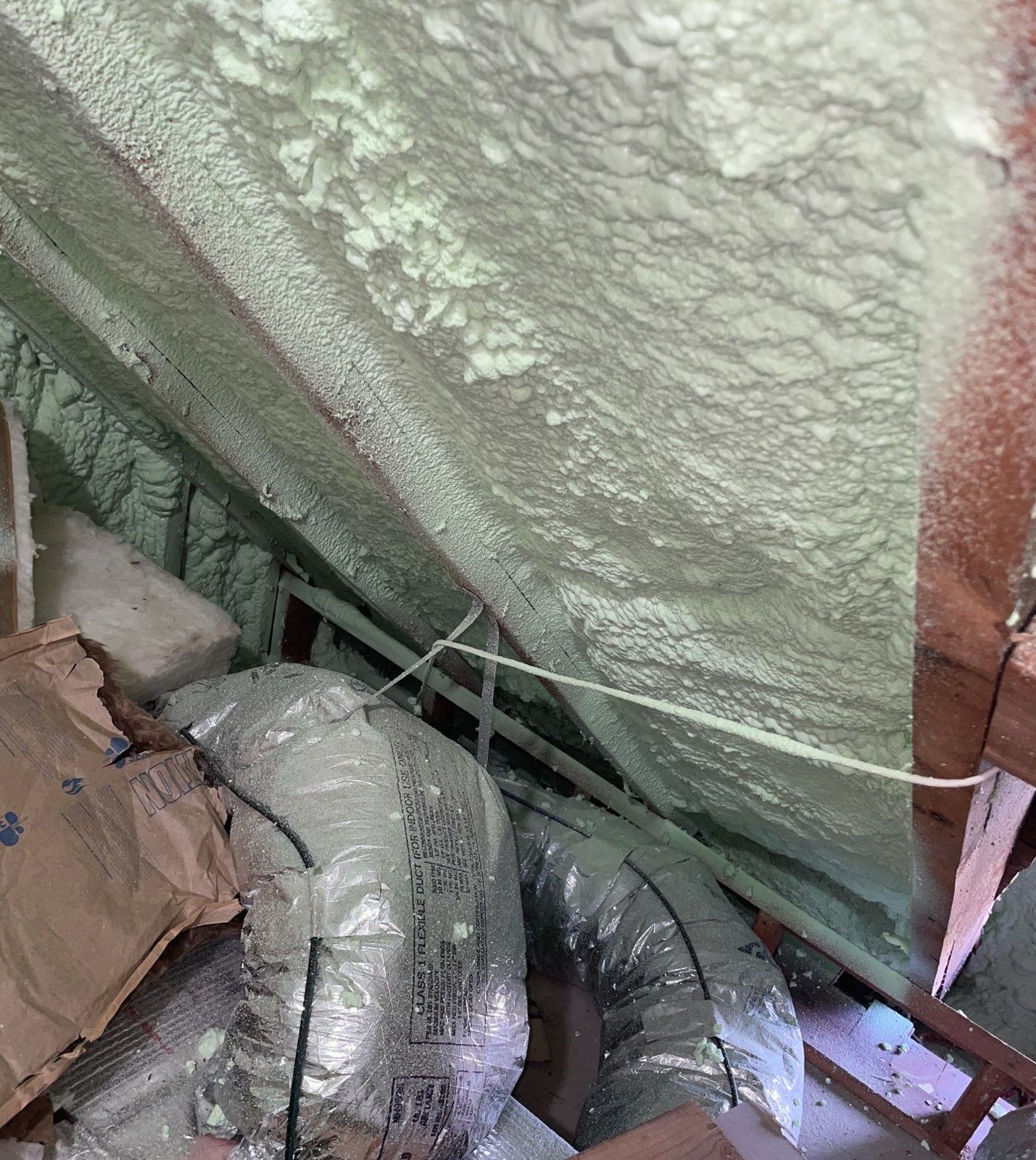
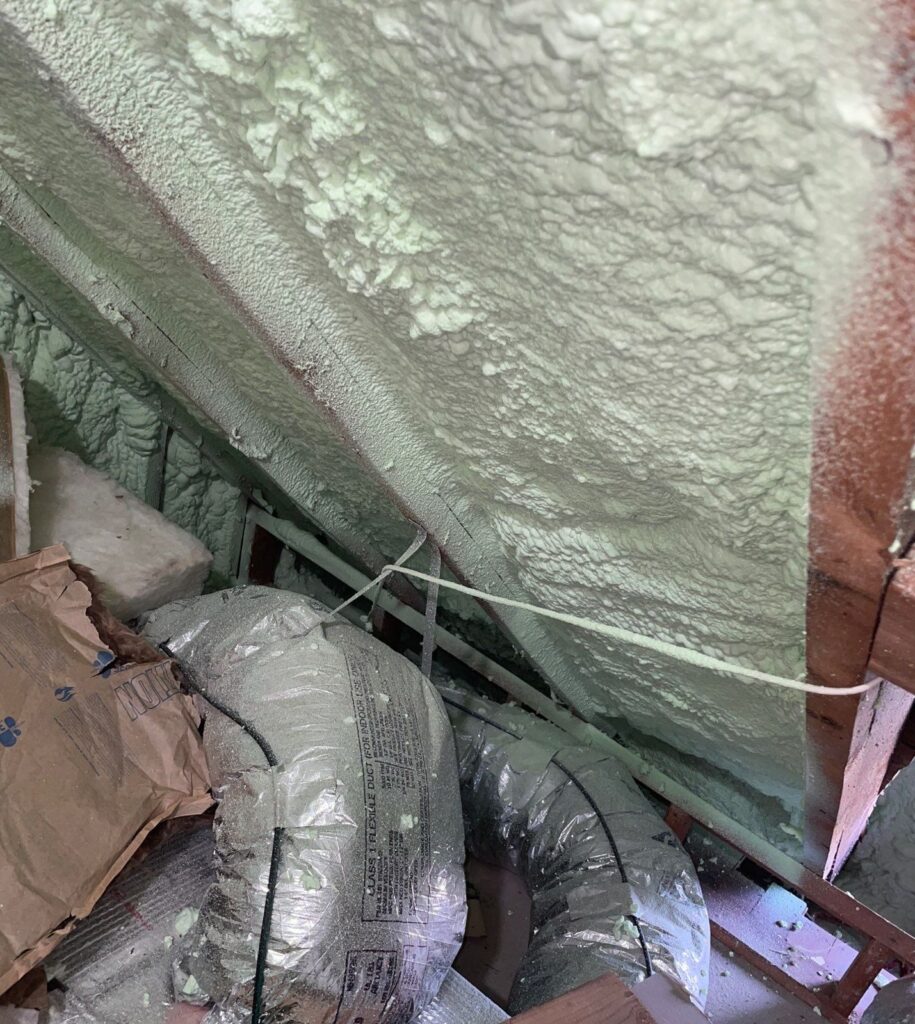
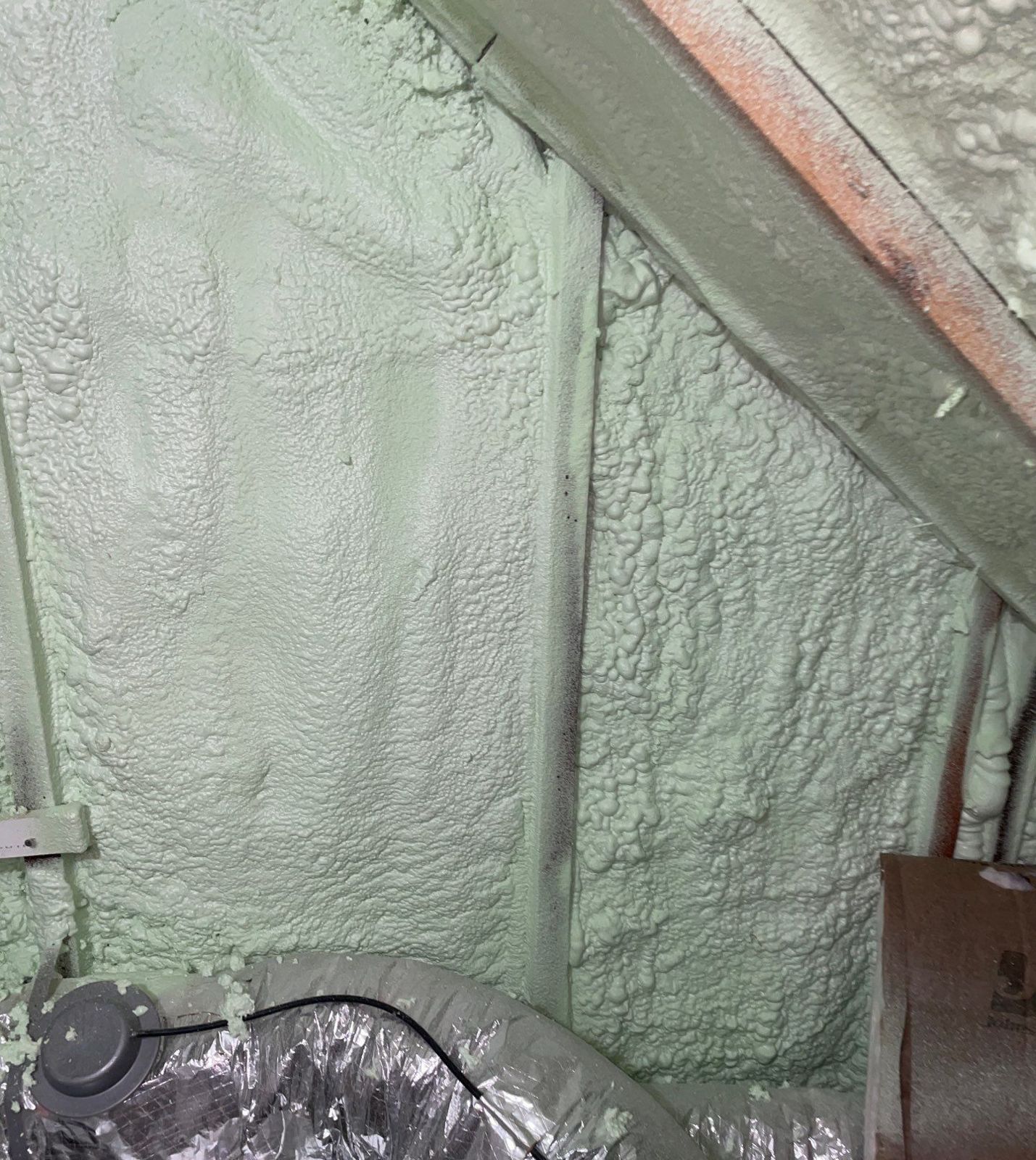
Spray foam insulation on the attic roof deck around ductwork in Teaneck NJ
After: spray foam on the attic roof deck. The ductwork now sits inside the insulated, sealed part of the house.

The Problem: Ducts Out in the Cold

In many Bergen County homes, central air and heating ducts were added through the attic after the house was built. That puts the ducts in the one part of the house that is closest to outdoor temperatures: freezing in winter and very hot in summer. Conditioned air loses heat or cooling through the duct walls before it reaches the rooms, and any leak at a duct joint pushes paid-for air into the attic or pulls attic air into the system.

That was the situation in this Teaneck attic: runs of flexible ductwork laid across the attic floor and framing, under a bare roof deck.
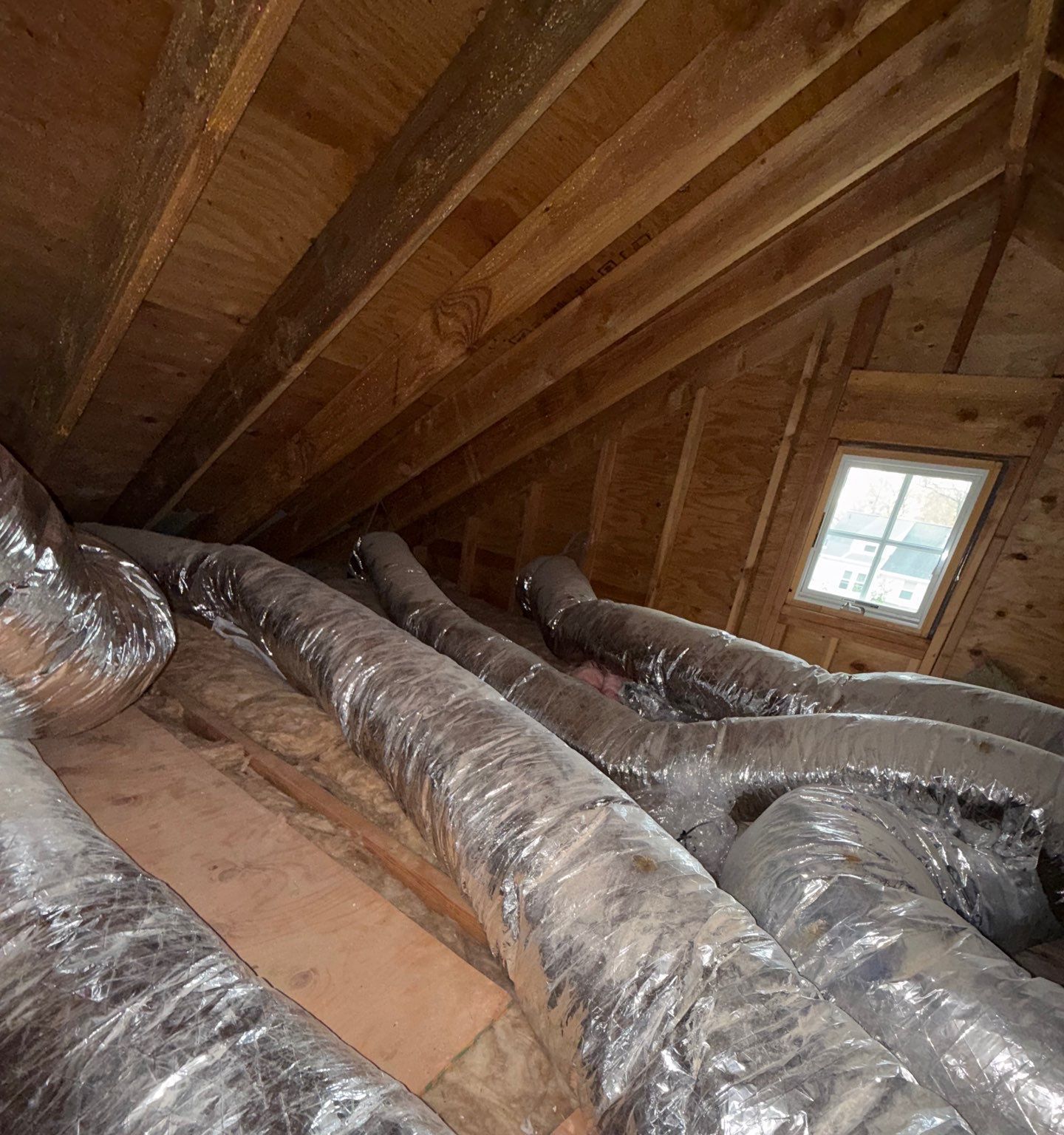
Attic in Teaneck NJ before spray foam: heating and cooling ducts in an unsealed attic
Before: heating and cooling ducts running through the unsealed attic.

Below the house, the crawl space had fiberglass batts sagging and falling out from between the floor joists, and bare block foundation walls. Cold air came in at the rim joist, where the house framing sits on the foundation, and moved freely under the floors.
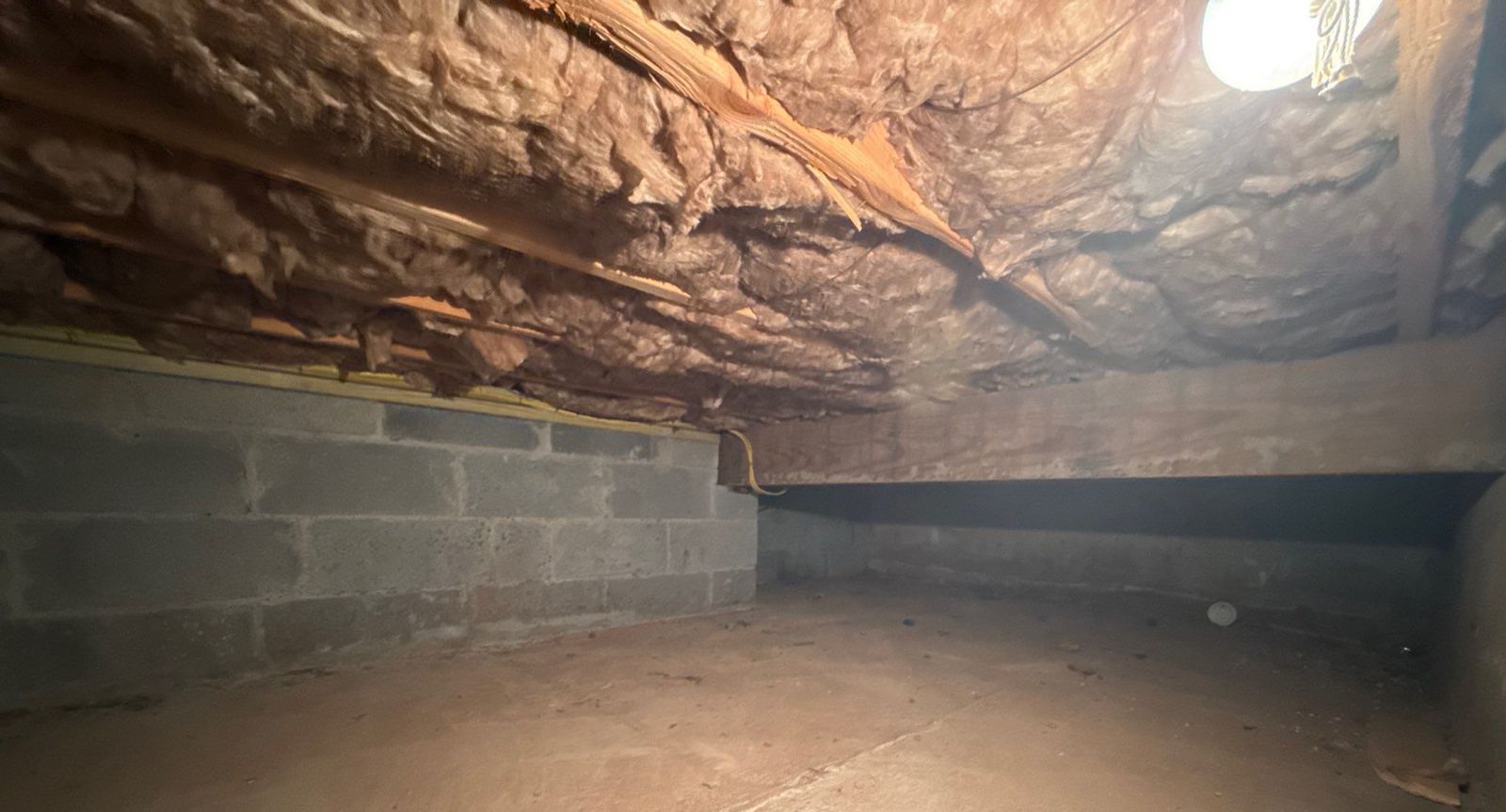
Crawl space in Teaneck NJ before: sagging fiberglass between joists and open block walls
Before: sagging fiberglass between the floor joists and open block walls in the crawl space.

What We Did

1. Attic: spray foam on the roof deck

Instead of trying to insulate around every duct on the attic floor, we moved the insulation line to the roof. Spray foam on the underside of the roof deck and on the attic walls seals and insulates in one step. The attic becomes part of the conditioned space, and the ducts inside it are no longer exposed to outdoor temperatures. This is one of the situations where spray foam clearly beats loose-fill insulation; our comparison of spray foam vs. fiberglass explains why.
Attic in Teaneck NJ before spray foam: heating and cooling ducts in an unsealed attic
Before
Spray foam insulation on the attic roof deck around ductwork in Teaneck NJ
After
The attic before and after spray foam on the roof deck.
Finished spray foam insulation on attic walls in Teaneck NJ
Continuous spray foam on the attic walls closes off the gaps that let outside air into the attic.

2. Crawl space: spray foam on the walls and rim joist

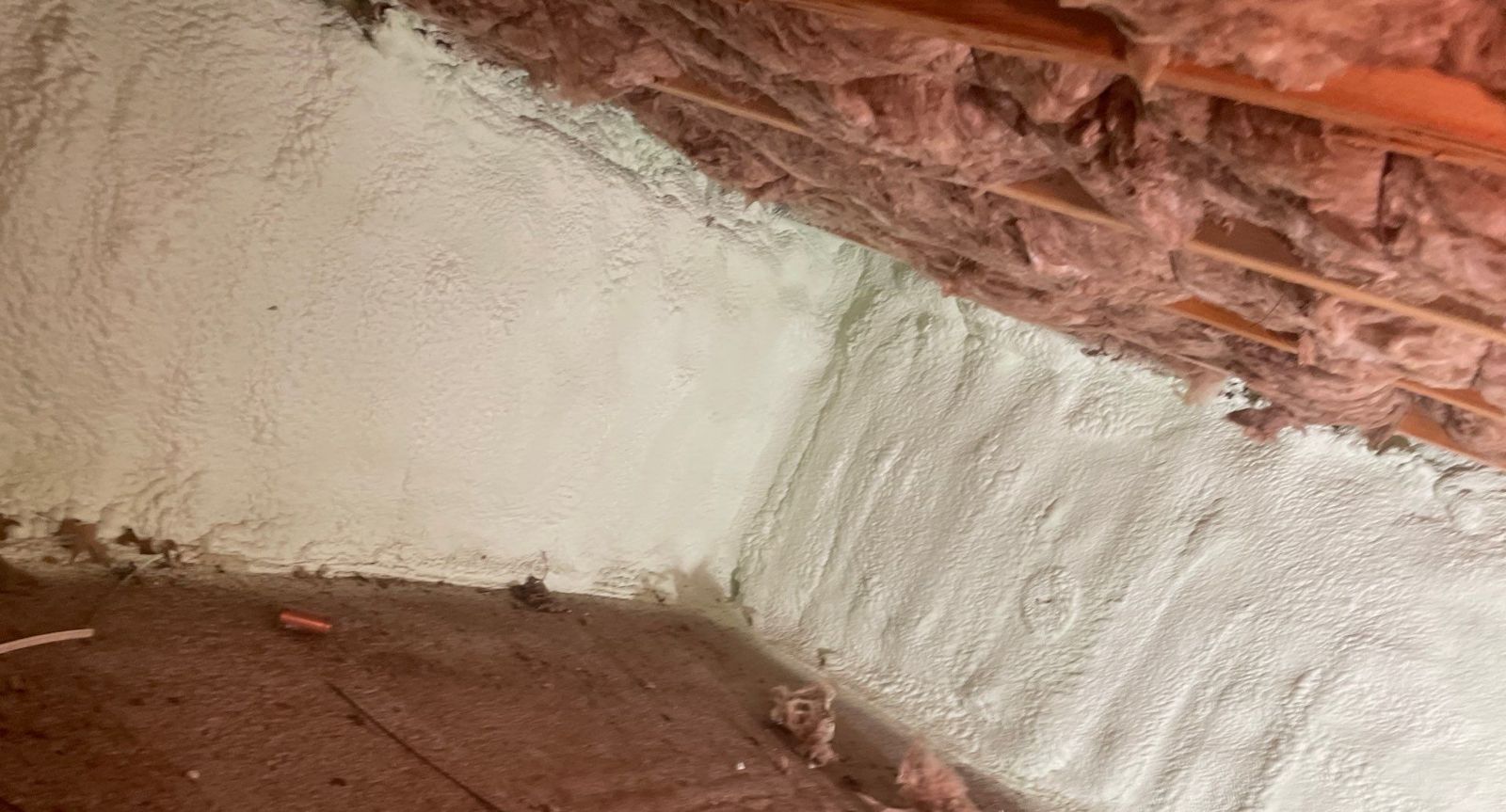
In the crawl space, we sprayed foam on the foundation walls and the rim joist. The rim joist is one of the leakiest spots in most houses, and foam seals it and insulates it in a single pass. Insulating the crawl space walls, rather than the underside of the floor, keeps the whole crawl space closer to indoor temperature.

Crawl space in Teaneck NJ before: sagging fiberglass between joists and open block walls
Before
Spray foam insulation on crawl space walls and rim joist in Teaneck NJ
After
The crawl space before and after spray foam on the walls and rim joist.

Why Bring the Ducts Inside the Insulation?

Ducts in an unsealed attic work against you twice. They lose heat or cooling through their walls on the way to each room, and leaks at the joints exchange air with the attic. Sealing the roof deck fixes both at once without rebuilding the duct system: the ducts end up surrounded by air that is close to indoor temperature, so less energy is lost before the air reaches the rooms.

What Homeowners Typically Notice

  • Rooms that heat and cool more evenly, especially upstairs rooms at the end of long duct runs.
  • A heating and cooling system that runs less to reach the same temperature.
  • Warmer first-floor floors once the crawl space walls and rim joist are sealed. See our guide to fixing cold floors.
  • Fewer drafts, because the attic and crawl space are no longer open to outside air.

Incentives for New Jersey Homeowners

New Jersey homeowners use a different set of programs from New York. Ask us about Home Performance with ENERGY STAR during your assessment, and we’ll walk you through what currently applies to your home.

Serving Teaneck and Bergen County

If your upstairs never gets as comfortable as downstairs, your ducts run through the attic, or your floors are cold all winter, the fix is usually in the attic and the crawl space. Metro NY Insulation is a woman-owned, family-run, BPI-accredited contractor serving Teaneck and homeowners across Bergen County. Every project starts with a home energy assessment so we can see where your home is losing energy.

Request an Energy Assessment: (845) 445-8255

Both approaches exist, but when there is a lot of ductwork in the attic, sealing the roof deck with spray foam is usually more effective than wrapping every duct. It brings all the ducts inside the conditioned space at once and also seals the attic against outside air.

It is a good fit when ducts, an air handler or living space are in the attic, because it turns the attic into part of the conditioned house. When the attic is empty, air sealing the attic floor and adding blown-in insulation is often the better value. We recommend one or the other after looking at the attic.

For most crawl spaces with plumbing or ducts in them, insulating and sealing the walls and rim joist works better than insulation between the floor joists, which tends to sag and fall out over time, as it had in this Teaneck crawl space.

New Jersey homeowners use different programs than New York; NYSERDA incentives apply to New York homes only. Ask us about Home Performance with ENERGY STAR during your assessment, and we’ll go over what currently applies to your home.

Expert Insulation Services In New Jersey & Westchester Since 2005

Schedule A Home Assessment With Our Insulation Experts